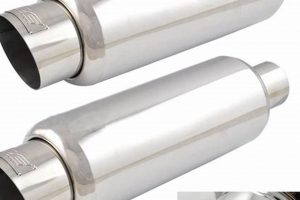
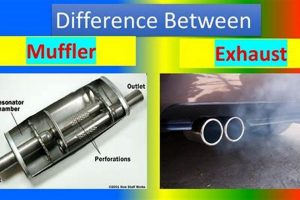
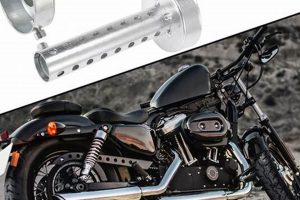
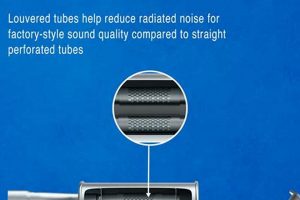
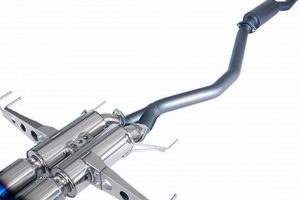
The fibrous material within a vehicle’s noise reduction component plays a critical role in attenuating sound waves generated by the engine’s combustion process. This material, typically composed of fiberglass, steel wool, or ceramic wool, is strategically packed within the muffler to absorb and disrupt these sound waves, thereby reducing the overall noise emitted from the exhaust system. An example would be the use of tightly compressed fiberglass around the perforated core of a motorcycle muffler to dampen the high-frequency sounds produced by the engine.
Effective sound dampening is crucial for maintaining compliance with noise regulations and enhancing the overall driving experience. The application of this material contributes to reduced noise pollution and a more comfortable cabin environment for vehicle occupants. Historically, materials like asbestos were used, but due to health concerns, safer and more environmentally friendly alternatives have been developed and implemented. Its use significantly impacts a vehicle’s operational noise level, contributing to public health and environmental wellbeing.
Understanding the composition, installation, and maintenance of these noise-reducing components is essential for both vehicle owners and automotive technicians. This knowledge allows for informed decisions regarding replacement materials, proper installation techniques, and the potential impact of modifications on vehicle performance and sound emissions. The following sections will delve further into specific types, installation procedures, and troubleshooting common issues associated with this critical element of the exhaust system.
Exhaust Muffler Packing
Proper attention to the sound dampening material within an exhaust system’s noise reduction component ensures optimal performance, longevity, and compliance with noise regulations. The following tips offer guidance on material selection, installation, and maintenance.
Tip 1: Material Selection: Choose a material appropriate for the vehicle and intended use. Consider temperature resistance, durability, and sound absorption properties. Fiberglass is suitable for general applications, while stainless steel wool or ceramic options are preferable for high-performance or racing environments due to their enhanced heat resistance.
Tip 2: Proper Packing Density: Ensure the material is packed firmly, but not excessively tight. Over-packing can restrict exhaust flow and reduce engine performance. Under-packing will result in inadequate sound dampening. Uniform density is crucial for consistent performance.
Tip 3: Wear Protective Gear: When handling these materials, wear gloves, eye protection, and a respirator. Many of these substances, particularly fiberglass, can cause skin and respiratory irritation.
Tip 4: Follow Manufacturer’s Instructions: Adhere strictly to the manufacturer’s recommendations regarding quantity, installation techniques, and any specific safety precautions related to the product being used.
Tip 5: Inspect Regularly: Periodically inspect the muffler and exhaust system for signs of damage or degradation of the sound-dampening material. Listen for changes in exhaust noise, which can indicate material breakdown or loss.
Tip 6: Consider Repacking Intervals: Depending on the vehicle’s usage and the material type, repacking the muffler may be necessary every few years. High-performance applications may require more frequent repacking.
Tip 7: Proper Disposal: Dispose of old sound-dampening material responsibly, following local regulations for hazardous waste disposal. Some materials may contain harmful substances and should not be discarded with general trash.
Adhering to these recommendations ensures the exhaust systems sound dampening components function effectively, contributing to a quieter and more efficient vehicle operation, while also ensuring compliance with environmental regulations.
The subsequent sections will address potential troubleshooting issues and further insights into optimizing exhaust system performance.
1. Material Composition
The material composition of exhaust muffler packing directly influences its ability to attenuate noise, withstand high temperatures, and maintain structural integrity within the harsh environment of an exhaust system. The selection of materials is a critical factor in determining the muffler’s overall performance and lifespan.
- Fiberglass
Fiberglass is a commonly used material due to its cost-effectiveness and reasonable sound-dampening properties. It consists of fine glass fibers interwoven to create a porous structure that absorbs sound waves. However, fiberglass is susceptible to degradation at extremely high temperatures, which can lead to reduced effectiveness and eventual burnout. Its application is prevalent in standard vehicle mufflers designed for moderate operating conditions.
- Steel Wool (Stainless Steel)
Stainless steel wool offers superior heat resistance compared to fiberglass, making it suitable for high-performance applications. Its metallic composition provides effective sound attenuation through vibration and absorption. While more durable than fiberglass, steel wool can be more expensive and potentially contribute to increased weight. Examples include use in motorcycle exhaust systems and performance mufflers where high exhaust gas temperatures are common.
- Ceramic Wool
Ceramic wool exhibits exceptional heat resistance and sound absorption characteristics, positioning it as a premium material for demanding applications. Composed of ceramic fibers, it can withstand extremely high temperatures without significant degradation. This enhanced durability and thermal stability make it a preferred choice for racing vehicles and other high-performance exhaust systems. However, ceramic wool typically comes at a higher cost compared to fiberglass or steel wool.
- Basalt Fiber
Basalt fiber is emerging as an environmentally friendly alternative that possesses comparable thermal and acoustic properties to traditional materials. Derived from volcanic rock, basalt fiber offers a sustainable and durable option for sound attenuation. Its increasing availability and comparable performance make it a viable choice in both OEM and aftermarket applications.
The choice of material for exhaust muffler packing is a trade-off between cost, performance requirements, and environmental considerations. Understanding the properties and limitations of each material is essential for selecting the optimal packing for a given application and ensuring long-term performance of the exhaust system.
2. Packing Density
Packing density, within the context of exhaust muffler packing, is the measure of how tightly the sound-dampening material is compressed within the muffler casing. This parameter significantly influences the exhaust system’s noise reduction capabilities, exhaust flow dynamics, and the material’s longevity. Optimal packing density is crucial for balancing these competing factors.
- Sound Attenuation Efficiency
Increased packing density generally leads to improved sound attenuation, as the sound waves encounter a greater resistance and are more effectively absorbed or reflected by the denser material. However, exceeding an optimal threshold can diminish this effect. An overly compressed material may lose its porosity, reducing its ability to absorb sound energy. For instance, a loosely packed muffler allows sound waves to pass through with minimal interaction, resulting in increased noise levels, while a moderately packed muffler effectively dampens the sound.
- Exhaust Flow Restriction
Packing density directly impacts the flow of exhaust gases through the muffler. High packing density can create significant backpressure, impeding the engine’s ability to expel exhaust gases efficiently. This restriction can lead to reduced engine performance, decreased fuel economy, and increased engine operating temperatures. Conversely, insufficient packing may reduce backpressure to a degree that compromises low-end torque. An example is a racing exhaust system designed for maximum power output, where packing density is carefully managed to minimize flow restriction while still providing adequate sound reduction.
- Material Longevity
The lifespan of exhaust muffler packing is influenced by its density. Excessive compression can accelerate the degradation of the material due to increased stress and heat buildup. This breakdown can result in material settling, loss of sound-dampening properties, and eventual failure of the muffler. Conversely, loosely packed material may shift and settle unevenly over time, leading to inconsistent performance and premature wear. Properly packed material is compressed sufficiently to remain in place and provide consistent performance but not so tightly as to accelerate its breakdown.
- Resonance and Tone
Packing density affects the resonant frequency and tonal quality of the exhaust note. Different packing densities can alter the frequencies at which the muffler effectively attenuates sound, thereby influencing the perceived sound characteristics. A less densely packed muffler might produce a deeper, more resonant tone, while a densely packed muffler could result in a quieter, more muted sound. Custom exhaust systems often leverage this relationship to fine-tune the exhaust note to meet specific preferences.
In conclusion, achieving the correct packing density is a critical aspect of exhaust muffler packing. A careful balance must be struck between sound attenuation, exhaust flow, material lifespan, and desired sound characteristics. The optimal packing density depends on factors such as the type of material used, the vehicle’s application, and the desired performance characteristics of the exhaust system. Neglecting the packing density results in a substandard final product.
3. Heat Resistance
Heat resistance is a critical performance parameter for exhaust muffler packing due to the extreme thermal conditions within the exhaust system. The combustion process in an engine generates exhaust gases that can reach temperatures exceeding 500 degrees Celsius (932 degrees Fahrenheit). This heat directly impacts the packing material, necessitating its ability to withstand prolonged exposure to these temperatures without significant degradation or loss of its sound-dampening properties. The relationship is causal: higher exhaust gas temperatures demand superior heat resistance from the packing material to maintain its functionality.
The importance of heat resistance in exhaust muffler packing is evident in the selection of materials used. For example, while fiberglass is a cost-effective option, its relatively low heat resistance limits its suitability for high-performance applications where exhaust gas temperatures are consistently elevated. In contrast, materials like stainless steel wool or ceramic wool are chosen for their superior ability to withstand high temperatures, ensuring consistent sound attenuation and extending the lifespan of the muffler. The use of inappropriate materials can lead to premature failure, resulting in increased noise levels and the need for frequent replacements. Consider a turbocharged engine, where exhaust temperatures are significantly higher; using a material with inadequate heat resistance would lead to rapid deterioration and a dramatic increase in exhaust noise.
Understanding the heat resistance characteristics of different packing materials is of practical significance for both manufacturers and vehicle owners. It allows for informed decisions regarding material selection, ensuring the chosen packing is appropriate for the intended application and operating conditions. This understanding also enables the prediction of the muffler’s lifespan and informs maintenance schedules, optimizing performance and minimizing the risk of unexpected failures. In summary, heat resistance is not merely a desirable attribute but a fundamental requirement for effective exhaust muffler packing, directly influencing its performance, longevity, and the overall sound emissions of the vehicle.
4. Sound Absorption
Sound absorption constitutes a primary function of exhaust muffler packing, directly impacting the noise level emitted by a vehicle. The material’s ability to dissipate sound energy transforms pressure waves into other forms of energy, primarily heat, thereby reducing the acoustic output. The following aspects detail this critical attribute.
- Material Porosity and Surface Area
The physical structure of the packing material, specifically its porosity and surface area, significantly influences sound absorption efficiency. Materials with high porosity contain numerous interconnected air pockets, increasing the surface area available for sound wave interaction. As sound waves propagate through these pores, friction and viscous effects convert acoustic energy into thermal energy, reducing the intensity of the transmitted sound. An example includes the use of densely packed fiberglass strands, creating a tortuous path for sound waves and maximizing energy dissipation.
- Frequency-Dependent Absorption
Sound absorption characteristics vary depending on the frequency of the sound waves. Different packing materials exhibit varying degrees of absorption across the audible spectrum. Some materials may be more effective at attenuating high-frequency sounds, while others perform better at lower frequencies. This frequency-dependent behavior is influenced by the material’s density, stiffness, and pore size distribution. The design of exhaust systems often involves selecting packing materials that target specific frequency ranges to achieve the desired sound profile. An automotive engineer considers using different packing materials to dampen distinct engine noises.
- Resonance and Damping
The phenomenon of resonance plays a crucial role in sound absorption within mufflers. The packing material can be tuned to resonate at specific frequencies, effectively absorbing sound energy at those frequencies. Damping refers to the process of dissipating energy from a vibrating system. Effective packing materials exhibit high damping characteristics, quickly attenuating resonant vibrations and preventing the amplification of sound. Using Helmholtz resonators within the muffler, in conjunction with strategically placed packing material, can enhance sound absorption at targeted frequencies.
- Material Degradation and Performance
The sound absorption properties of exhaust muffler packing are subject to degradation over time due to factors such as heat, vibration, and chemical exposure. As the material deteriorates, its porosity and damping characteristics diminish, leading to reduced sound attenuation and increased noise levels. Regular inspection and replacement of the packing material are essential for maintaining optimal performance and ensuring compliance with noise regulations. Disintegration of the material within a race car’s muffler will result in a noticeable increase in exhaust volume.
In conclusion, the interaction between sound waves and exhaust muffler packing is complex, influenced by material properties, frequency, and environmental factors. Optimizing sound absorption requires careful consideration of these variables, aiming for a balance between noise reduction, exhaust flow, and material longevity. Continuous advancements in materials science are leading to the development of more effective and durable packing materials, contributing to quieter and more environmentally friendly vehicles.
5. Durability
Durability, in the context of exhaust muffler packing, refers to the material’s ability to withstand the harsh operating conditions within an exhaust system over an extended period. This characteristic is critical for maintaining the muffler’s performance, ensuring longevity, and minimizing maintenance requirements.
- Material Resistance to Thermal Degradation
The material must resist thermal breakdown caused by high exhaust gas temperatures. Repeated exposure to elevated temperatures can lead to embrittlement, cracking, or complete disintegration of the packing, reducing its sound-dampening capabilities. For example, fiberglass, if not specifically designed for high-temperature applications, can quickly degrade and lose its structural integrity, necessitating frequent replacement. Conversely, stainless steel wool or ceramic-based packing materials offer superior resistance to thermal degradation, extending the muffler’s service life.
- Resistance to Chemical Corrosion
Exhaust gases contain corrosive compounds, such as acids and water vapor, which can attack and degrade the packing material. The material’s chemical resistance is essential to prevent corrosion and maintain its structural integrity. For instance, packing materials susceptible to corrosion may experience a gradual reduction in volume and density, diminishing their sound-attenuating properties. Materials with inherent resistance to chemical attack, or those treated with protective coatings, exhibit increased durability in corrosive exhaust environments.
- Mechanical Strength and Vibration Resistance
The packing material must possess sufficient mechanical strength to withstand the vibrations and physical stresses imposed by the exhaust system. Constant vibration can cause the material to compress, shift, or break down, resulting in uneven packing density and reduced performance. Materials with high tensile strength and resilience are less prone to mechanical damage, ensuring consistent sound attenuation and prolonged service life. In high-performance applications, where vibrations are amplified, selecting packing materials with superior mechanical properties is critical.
- Resistance to Contamination and Oil Absorption
In certain scenarios, such as engine malfunctions or two-stroke engine applications, the exhaust system may be exposed to oil or other contaminants. The packing material’s ability to resist absorption and degradation from these substances directly impacts its durability. Materials that readily absorb oil can become saturated, reducing their sound-dampening effectiveness and potentially causing increased backpressure. Packing materials with hydrophobic properties or those resistant to chemical attack offer improved resistance to contamination, maintaining their performance and extending their lifespan.
Ultimately, the durability of exhaust muffler packing is a function of its ability to withstand thermal stress, chemical corrosion, mechanical vibration, and potential contamination. Selecting materials with appropriate durability characteristics, based on the intended application and operating conditions, is crucial for ensuring long-term performance and reliability of the exhaust system. In doing so, one must remember to consider operating conditions of the car.
6. Installation Technique
The installation technique employed when packing an exhaust muffler directly influences the system’s performance and longevity. Improper packing leads to premature degradation of the sound-dampening material, inconsistent sound attenuation, and potential damage to the muffler itself. A loosely packed muffler, for example, allows the exhaust gases to channel through specific areas, creating hot spots that accelerate material burnout and generate undesirable noise. Conversely, excessively tight packing can restrict exhaust flow, increasing backpressure and potentially reducing engine performance. The method significantly contributes to the functionality, making it an inseparable component of the overall system. A professional installation ensures even distribution and correct density, promoting efficient sound absorption and minimizing flow restriction.
The practical implications of correct installation extend beyond immediate performance. Consider the difference between using pre-formed packing versus loose-fill materials. Pre-formed packing, designed for specific muffler dimensions, simplifies the installation process and promotes uniform density. Loose-fill materials require careful layering and compression to achieve optimal results. Failure to properly compress the material around the muffler’s core can lead to uneven settling, creating voids that diminish sound attenuation. Similarly, neglecting to seal the ends of the muffler properly allows moisture and contaminants to enter the packing, accelerating corrosion and material breakdown. These examples illustrate the need to use correct processes.
In conclusion, the installation technique is paramount to realizing the intended benefits of exhaust muffler packing. Attention to detail during installation maximizes sound attenuation, ensures proper exhaust flow, and extends the lifespan of the system. Challenges, like improper material handling or lack of experience, highlight the need for proper training and adherence to manufacturer specifications. The correct technique is essential to avoid the pitfalls that undermine the sound and performance goals.
Frequently Asked Questions
The following addresses common inquiries concerning the composition, function, and maintenance of exhaust muffler packing, a critical component for noise reduction in vehicles.
Question 1: What constitutes “exhaust muffler packing” and what purpose does it serve?
Exhaust muffler packing refers to the sound-absorbing material contained within an exhaust muffler. It functions to attenuate sound waves generated by the engine, reducing the overall noise emitted from the exhaust system. Common materials include fiberglass, steel wool, and ceramic fibers.
Question 2: What are the primary factors influencing the selection of appropriate packing material?
The selection of packing material hinges on several factors, including operating temperature, exhaust gas composition, and desired sound characteristics. High-performance applications typically necessitate materials with greater heat resistance, such as stainless steel or ceramic fibers. Cost considerations also factor into the decision-making process.
Question 3: How does packing density affect muffler performance?
Packing density significantly impacts both sound attenuation and exhaust flow. Insufficient packing results in inadequate noise reduction, while over-packing can restrict exhaust flow, potentially reducing engine performance. An optimal density balances these competing requirements.
Question 4: What are the typical signs of deteriorated or failing exhaust muffler packing?
Indicators of packing failure include a noticeable increase in exhaust noise, a change in exhaust tone, and/or visible material degradation around the muffler outlet. These symptoms often accompany a decrease in engine performance, particularly at higher RPMs.
Question 5: Is it possible to repack an exhaust muffler, and what does this process entail?
Repacking an exhaust muffler is feasible in many cases, although the procedure varies depending on the muffler design. The process generally involves disassembling the muffler, removing the old packing, thoroughly cleaning the interior, installing new packing with the correct density, and reassembling the unit.
Question 6: What safety precautions are necessary when handling exhaust muffler packing materials?
Handling exhaust muffler packing necessitates wearing appropriate personal protective equipment, including gloves, eye protection, and a respirator. Many packing materials, such as fiberglass, can cause skin and respiratory irritation. Proper ventilation is also crucial to minimize inhalation of airborne fibers.
Proper understanding of exhaust muffler packing characteristics and maintenance contributes to efficient and compliant vehicle operation.
Further sections will provide detailed information on troubleshooting specific issues related to exhaust system performance.
Conclusion
This exploration has detailed the critical function of exhaust muffler packing in attenuating vehicle noise. The selection of appropriate materials, consideration of packing density, and adherence to proper installation techniques have been presented as essential factors in achieving optimal exhaust system performance and longevity. The long-term reliability and effectiveness of an exhaust system are inextricably linked to the quality and condition of its sound-dampening components. This process is not simply a matter of filling void space; rather, the interaction between sound waves and the materials involves a complex interplay of physical principles.
Therefore, a thorough understanding of exhaust muffler packing is vital for both vehicle owners and automotive professionals. Continued research and development in materials science promise further advancements in sound attenuation technology, contributing to quieter and more environmentally responsible transportation. Proper inspection and maintenance of these components are essential for ensuring regulatory compliance, enhancing vehicle performance, and minimizing noise pollution in urban environments. Future work will be in new materials.