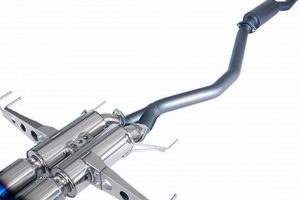
A specialized adhesive material designed for application to vehicle exhaust systems is used to seal leaks and repair damage. This product typically comprises heat-resistant fiberglass or ceramic fibers combined with a high-temperature adhesive. For instance, it can be applied to small cracks or holes in a car’s silencing component to temporarily restore its functionality.
The value of this repair solution lies in its ability to provide a cost-effective and immediate solution to exhaust system issues. Historically, such damage required component replacement, incurring significant expense and downtime. This tape offers a means of extending the life of exhaust components, reducing emissions and noise pollution in the short term, and postponing costly repairs.
The subsequent sections will elaborate on the application methods, types available, and the overall effectiveness of this practical solution for exhaust system maintenance.
Application Best Practices
Proper application is crucial to maximizing the effectiveness and longevity of a sealing solution for exhaust systems. Adhering to the following guidelines will yield optimal results.
Tip 1: Surface Preparation: Thoroughly clean the area surrounding the damage. Remove rust, grease, and any loose debris using a wire brush and solvent. A clean surface ensures proper adhesion.
Tip 2: Component Cooling: Allow the exhaust system to cool completely before application. Applying the tape to a hot surface will prematurely cure the adhesive and compromise its bonding strength.
Tip 3: Tape Overlap: Overlap each wrap of the repair material by at least 50%. This creates a secure, multi-layered seal and minimizes the risk of leaks.
Tip 4: Tension Application: Apply the tape with moderate tension. This helps conform the material to the contours of the exhaust system and further enhances adhesion.
Tip 5: Securing the Ends: Secure the ends of the tape with a metal clamp or wire. This prevents the edges from peeling and extends the lifespan of the repair.
Tip 6: Heat Curing: After application, allow the engine to idle for a short period to gradually cure the adhesive. Avoid sudden temperature changes that could weaken the bond.
Tip 7: Inspect Regularly: Routinely inspect the repair for any signs of damage or deterioration. Reapply or reinforce the repair as needed to maintain a secure seal.
By following these practices, the user can ensure a secure and durable repair. This translates to extended component lifespan and reduced noise/emission issues.
The following sections will examine the various types and selection criteria for appropriate repair material.
1. Heat Resistance
Heat resistance is a fundamental property governing the functionality and lifespan of exhaust repair tape. The exhaust system experiences extreme temperatures due to combustion gases; consequently, the tape must maintain its integrity at these temperatures to effectively seal leaks and prevent further component degradation. Inadequate heat resistance causes the adhesive to degrade, leading to detachment and compromising the seal, negating the repair’s purpose. For example, a tape rated for only 200C, when applied to an area experiencing 400C, will quickly fail.
The tape’s composition directly influences its heat resistance. Fiberglass and ceramic-based tapes are engineered to withstand significantly higher temperatures than standard tapes. Furthermore, the adhesive formulation is critical; high-temperature adhesives are specially designed to maintain their bond under thermal stress. The selection of a tape with appropriate heat resistance is thus paramount to achieving a durable and reliable exhaust system repair. A practical example would be selecting tape certified to withstand at least 50 degrees above the exhaust systems maximum operating temperature.
In conclusion, heat resistance constitutes an indispensable characteristic. Proper understanding and consideration of temperature profiles along the exhaust system are necessary to select a tape appropriate for the application. Failure to prioritize heat resistance leads to premature failure and ineffective repairs. Ensuring the correct material composition is crucial for extending the longevity and efficiency of any exhaust system repair.
2. Adhesive Strength
Adhesive strength is a critical factor determining the effectiveness and longevity of any repair performed with exhaust system repair tape. Its role extends beyond simple adherence; it dictates the tape’s ability to withstand the harsh conditions within an exhaust system, including high temperatures, vibrations, and exposure to corrosive elements.
- Surface Compatibility
The adhesive must effectively bond with the materials commonly found in exhaust systems, such as steel, stainless steel, and cast iron. Different adhesives exhibit varying degrees of compatibility, influencing the success of the repair. Incompatible adhesive may lead to peeling and overall degradation.
- Temperature Resistance
Exhaust systems reach extreme temperatures. The adhesive must retain its bonding properties at these levels to prevent failure. High-temperature adhesives are specifically formulated to withstand thermal degradation and maintain their grip.
- Shear Strength
Vibration and mechanical stresses subject the tape to shear forces. The adhesive’s shear strength determines its resistance to these forces and its ability to prevent slippage or tearing of the tape. Inadequate shear strength leads to compromised sealing.
- Environmental Resistance
The exhaust system is exposed to moisture, road salts, and other corrosive substances. The adhesive must resist degradation from these environmental factors to ensure a durable and long-lasting repair. Poor environment resistance leads to bond degradation and requires more frequent repair.
The adhesive characteristics significantly influence the functionality of the repair tape. Failure to account for material compatibility, temperature fluctuations, external pressure, and possible environmental impacts results in a substandard repair. The use of appropriate adhesive solutions will reduce further damage to the exhaust and ensure longevity.
3. Application Ease
Application ease is a critical attribute directly influencing the effectiveness of any repair using exhaust system tape. The tape’s design, material properties, and included accessories determine the complexity of the application process, which, in turn, affects the quality and durability of the resulting seal. For instance, a tape that is difficult to conform to complex exhaust system shapes or requires specialized tools will likely result in a less effective and shorter-lasting repair compared to one that is flexible and easily applied with common tools.
Several factors contribute to the ease of application. These include the tape’s flexibility, the tackiness of the adhesive, and the presence of features such as pre-cut lengths or backing paper that is easily removed. A highly flexible tape readily conforms to curved surfaces, facilitating a tighter seal. A sufficiently tacky adhesive ensures immediate adhesion and prevents slippage during the wrapping process. Well-designed packaging and clear instructions also improve the user experience. Consider a scenario where a vehicle owner attempts to repair a damaged exhaust pipe on the roadside. A tape with poor application characteristics will prove extremely challenging to use effectively in such conditions.
Ultimately, application ease significantly impacts the likelihood of a successful and long-lasting exhaust system repair. Manufacturers who prioritize this aspect of their product design enhance the probability that users, regardless of their experience level, can achieve a secure and effective seal. This leads to extended exhaust component lifespan and reduced noise and emission issues. Easy application will cause less defects in the product for consumers.
4. Durability
Durability, in the context of exhaust muffler tape, represents the material’s capacity to maintain its structural integrity and functional performance over an extended period, while exposed to the demanding operating conditions of a vehicle exhaust system. These conditions encompass extreme temperatures, constant vibrations, exposure to moisture and corrosive elements (such as road salt), and mechanical stress from impacts with road debris. The relationship between durability and the effectiveness of exhaust sealing is direct; a lack of durability inevitably leads to premature failure of the tape, resulting in renewed leaks, increased noise pollution, and a return to the original problem the tape was intended to solve.
The durability of exhaust muffler tape is determined by several factors, including the composition of the base material (e.g., fiberglass, ceramic fibers), the properties of the adhesive used, and the manufacturing processes employed. For example, a tape constructed from low-quality fiberglass with a weak adhesive will exhibit poor durability, rapidly degrading under heat and vibration. Conversely, a tape made from high-grade ceramic fibers and a high-temperature adhesive will demonstrate superior durability, effectively sealing leaks and withstanding the harsh conditions for a longer duration. Real-world examples showcase this effect; a budget-priced tape may last only a few weeks before failing, while a premium-grade tape could potentially maintain its integrity for several months or even a year under similar driving conditions.
Understanding the practical significance of durability is crucial for selecting the appropriate repair solution. While a cheaper tape may offer a short-term fix, the long-term cost can be higher due to frequent replacements and the potential for more extensive damage to the exhaust system. Investing in a more durable tape, even if it carries a higher initial cost, provides a more reliable and cost-effective solution over time. The challenges associated with assessing durability stem from the variability of operating conditions and the lack of standardized testing methods. However, examining the tape’s specifications, reading customer reviews, and considering the manufacturer’s reputation can offer valuable insights into its potential durability.
5. Material Composition
The performance and longevity of an exhaust muffler tape are fundamentally determined by its material composition. The materials selected directly influence the tape’s ability to withstand high temperatures, resist corrosion, maintain adhesive strength, and conform to the contours of the exhaust system. These properties collectively dictate the tape’s effectiveness in sealing leaks and suppressing noise. Inappropriate material selection invariably leads to premature failure, necessitating frequent replacements and potentially causing further damage to the exhaust system. For instance, a tape composed of materials with insufficient heat resistance will rapidly degrade under the extreme temperatures generated by the exhaust gases, losing its adhesive properties and compromising its ability to seal.
Common materials used in exhaust muffler tape include fiberglass, ceramic fibers, and various high-temperature adhesives. Fiberglass tapes offer a balance of cost-effectiveness and moderate heat resistance, suitable for standard applications. Ceramic fiber tapes provide superior heat resistance and are preferred for high-performance vehicles or areas of the exhaust system experiencing particularly high temperatures. The selection of an appropriate adhesive is equally critical. High-temperature adhesives, often formulated with silicone or epoxy resins, maintain their bonding strength under extreme thermal stress. The optimal material combination depends on the specific application requirements, considering factors such as operating temperature, exhaust gas composition, and expected service life. As an example, a repair near the exhaust manifold, which experiences the highest temperatures, necessitates a ceramic-based tape with a high-temperature silicone adhesive, while a repair further downstream may be adequately addressed with a fiberglass tape and a standard high-temperature adhesive.
Understanding the material composition of exhaust muffler tape is essential for informed decision-making. Consumers should carefully review product specifications and select tapes formulated with materials appropriate for the intended application. While seemingly minor, the choice of materials ultimately dictates the tape’s durability, performance, and overall value. Overlooking this aspect can result in repeated repairs and increased expenses. The lack of standardized testing methods for exhaust muffler tape durability presents a challenge, emphasizing the importance of relying on reputable brands and considering customer reviews to gauge real-world performance. Ultimately, the effectiveness of any exhaust system repair hinges on the proper selection of materials tailored to the specific demands of the application.
Frequently Asked Questions
This section addresses common inquiries regarding the use, limitations, and selection of exhaust muffler tape as a repair solution.
Question 1: Is exhaust muffler tape a permanent solution for exhaust leaks?
No, it provides a temporary repair. The tape extends the lifespan of the exhaust system but requires component replacement for a lasting solution.
Question 2: What temperature ratings should be considered when selecting repair tape?
The tape’s temperature rating must exceed the maximum operating temperature of the exhaust component being repaired. Consult vehicle specifications for temperature guidelines.
Question 3: Can repair tape be applied to any part of the exhaust system?
Application is limited to accessible and relatively smooth sections of the exhaust. Areas with severe corrosion or complex shapes may not be suitable.
Question 4: Does the tape affect vehicle performance or fuel efficiency?
If properly applied to seal leaks, it can improve performance by restoring proper exhaust flow. Neglecting such repairs can lead to suboptimal engine operation.
Question 5: What safety precautions must be taken during application?
Allow the exhaust system to cool completely. Wear gloves to protect skin from adhesive and fiberglass particles. Work in a well-ventilated area.
Question 6: How long does the average repair last?
Lifespan varies depending on material quality, application technique, and operating conditions. Expect a service life of several weeks to months under normal use.
Exhaust muffler tape offers a practical, interim solution for exhaust system repairs. Correct application and material selection are essential for optimizing repair effectiveness.
The succeeding sections will discuss alternative exhaust repair strategies and preventative measures.
Conclusion
This exploration of exhaust muffler tape has detailed its function as a temporary solution for exhaust system leaks, emphasizing the importance of proper material selection, application techniques, and understanding its inherent limitations. The effectiveness of exhaust muffler tape depends on considering factors such as heat resistance, adhesive strength, and the specific area of the exhaust system requiring repair.
While it serves as a readily available and cost-effective measure to address immediate exhaust issues, exhaust muffler tape is not a substitute for professional exhaust system repair or replacement. Ignoring underlying problems can result in increased vehicle emissions, reduced fuel efficiency, and potential safety hazards. Therefore, prioritize a comprehensive assessment of exhaust system integrity and seek professional advice to determine the appropriate course of action for long-term vehicle maintenance.