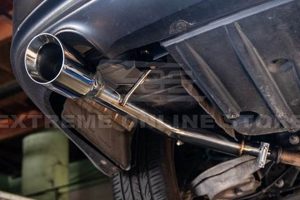
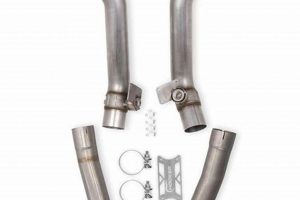
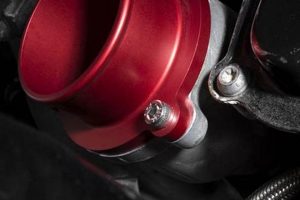
This aftermarket component replaces the factory-installed muffler located on the compressor outlet of the turbocharger in the sixth generation Golf GTI (Mk6). The original part is designed to reduce turbocharger noise, but can also create a restriction in airflow. Replacing it with a straight-through design aims to improve turbocharger response and potentially increase horsepower.
The modification is often pursued by automotive enthusiasts seeking enhanced engine performance. By streamlining airflow, this change can lead to quicker spool-up of the turbocharger, resulting in improved throttle response and reduced turbo lag. Historically, modifications of this nature have been popular as a relatively simple and cost-effective way to unlock additional performance from turbocharged engines. However, potential downsides, such as increased turbocharger noise and possible effects on vehicle emissions, should be considered.
The subsequent sections will delve into the specific advantages and disadvantages of this modification, installation considerations, and factors influencing its overall effectiveness.
Installation and Performance Tips for Optimized Results
Achieving optimal performance gains from a turbocharger modification requires careful consideration of several factors. The following tips offer guidance for successful implementation and maximizing its effectiveness.
Tip 1: Ensure Proper Fitment: Verify compatibility with the specific Mk6 GTI model year. Slight variations in engine configurations can affect fitment. A poorly fitting component can negate potential performance gains and even cause damage.
Tip 2: Consider Supporting Modifications: Optimal results are often achieved when this modification is paired with other performance enhancements. Upgrading the intake system or exhaust can further reduce airflow restrictions and maximize benefits.
Tip 3: Monitor Boost Levels: Following installation, closely monitor boost levels to ensure they remain within safe operating parameters. Uncontrolled boost increases can lead to engine damage. A boost gauge is a valuable tool for this purpose.
Tip 4: Be Aware of Increased Noise: This modification will likely result in a noticeable increase in turbocharger noise. This is a characteristic of the design change. Evaluate tolerance for increased noise levels prior to installation.
Tip 5: Consider Professional Installation: While some enthusiasts may opt for DIY installation, professional installation is recommended to ensure proper fitment and avoid potential complications. Certified mechanics possess the expertise to address unforeseen issues.
Tip 6: Check Local Regulations: Before modifying the vehicle, research and adhere to local regulations regarding vehicle modifications. Some regions may have restrictions on aftermarket parts that affect emissions or noise levels.
By carefully considering these recommendations, users can optimize the performance benefits while mitigating potential drawbacks, thereby ensuring a successful and satisfactory outcome.
The following section will provide a concluding summary, emphasizing key considerations for owners of the Mk6 GTI contemplating this modification.
1. Improved Turbo Response

Improved turbo response is a primary objective for individuals considering a turbo muffler delete for the Mk6 GTI. The modification aims to reduce restrictions in the turbocharger’s outlet path, facilitating quicker airflow and subsequently faster turbocharger spool-up.
- Reduced Backpressure and Quicker Spool
The factory muffler introduces backpressure, hindering the free flow of exhaust gases. By removing this obstruction, the turbocharger can spool up more rapidly, resulting in a more immediate throttle response and reduced lag. The benefit is especially noticeable during off-boost situations or when accelerating from lower engine speeds.
- Enhanced Low-End Torque
A faster-spooling turbocharger translates to increased low-end torque. The engine reaches its peak torque output sooner, providing a more responsive and engaging driving experience in everyday situations. This is beneficial in city driving and during overtaking maneuvers.
- Optimized Airflow Dynamics
The modified outlet promotes more efficient airflow dynamics, ensuring a smoother transition of compressed air into the intake system. This optimization contributes to increased volumetric efficiency, ultimately leading to improved engine performance across the rev range.
- Amplified Throttle Sensitivity
The responsiveness of the throttle pedal is amplified. Drivers experience a more direct connection between their input and the engine’s reaction, enhancing control and driving precision. This is a key consideration for performance-oriented drivers.
The interconnectedness of these facets underscores the significance of improved turbo response. While individual benefits are noteworthy, their cumulative effect provides a more responsive, powerful, and engaging driving experience within the Mk6 GTI platform. These factors are often weighed against potential drawbacks such as increased noise when deciding whether to implement the modification.
2. Increased Turbo Noise

The installation of a turbo muffler delete on a Mk6 GTI invariably results in a noticeable increase in turbocharger noise. This phenomenon is a direct consequence of removing the factory-installed muffler, which is designed to attenuate the characteristic sounds produced by the turbocharger’s operation. The deletion allows a more direct and unobstructed pathway for these sounds to propagate, amplifying their perceived volume and altering their tonal quality.
The sound profile often shifts from a subtle, muffled whine to a more pronounced whoosh or hiss, particularly during acceleration and deceleration. The extent of the increase varies depending on factors such as the specific aftermarket component used, ambient noise levels, and individual sensitivity to sound. Drivers accustomed to the relatively quiet operation of a stock Mk6 GTI may find the increased turbo noise distracting or even undesirable. Conversely, some automotive enthusiasts view the amplified sounds as a desirable characteristic, associating them with enhanced performance and a more visceral driving experience. Numerous online forums and video demonstrations showcase the auditory impact of this modification, providing prospective users with a realistic expectation of the resulting sound characteristics.
The augmented turbo noise serves as an important indicator of the modification’s presence and its effect on airflow dynamics. However, careful consideration should be given to the subjective acceptability of the altered sound profile before proceeding with the installation. The trade-off between potential performance gains and increased auditory intrusion represents a key factor in the decision-making process. Understanding this connection helps owners make informed choices that align with their performance goals and personal preferences.
3. Straight-Through Design

The essence of a turbo muffler delete for the Mk6 GTI lies in its straight-through design. This configuration directly replaces the OEM muffler, characterized by internal baffles and chambers intended to reduce turbocharger noise, with a streamlined component offering minimal resistance to airflow. The primary cause-and-effect relationship is that the elimination of internal obstructions enhances airflow velocity and reduces backpressure within the turbocharger’s discharge path.
The straight-through design is paramount to the turbo muffler delete’s intended function. Without it, the replacement part would merely replicate the restrictive characteristics of the original muffler, negating any potential performance gains. Consider, for instance, a poorly designed aftermarket component with internal welds that protrude into the airflow path; this would diminish the benefits of the delete, acting as a bottleneck despite the absence of a traditional muffler. Real-world dyno tests often demonstrate the efficacy of a well-designed straight-through unit compared to both the OEM part and poorly constructed aftermarket alternatives. The practical significance is that careful selection of a unit with a truly uninhibited internal path is crucial to realizing the performance benefits associated with this modification.
Understanding the importance of the straight-through design allows owners to make informed choices, differentiating between effective performance upgrades and cosmetic modifications. While challenges may arise in verifying the internal structure of a component before purchase, visual inspections and reviews from reputable sources can offer valuable insights. Ultimately, the success of a turbo muffler delete hinges on its ability to provide an unobstructed conduit for compressed air, linking directly to improvements in throttle response and potential power output. The overall goal is a smoother, more efficient system enhancing the vehicle’s performance.
4. Potential Power Gain

The aspiration for increased power output is a significant motivator behind the installation of a turbo muffler delete on a Mk6 GTI. While the magnitude of the gain varies depending on supporting modifications and testing methodologies, the potential for enhanced performance is a key consideration for enthusiasts.
- Reduced Backpressure and Exhaust Flow Efficiency
The factory turbo muffler is designed to reduce noise, but its internal baffling creates backpressure that restricts exhaust flow. A turbo muffler delete, with its straight-through design, minimizes this restriction. The result is improved exhaust flow efficiency, enabling the turbocharger to spool more freely. This enhanced efficiency translates to a potential increase in horsepower, particularly at higher engine speeds. Independent dyno testing often reveals modest but measurable gains in peak horsepower and torque following the installation of a turbo muffler delete.
- Optimized Turbocharger Spool-Up
A less restrictive exhaust pathway also contributes to quicker turbocharger spool-up. As the turbocharger reaches its optimal operating speed more rapidly, the engine produces more power across a broader range of engine speeds. This improvement in responsiveness is not always reflected in peak power figures alone but is noticeable in the overall driving experience. The engine feels more eager and responsive to throttle inputs.
- Synergistic Effect with Other Modifications
The potential power gain from a turbo muffler delete is often amplified when paired with other performance modifications. Upgrading the intake system, intercooler, or exhaust system can further reduce airflow restrictions and enhance the benefits of the turbo muffler delete. For instance, combining the turbo muffler delete with a high-flow downpipe can create a more significant increase in power output than either modification alone. These synergistic effects must be considered when evaluating the overall impact on vehicle performance.
- Variations in Testing Conditions and Measurement
Reported power gains from a turbo muffler delete can vary significantly depending on testing methodologies, environmental conditions, and the specific dynamometer used. Independent testing performed under controlled conditions provides the most reliable indication of the potential power gain. However, it’s important to recognize that these gains represent potential improvements under specific conditions, and real-world performance may vary based on driving style and environmental factors. A realistic expectation is crucial when assessing the value of this modification.
The connection between reduced backpressure, optimized spool-up, and synergistic modifications underscores the potential for power gains. While the specific power increase may be modest, the cumulative effect on engine responsiveness and overall performance is a compelling factor for Mk6 GTI owners seeking to enhance their driving experience. The value proposition lies in the combination of performance enhancement and auditory impact, aligning with the preferences of performance-oriented drivers.
5. Installation Complexity
The installation of a turbo muffler delete on a Mk6 GTI presents a spectrum of complexity influenced by factors such as mechanical aptitude, tool availability, and familiarity with the vehicle’s engine bay. The procedure typically involves disconnecting existing hoses and clamps connected to the factory muffler, removing the muffler itself, and then installing the aftermarket component in its place. While seemingly straightforward, challenges arise from the confined space within the engine bay, potential corrosion on existing fasteners, and the need to properly orient and secure the new component to prevent leaks or damage. The practical significance lies in the potential for complications that can extend the installation time and necessitate specialized tools or expertise.
The degree of complexity increases significantly for individuals lacking experience with automotive repair. Identifying the correct components, understanding torque specifications, and properly sealing connections are critical for a successful installation. Overtightening clamps can damage hoses, while undertightening can lead to boost leaks, diminishing performance gains and potentially causing engine damage. Real-world examples include stripped threads on fasteners, improperly seated couplers leading to boost leaks, and damage to surrounding components due to clumsy handling. Therefore, individuals without sufficient mechanical expertise should strongly consider professional installation.
In summary, the perceived simplicity of a turbo muffler delete installation belies a potential for complications that can arise from inadequate preparation, lack of experience, or unforeseen challenges. While mechanically inclined individuals may find the task manageable, those lacking experience should acknowledge the inherent complexity and seek professional assistance. This approach mitigates the risk of damage, ensures proper installation, and ultimately maximizes the performance benefits of the modification. The key takeaway is a realistic assessment of one’s abilities and a willingness to seek professional help when necessary.
6. Vehicle Compatibility
Vehicle compatibility is a paramount consideration when evaluating a turbo muffler delete for the Mk6 GTI. While the term “Mk6 GTI” implies a specific generation of the vehicle, subtle variations within that generation can affect the direct fitment of aftermarket components. Engine codes, model years, and regional market differences can lead to discrepancies in the turbocharger outlet design. Consequently, a component marketed as universally compatible with the Mk6 GTI may not seamlessly integrate with all sub-models. This mismatch can result in installation difficulties, compromised performance, or even damage to the vehicle. Therefore, careful verification of compatibility based on specific vehicle identification information is essential prior to purchase and installation.
For instance, an early Mk6 GTI produced in 2009 might have a slightly different outlet flange design compared to a late-production 2013 model. A real-world example is the variance observed in the diameter or bolt pattern of the turbocharger outlet. Installing an incompatible turbo muffler delete could necessitate modifications to the component or the vehicle itself, thereby negating the plug-and-play nature of the upgrade and potentially voiding warranties. Moreover, attempting to force-fit an incompatible component can damage the turbocharger or surrounding parts, leading to costly repairs. Compatibility charts provided by reputable aftermarket parts manufacturers are valuable tools for confirming proper fitment based on precise vehicle specifications. It is important to cross-reference these charts with the vehicle’s VIN (Vehicle Identification Number) to ensure accurate matching.
In summary, overlooking vehicle compatibility introduces significant risks when considering a turbo muffler delete for the Mk6 GTI. Ensuring a precise fitment is crucial for realizing the intended performance benefits while avoiding potential damage or complications. By meticulously verifying compatibility through reliable sources and cross-referencing vehicle-specific information, owners can make informed decisions and ensure a successful and trouble-free installation. The emphasis on accurate matching underscores the importance of detailed research and informed decision-making within the context of aftermarket modifications.
Frequently Asked Questions
This section addresses common inquiries regarding the installation and implications of a turbo muffler delete on a Mk6 GTI. The information provided is intended to offer clarity and guidance to prospective users.
Question 1: Does a turbo muffler delete increase horsepower on a Mk6 GTI?
A turbo muffler delete can contribute to a modest increase in horsepower. The primary mechanism involves reducing backpressure, which allows the turbocharger to spool more efficiently. Gains are typically observed at higher RPMs and are more pronounced when combined with other performance modifications, such as an upgraded intake or exhaust system. Individual results may vary based on testing methodologies and specific vehicle configurations.
Question 2: Will a turbo muffler delete void my Mk6 GTI’s warranty?
The installation of a turbo muffler delete may potentially affect the vehicle’s warranty. The Magnuson-Moss Warranty Act protects consumers; however, if the aftermarket part is determined to be the direct cause of a failure, the manufacturer may deny warranty coverage for the affected component. Consultation with a qualified legal professional regarding warranty implications is advisable prior to installation.
Question 3: Is a tune required after installing a turbo muffler delete on a Mk6 GTI?
A tune is not strictly required after installing a turbo muffler delete. The engine control unit (ECU) should be able to adapt to the minor changes in airflow. However, a custom ECU tune can optimize performance to fully realize the potential benefits of the modification. This may involve adjusting boost levels, fuel delivery, and timing parameters.
Question 4: What is the expected lifespan of a turbo muffler delete on a Mk6 GTI?
The expected lifespan of a turbo muffler delete depends primarily on the quality of the component and the environmental conditions to which it is exposed. A well-constructed unit made from durable materials, such as aluminum or stainless steel, should last the lifetime of the vehicle under normal operating conditions. Corrosion and physical damage are the primary factors that can reduce lifespan.
Question 5: Does a turbo muffler delete affect emissions on a Mk6 GTI?
A turbo muffler delete may have a minor impact on emissions. The part is located after the catalytic converter, so emissions are not largely affected. The removal of an OEM part means the vehicle is no longer stock and this can create issues for legal requirements. Some vehicles may exhibit slight changes in fuel economy due to the altered airflow dynamics, this depends entirely on other aftermarket part added or not.
Question 6: What tools are required for a turbo muffler delete installation on a Mk6 GTI?
The tools needed for installation typically include a socket set, wrenches, screwdrivers, pliers, and possibly a hose clamp removal tool. Access to a vehicle lift or jack stands can greatly facilitate the installation process. A torque wrench is also highly recommended to ensure that fasteners are tightened to the correct specifications. Review of the vehicle’s service manual is encouraged to become well-informed.
The key takeaways from these FAQs are to carefully assess the potential performance benefits, warranty implications, and installation complexity before proceeding with a turbo muffler delete on a Mk6 GTI. Informed decision-making is crucial for achieving a satisfactory outcome.
The subsequent section offers a concluding summary, highlighting the primary considerations for owners contemplating this modification.
Turbo Muffler Delete Mk6 GTI
This exploration of the turbo muffler delete for the Mk6 GTI has elucidated key aspects of this modification. Factors encompassing performance enhancement, potential drawbacks, installation intricacies, and vehicle compatibility are critical to informed decision-making. The modification’s impact on turbocharger response, noise levels, and potential power gains has been carefully examined. It has been established that this is not a universally beneficial upgrade, and its suitability depends on individual priorities and expectations.
Ultimately, the decision to implement a turbo muffler delete on a Mk6 GTI rests with the owner. A thorough evaluation of the information presented, coupled with a realistic assessment of one’s mechanical capabilities and tolerance for increased turbocharger noise, is essential. Thoughtful consideration will ensure a successful outcome, aligning with individual performance goals and driving preferences. Furthermore, adherence to local regulations and a commitment to responsible vehicle modification are paramount.