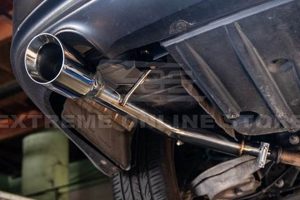
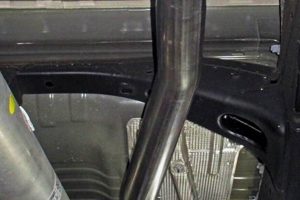
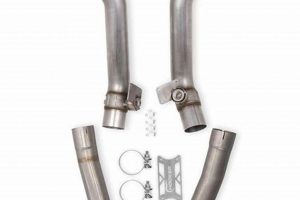
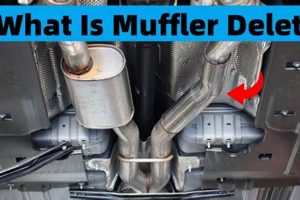
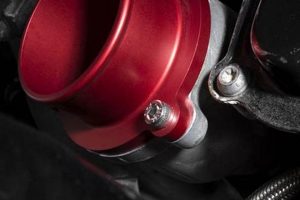
The process in question involves the removal of the factory-installed mufflers from a Chevrolet Corvette C7. This modification alters the vehicle’s exhaust system, directly impacting the sound characteristics and potentially influencing performance metrics. For example, a typical outcome is a louder, more aggressive exhaust note.
The impetus behind this modification often stems from a desire to enhance the auditory experience associated with the vehicle’s operation. Beyond the aural element, proponents suggest potential improvements in exhaust flow, which could translate to marginal gains in horsepower and torque. Historically, modifications to exhaust systems have been a common practice among automotive enthusiasts seeking to personalize and optimize their vehicles.
The subsequent discussion will delve into specific aspects of this procedure, including potential performance implications, considerations regarding legality and warranty, and alternative exhaust system modifications available for the Chevrolet Corvette C7.
C7 Muffler Delete
Implementing an exhaust modification necessitates careful planning and execution to ensure optimal results and minimize potential drawbacks. The following tips offer guidance on critical aspects of the process.
Tip 1: Research Local Regulations: Before undertaking any modifications, investigate applicable noise regulations within the operating jurisdiction. Excessive exhaust noise may result in fines or require remediation to comply with legal standards. Consult local law enforcement or transportation authorities for clarification.
Tip 2: Evaluate Potential Performance Impacts: While a performance increase is often cited as a benefit, the actual gain may be minimal or even detrimental without corresponding modifications to the engine’s tuning. Consider dyno testing before and after the procedure to quantify any performance changes accurately.
Tip 3: Assess Warranty Implications: Modifying the exhaust system may void or limit the vehicle’s factory warranty coverage, particularly regarding related components. Contact the dealership or review the warranty documentation to understand the potential ramifications.
Tip 4: Consider Sound Level and Resonance: The removal of mufflers will significantly increase the exhaust volume and may introduce undesirable resonance within the vehicle’s cabin. Evaluate whether the increased noise level is acceptable for daily driving conditions.
Tip 5: Explore Alternative Exhaust Options: Rather than a complete muffler elimination, consider aftermarket exhaust systems that offer a balance of performance enhancement and noise control. These systems are often engineered to provide optimal flow characteristics while maintaining acceptable sound levels.
Tip 6: Professional Installation is Recommended: This modification often involves cutting and welding exhaust components. Unless proficient in these skills, engaging a qualified exhaust technician is advisable to ensure proper fitment and prevent leaks. Improper installation can lead to exhaust leaks, reduced performance, and potentially dangerous fumes entering the cabin.
Tip 7: Evaluate Resonator Effects: The C7 Corvette utilizes resonators in addition to mufflers. Eliminating only the mufflers may alter the exhaust tone in an unexpected or undesirable way. Consider the impact on the overall exhaust sound profile.
Careful attention to these considerations will facilitate a more informed decision and a potentially more satisfactory outcome. Addressing these concerns proactively can prevent unexpected complications and ensure the modified exhaust system meets both personal preferences and practical requirements.
The subsequent sections will explore specific products related to exhaust modification for the Chevrolet Corvette C7.
1. Sound Amplification

Sound amplification is a primary consequence of removing the factory mufflers from a Chevrolet Corvette C7. This modification directly alters the exhaust system’s ability to attenuate noise, resulting in a significant increase in decibel levels and a change in the character of the exhaust note.
- Increased Decibel Levels
The elimination of mufflers removes a key component designed to reduce exhaust noise. This inevitably leads to higher decibel levels, particularly during acceleration and high-RPM operation. This increase can be quantified using sound level meters, and often results in levels exceeding legal limits in certain jurisdictions. Examples include reaching 95-100 dB at wide-open throttle, potentially violating noise ordinances in residential areas or regulated tracks.
- Change in Exhaust Tone
Mufflers are designed to shape the exhaust note, often attenuating specific frequencies to produce a smoother, less aggressive sound. Removing them typically results in a raw, raspier, and more aggressive exhaust tone. This can manifest as increased popping and crackling during deceleration, a deeper rumble at idle, and a more pronounced roar during acceleration. This alteration may be desirable to some enthusiasts but may also introduce unwanted drone at cruising speeds.
- Resonance and Drone Effects
Without the dampening effect of mufflers, certain frequencies can be amplified, leading to increased resonance inside the vehicle’s cabin, particularly at specific engine speeds. This phenomenon, known as drone, can be fatiguing and uncomfortable during extended drives. The intensity and frequency of drone are influenced by the vehicle’s exhaust system design and the absence of mufflers allows these frequencies to be more pronounced.
- Potential for Attracting Attention
The significant increase in exhaust noise associated with this removal can attract unwanted attention from law enforcement, particularly in areas with strict noise regulations. The heightened sound levels may also be disruptive in residential neighborhoods, potentially leading to complaints. Consequently, while the modification may enhance the auditory experience for the driver, it also carries the risk of negative interactions with authorities and neighbors.
These facets of sound amplification demonstrate the complex effects of modifying the exhaust system. While some individuals seek increased volume and a more aggressive tone, it is crucial to understand the potential consequences, including legal ramifications, in-cabin discomfort, and potential disruptions to the surrounding environment. Carefully considering these factors is essential before proceeding with this modification to ensure the desired outcome aligns with practical considerations and personal preferences.
2. Performance Alteration

Performance alteration is frequently cited as a motivation for removing the factory mufflers from a Chevrolet Corvette C7. However, the tangible performance impact of this modification warrants careful scrutiny. While potential gains exist, they are often less significant than perceived and can be influenced by various factors.
- Exhaust Flow Optimization
The primary argument for performance gains centers on the premise that eliminating mufflers reduces backpressure in the exhaust system, thereby improving exhaust flow. Theoretically, this enhanced flow allows the engine to breathe more efficiently, potentially increasing horsepower and torque. However, the factory exhaust system on the C7 Corvette is already relatively efficient, and the reduction in backpressure achieved by removing the mufflers may not translate into substantial gains. Measurements obtained from dynamometer testing typically show minimal improvements, often within the margin of error.
- Impact on Torque Curve
While horsepower figures may show a marginal increase, the effect on the engine’s torque curve is equally important. Removing mufflers can sometimes shift the torque curve, potentially reducing low-end torque in favor of slightly higher peak horsepower at high RPMs. This trade-off may not be desirable for daily driving, where low-end torque is more frequently utilized. Without proper tuning or further modifications to the exhaust system design, the overall drivability of the vehicle could be negatively impacted.
- Engine Tuning Considerations
To fully realize any potential performance gains from exhaust modifications, it is often necessary to retune the engine’s computer. The engine control unit (ECU) manages fuel delivery, ignition timing, and other parameters based on the factory exhaust system. Removing the mufflers alters the exhaust dynamics, potentially leading to a suboptimal air-fuel ratio. A custom tune can optimize these parameters to take advantage of the improved exhaust flow, maximizing any potential horsepower and torque increases. Neglecting to tune the engine after modification may limit or negate any performance benefits.
- Potential for Performance Degradation
In some instances, removing the mufflers can actually decrease performance, particularly if it disrupts the carefully engineered balance of the exhaust system. Excessive reduction in backpressure can negatively impact cylinder scavenging, the process of removing exhaust gases from the cylinders. This can lead to a decrease in volumetric efficiency and a corresponding reduction in power output. Therefore, it is crucial to understand the potential for negative consequences before undertaking this modification.
The potential performance alteration resulting from this deletion is complex. While some enthusiasts may perceive a subjective improvement in throttle response or engine sound, objective measurements often reveal only marginal gains. Furthermore, the overall impact on performance depends heavily on factors such as engine tuning and the overall exhaust system design. Those seeking significant performance enhancements from this modification should carefully consider the potential trade-offs and consult with experienced automotive technicians.
3. Legality Review

A legality review is a crucial step when considering the removal of factory mufflers from a Chevrolet Corvette C7. This assessment determines compliance with applicable laws and regulations governing vehicle noise emissions, ensuring the modification does not result in legal penalties or the inability to operate the vehicle on public roads.
- Noise Ordinances
Local and state ordinances often specify maximum permissible noise levels for vehicles. Exceeding these limits, particularly in residential areas or during specific hours, can result in fines. The deletion of mufflers typically increases exhaust noise significantly, potentially violating these ordinances. Enforcement can range from warnings to substantial fines, and may require the vehicle to be returned to compliance before further operation is permitted. Actual decibel level restrictions vary widely by location.
- Vehicle Inspection Standards
Many jurisdictions require periodic vehicle inspections, including checks for proper exhaust system components and noise levels. Removing mufflers may cause a vehicle to fail inspection, preventing registration renewal. Some states mandate that all vehicles meet original equipment manufacturer (OEM) standards, making the removal of any emissions-related component, including mufflers, a violation. Therefore, it is crucial to ascertain if exhaust system integrity is part of the inspection criteria.
- Federal Regulations
While the Environmental Protection Agency (EPA) regulates new vehicle emissions, enforcement regarding modifications to existing vehicles often falls to state and local authorities. However, tampering with emissions control devices, including mufflers, may be a violation of federal law if it significantly impacts emissions output. Though primarily targeted at manufacturers and dealers, individuals making substantial modifications could potentially be subject to scrutiny if the alterations result in excessive pollution.
- Track Day Regulations
Even when operating a vehicle on a closed course or racetrack, noise restrictions are often in place. Many tracks impose decibel limits to protect nearby communities from excessive noise pollution. Removing mufflers may cause a vehicle to exceed these limits, preventing participation in track events. It is essential to review the track’s specific noise regulations before making exhaust modifications to ensure compliance.
The necessity of a legality review cannot be overstated. Non-compliance with noise regulations can result in financial penalties, vehicle impoundment, and the inability to participate in motorsports events. Before proceeding with the removal, thorough investigation of all applicable laws and regulations is essential to mitigate potential legal consequences and ensure responsible vehicle operation.
4. Resonance Management
Resonance management becomes a critical consideration following the removal of factory mufflers from a Chevrolet Corvette C7. The absence of these mufflers significantly alters the characteristics of the exhaust system, often resulting in increased levels of unwanted resonance within the vehicle’s cabin.
- Frequency Amplification
The factory mufflers are engineered to dampen specific frequencies within the exhaust stream, mitigating the transmission of these frequencies into the passenger compartment. Upon muffler removal, these frequencies become amplified, potentially leading to noticeable drone at certain engine speeds. The specific frequencies amplified depend on the overall exhaust system design and the engine’s operating parameters.
- Cabin Drone
Cabin drone, characterized by a low-frequency humming or booming sound, is a common complaint following exhaust modifications. This phenomenon occurs when the amplified exhaust frequencies resonate with the vehicle’s body panels or interior components. The intensity of the drone can vary depending on the vehicle speed, engine load, and the materials used in the cabin’s construction. Prolonged exposure to cabin drone can cause driver fatigue and passenger discomfort.
- Resonator Integration
To mitigate the effects of increased resonance, aftermarket resonators can be integrated into the exhaust system. Resonators are designed to cancel out specific frequencies, effectively reducing the amplitude of unwanted sounds. The selection and placement of resonators are crucial for achieving optimal resonance management. Incorrectly sized or positioned resonators can exacerbate the problem.
- Material Damping
Additional techniques for resonance management include the application of sound-deadening materials to the vehicle’s floor, firewall, and other interior surfaces. These materials absorb vibrations and reduce the transmission of sound into the cabin. Material damping can be employed as a standalone solution or in conjunction with resonators to further minimize the effects of resonance.
Effective resonance management is essential for maintaining a comfortable and enjoyable driving experience after modifying the exhaust system. Careful consideration of frequency amplification, cabin drone, resonator integration, and material damping is crucial for achieving optimal results and minimizing unwanted noise within the vehicle.
5. Warranty Impact
The removal of factory mufflers from a Chevrolet Corvette C7, commonly referred to as “c7 muffler delete,” directly influences the vehicle’s warranty coverage. This modification, while potentially enhancing exhaust sound or marginally improving performance, introduces the risk of voiding or limiting the factory warranty, particularly concerning components related to the exhaust system or engine. The cause-and-effect relationship is straightforward: altering the OEM configuration can provide grounds for the manufacturer to deny warranty claims if the failure is deemed to be a consequence of the modification.
The importance of understanding the warranty impact stems from the potential financial burden associated with repairs if a failure occurs. For instance, if the engine experiences issues related to exhaust backpressure changes following the muffler deletion, the manufacturer may refuse to cover the repair costs, placing the financial responsibility on the vehicle owner. This highlights the practical significance of carefully evaluating the risk-reward ratio before undertaking this modification. Real-life examples abound, where owners have faced denied warranty claims after modifications were linked to subsequent mechanical issues. Furthermore, depending on the terms and conditions of the specific warranty, even seemingly unrelated components could be affected if the dealership or manufacturer argues that the modification contributed to the overall strain or stress on the vehicle.
In summary, the warranty impact is a critical component of any decision to perform a “c7 muffler delete.” It necessitates a thorough understanding of the vehicle’s warranty terms, consultation with the dealership to ascertain potential consequences, and an acceptance of the financial risk associated with denied warranty claims. Mitigating this risk may involve exploring aftermarket warranties that cover modified vehicles, but this option often entails higher premiums and specific limitations. Ultimately, informed decision-making requires weighing the desired benefits of the modification against the potential implications for the vehicle’s warranty coverage.
6. Installation Quality

Installation quality exerts a pivotal influence on the outcome of a c7 muffler delete, extending beyond mere aesthetic considerations to directly affect performance, safety, and longevity of the modification. Proper execution is essential to prevent complications and realize the intended benefits.
- Welding Integrity
A c7 muffler delete often necessitates welding to connect replacement pipes or components. Poor welding can lead to exhaust leaks, resulting in reduced performance, increased noise, and potential exposure to harmful exhaust gases. Example: Inadequate weld penetration can create weak points prone to cracking under thermal stress, requiring costly repairs. A professional welder with experience in exhaust systems is crucial for ensuring structural integrity.
- Alignment and Fitment
Precise alignment and fitment are paramount to prevent stress on the exhaust system and surrounding components. Misaligned pipes can cause vibrations, premature wear, and potential damage to exhaust hangers or adjacent parts. Example: Improper fitment could cause the exhaust system to contact the vehicle’s frame, leading to rattles and potential heat damage. Meticulous attention to detail and the use of appropriate tools are necessary for achieving correct alignment.
- Leak Prevention
Exhaust leaks compromise performance and pose safety hazards. Leaks diminish exhaust scavenging efficiency, reduce horsepower, and can allow carbon monoxide to enter the vehicle’s cabin. Example: Insufficient sealing between connecting pipes or manifolds can lead to detectable hissing noises and a reduction in fuel economy. The use of quality gaskets, sealants, and proper tightening procedures is essential for preventing leaks.
- Hanger Support
Proper support of the modified exhaust system is crucial to prevent excessive stress on the pipes and welds. Inadequate hanger support can lead to cracking, sagging, and eventual failure of the exhaust system. Example: Failure to adequately support the exhaust system can cause it to droop, potentially contacting speed bumps or other road hazards. Proper placement and reinforcement of exhaust hangers are necessary for ensuring long-term durability.
These elements underscore the significance of prioritizing installation quality during a c7 muffler delete. Compromising on installation standards can negate potential benefits and introduce significant risks. Engaging qualified professionals with experience in exhaust system modifications is recommended to ensure a safe, reliable, and performant outcome.
Frequently Asked Questions
This section addresses common inquiries regarding the removal of factory mufflers, or c7 muffler delete, from a Chevrolet Corvette C7. The information is intended to provide factual guidance and address potential misconceptions.
Question 1: What specific performance gains can be expected from a c7 muffler delete?
Observed performance gains are often minimal, typically ranging from 5-10 horsepower. These gains are generally at higher RPMs and may not be noticeable during typical driving conditions. Dyno testing before and after the modification is recommended to quantify any actual performance changes.
Question 2: Will a c7 muffler delete automatically void the vehicle’s warranty?
The modification may void portions of the vehicle’s warranty, particularly those related to the exhaust system or engine. However, the Magnuson-Moss Warranty Act protects consumers; the manufacturer must prove that the modification directly caused the failure to deny a warranty claim. Consult with the dealership regarding warranty implications.
Question 3: What are the potential legal ramifications of a c7 muffler delete?
Exceeding local noise ordinances can result in fines and citations. Vehicles may also fail state-mandated inspections if the exhaust system no longer meets noise level requirements. Research local laws regarding vehicle noise emissions before proceeding with the modification.
Question 4: How does a c7 muffler delete affect exhaust drone inside the vehicle?
The absence of mufflers often increases exhaust drone, particularly at cruising speeds. This can be mitigated by adding aftermarket resonators or sound-deadening materials to the vehicle’s interior.
Question 5: Is professional installation required for a c7 muffler delete?
Professional installation is strongly recommended. Improper welding or fitment can lead to exhaust leaks, reduced performance, and potential safety hazards. Engaging a qualified exhaust technician is crucial for ensuring proper execution.
Question 6: What alternatives exist to a complete c7 muffler delete for enhancing exhaust sound?
Options include aftermarket exhaust systems that offer a balance of performance and sound control, or axle-back exhaust systems that replace the mufflers with less restrictive components while maintaining some degree of sound attenuation. Electronic exhaust cutouts also provide adjustable sound levels.
In summary, the decision to proceed with a c7 muffler delete involves careful consideration of potential performance gains, warranty implications, legal ramifications, and the impact on in-cabin noise levels. Informed decision-making requires a thorough understanding of these factors.
The subsequent section will explore common products associated with modifications.
C7 Muffler Delete
The preceding analysis has dissected the multifaceted implications of a c7 muffler delete. Examination has extended across performance effects, legal considerations, potential warranty compromises, sound management strategies, and the critical role of installation quality. Each element contributes to a comprehensive understanding of the modification’s ramifications.
The decision to proceed with a c7 muffler delete requires careful deliberation. The consequences, extending from potential legal repercussions to the nuanced alterations in driving experience, demand a calculated approach. Ultimately, the responsible enthusiast will prioritize thorough research and professional guidance to ensure a modification that aligns with both personal preferences and practical constraints, recognizing the long-term implications for vehicle integrity and regulatory compliance.