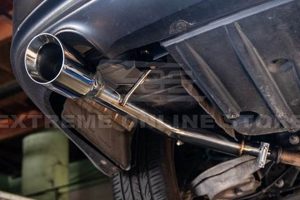
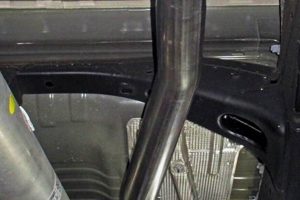
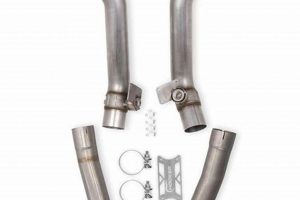
The removal of the exhaust mufflers from a fourth-generation Chevrolet Corvette (C4) is a modification that alters the vehicle’s exhaust system. This process effectively bypasses the mufflers, allowing exhaust gases to exit the engine with less restriction. As an example, a vehicle owner might undertake this modification to achieve a louder exhaust note.
The appeal of this modification lies primarily in the change to the vehicle’s sound profile, often resulting in a more aggressive and pronounced exhaust tone. Historically, such modifications have been popular among automotive enthusiasts seeking to enhance the auditory experience of their vehicle and potentially improve exhaust flow, although the performance gains are often minimal on a stock engine. This practice is often considered an easy way to make an older vehicle like the C4 sound better without significant financial investment.
The following sections will explore the potential effects of this modification on performance, legality, and overall driving experience, while also addressing common considerations for those contemplating this alteration.
Tips for C4 Corvette Exhaust Modification
Considerations for modifying a C4 Corvette’s exhaust system by bypassing the mufflers require careful evaluation to ensure optimal results and legal compliance.
Tip 1: Research Local Regulations: Prior to any modifications, verify local noise ordinances and emission standards. The elimination of mufflers can result in non-compliance, potentially leading to fines or required remediation.
Tip 2: Evaluate Potential Performance Impact: While a louder exhaust note is a primary objective, the impact on engine performance should be considered. On a stock C4 engine, performance gains from merely deleting the mufflers are typically minimal and potentially negligible.
Tip 3: Consider Alternative Exhaust System Components: Instead of a simple muffler bypass, investigate complete cat-back exhaust systems designed specifically for the C4 Corvette. These systems are engineered for optimal performance and sound without exceeding acceptable noise levels.
Tip 4: Address Potential Drone: Muffler removal can introduce exhaust drone, a low-frequency resonance that can be intrusive and fatiguing during highway driving. Consider installing resonators or other noise-dampening components to mitigate this effect.
Tip 5: Prioritize Welding Quality: When fabricating a custom bypass, ensure that all welds are performed by a qualified professional. Substandard welding can result in leaks, compromising performance and creating undesirable exhaust noises.
Tip 6: Account for Ground Clearance: Modifying the exhaust system can alter its routing and ground clearance. Take precautions to ensure adequate clearance to prevent damage to the exhaust system from road hazards or speed bumps.
Careful planning and execution are critical when modifying a C4 Corvette’s exhaust system. By prioritizing regulatory compliance, performance considerations, and quality workmanship, it is possible to achieve the desired sound profile without compromising the vehicle’s functionality or legality.
The subsequent sections will delve into the broader ramifications of these modifications, including their potential impact on the vehicle’s value and long-term reliability.
1. Acoustic alteration

The correlation between a “corvette c4 muffler delete” and acoustic alteration is direct and significant. The muffler, by design, attenuates sound waves generated by the engine’s combustion process. Its removal eliminates this sound dampening, resulting in a pronounced increase in exhaust volume and a shift in tonal quality. The resulting sound profile is typically characterized by a deeper, more resonant exhaust note, often perceived as more aggressive or performance-oriented. This change in sound is the primary motivator for many who choose to undertake this modification.
The importance of acoustic alteration as a component of the “corvette c4 muffler delete” lies in its subjective appeal. Automotive enthusiasts often seek to enhance the auditory experience of their vehicles, and a modified exhaust note is a common method of achieving this. For instance, a C4 Corvette owner might aim to evoke the sound of classic muscle cars or racing vehicles. However, the acoustic alteration also presents potential drawbacks. The increased exhaust volume can lead to noise pollution and potential violations of local noise ordinances. Moreover, the altered sound profile might not be universally appreciated, as some may find the louder exhaust to be excessive or intrusive, especially during extended periods of driving.
In summary, the “corvette c4 muffler delete” unequivocally results in a substantial acoustic alteration, altering the sound characteristics of the exhaust system. This alteration serves as both the modification’s primary attraction and its primary challenge, necessitating a careful consideration of its potential benefits and drawbacks. Understanding the acoustic consequences of the modification is crucial for informed decision-making and responsible vehicle operation.
2. Performance Impact

The relationship between modifying the exhaust system of a C4 Corvette, specifically through the removal of mufflers, and its resultant impact on engine performance is a complex topic often debated among automotive enthusiasts. While a louder exhaust note is a readily apparent outcome, the actual gains or losses in power and efficiency require a more nuanced examination.
- Exhaust Flow Dynamics
Removing mufflers can theoretically reduce backpressure within the exhaust system, potentially allowing exhaust gases to exit the engine more freely. In a naturally aspirated engine, however, excessive reduction in backpressure can negatively impact cylinder scavenging, the process of clearing spent gases from the combustion chamber. This can lead to a decrease in low-end torque, as the engine relies on a certain amount of backpressure to optimize cylinder filling. Conversely, in turbocharged or supercharged engines, the benefits of reduced backpressure are often more pronounced, as these engines actively force air into the cylinders and are less reliant on scavenging.
- Engine Management System (EMS) Calibration
Modern vehicles often employ sophisticated engine management systems that monitor and adjust various engine parameters based on real-time sensor data. The removal of mufflers may alter exhaust gas composition and flow characteristics, potentially affecting the readings of sensors such as oxygen sensors. If the EMS is unable to compensate for these changes, it could lead to suboptimal fuel-air mixtures, reduced engine efficiency, and even potential damage to the catalytic converters. Proper tuning or recalibration of the EMS may be necessary to realize any potential performance gains from the modification.
- Resonance and Scavenging Effects
The design of an exhaust system, including the length and diameter of its various components, can create resonance effects that aid in cylinder scavenging at specific engine speeds. Removing mufflers can disrupt these carefully engineered resonance patterns, potentially leading to decreased performance within certain RPM ranges. A well-designed exhaust system aims to optimize scavenging across the entire engine’s operating range, not just at peak horsepower.
- Subjective vs. Objective Performance
The perceived increase in performance following a muffler delete is often attributable to the louder and more aggressive exhaust note, which can create a subjective impression of enhanced power. However, dyno testing is necessary to accurately quantify any actual gains or losses in horsepower and torque. In many cases, the objective performance improvements are minimal or even negative, despite the subjective perception of increased power.
In conclusion, while a “corvette c4 muffler delete” may offer a perceived improvement in performance due to the altered exhaust sound, the actual impact on horsepower and torque is often minimal or even detrimental, particularly on a stock engine. Careful consideration of exhaust flow dynamics, EMS calibration, resonance effects, and objective dyno testing is crucial in accurately assessing the performance impact of such a modification. The interplay between these factors demonstrates that simply removing mufflers does not guarantee a performance enhancement.
3. Legality concerns
The “corvette c4 muffler delete” is directly linked to various legality concerns stemming from noise regulations and emissions standards. The removal of mufflers, designed to attenuate exhaust noise, often results in sound levels exceeding permissible limits set by local, state, or federal authorities. These regulations, often codified in noise ordinances, aim to maintain public peace and prevent excessive noise pollution. Violating such ordinances can lead to fines, citations, or even requirements to restore the vehicle to its original, compliant configuration. For instance, many municipalities have decibel limits for vehicle exhaust, and a vehicle with a muffler delete is highly likely to surpass these limits during normal operation. The importance of understanding these “Legality concerns” is paramount, as ignorance of these laws does not excuse non-compliance. The primary cause is the direct relationship between muffler removal and amplified exhaust noise.
Further complicating matters are emission standards, although the direct impact of a muffler delete on emissions is often less pronounced than its effect on noise levels. Mufflers themselves are not typically catalytic converters or other emissions control devices. However, some jurisdictions have laws prohibiting any modification to a vehicle’s exhaust system that alters its original configuration, regardless of whether it directly affects emissions. Moreover, excessively loud exhaust systems can attract unwanted attention from law enforcement, potentially leading to closer scrutiny of other vehicle components and potential violations of other regulations. As a practical example, a vehicle owner in California with a “corvette c4 muffler delete” could face difficulties passing smog inspections, even if the vehicle’s emissions levels are technically within acceptable limits, simply due to the obvious modification.
In conclusion, the “corvette c4 muffler delete” is inextricably linked to “Legality concerns” related to noise ordinances and exhaust modification regulations. Understanding these legal implications is critical for vehicle owners contemplating such a modification, as the potential consequences range from fines and citations to the inconvenience of restoring the vehicle to its original state. Due diligence in researching and adhering to local laws is essential for responsible vehicle ownership and avoiding legal repercussions.
4. Drone introduction
The removal of mufflers, a “corvette c4 muffler delete,” is frequently associated with the introduction of exhaust drone, a low-frequency resonance within the vehicle’s cabin. This phenomenon arises because mufflers are specifically designed to attenuate certain frequencies of sound generated by the engine. Their absence allows these frequencies, often in the range of 100-250 Hz, to propagate freely through the exhaust system and resonate within the vehicle’s body. This resonance is perceived as a droning or booming sound, particularly noticeable at cruising speeds, which can lead to driver fatigue and passenger discomfort. The prominence of “Drone introduction” as a component of “corvette c4 muffler delete” stems directly from the function of the removed component. The mufflers core purpose is sound deadening, and its deletion will cause the drone that it prevents. For example, a C4 Corvette traveling at a constant speed of 70 mph in fifth gear might exhibit a persistent low-frequency hum that was not present with the stock exhaust system.
Understanding the factors that contribute to drone is critical for mitigating its effects. Exhaust system design, vehicle body acoustics, and engine operating conditions all play a role in determining the intensity and frequency of drone. Simply welding straight pipes in place of the mufflers often exacerbates the issue. Some aftermarket exhaust systems address drone by incorporating resonators, which are designed to cancel out specific frequencies. The placement and tuning of these resonators are crucial for effectively reducing drone without significantly impacting exhaust flow. Furthermore, sound-deadening materials applied to the vehicle’s interior, particularly in the floorboards and trunk, can help dampen the resonance and reduce the perceived loudness of the drone. For example, products like Dynamat can be strategically installed to absorb vibrations and reduce the transmission of sound into the cabin.
In conclusion, “Drone introduction” is a common and often undesirable consequence of the “corvette c4 muffler delete.” While the modified exhaust note may be appealing to some, the resulting drone can detract from the overall driving experience. Mitigation strategies, such as the use of resonators and sound-deadening materials, can help minimize the impact of drone. However, the most effective solution often involves carefully considering the entire exhaust system design and selecting components that are engineered to minimize unwanted resonance. The challenge lies in striking a balance between achieving the desired exhaust note and maintaining a comfortable and enjoyable driving environment.
5. Resale value

The impact of modifying a C4 Corvette’s exhaust system through the removal of mufflers, a procedure defined as “corvette c4 muffler delete,” on the vehicle’s subsequent resale value is a significant consideration. This modification, while potentially enhancing the auditory experience for some, can have demonstrable effects on a vehicle’s appeal to prospective buyers and, consequently, its market value.
- Originality and Collector Status
C4 Corvettes, particularly those in well-preserved condition, are increasingly viewed as collectible vehicles. Modifications that deviate from the original factory configuration, such as the removal of mufflers, can diminish their appeal to collectors who prioritize originality. A modified exhaust may suggest a history of non-standard maintenance or usage, potentially raising concerns about the vehicle’s overall condition and diminishing its perceived value. A potential buyer focused on originality would likely prefer a stock exhaust system.
- Perception of Maintenance and Care
A “corvette c4 muffler delete” can create a perception that the vehicle has been modified without considering long-term maintenance or broader mechanical implications. While some prospective buyers might appreciate the altered exhaust sound, others may view it as an indication of neglect or a lack of attention to detail. This negative perception can lead to lower offers or a reluctance to purchase the vehicle altogether. The alteration may signal a prioritization of short-term gratification over responsible vehicle stewardship.
- Compliance with Regulations
As previously discussed, the removal of mufflers can lead to non-compliance with local noise regulations. This non-compliance can limit the pool of potential buyers to those residing in areas with less stringent enforcement or those willing to undertake the expense and effort of restoring the exhaust system to a compliant configuration. The legal ramifications associated with a modified exhaust system can directly reduce a vehicle’s resale market.
- Broad Market Appeal
The vast majority of potential buyers in the used car market seek vehicles that are reliable, comfortable, and conform to established standards. A “corvette c4 muffler delete” typically reduces the vehicle’s comfort level due to increased noise and potential drone, and it deviates from factory specifications. This can limit the vehicle’s broad market appeal, making it more difficult to sell and potentially requiring a lower price to attract a buyer. The modification essentially narrows the target audience for the vehicle.
In conclusion, a “corvette c4 muffler delete” can exert a negative influence on a C4 Corvette’s resale value by compromising its originality, raising concerns about maintenance practices, potentially violating noise regulations, and reducing its broad market appeal. While some individuals may value the altered exhaust sound, the modification’s overall impact on resale value is generally unfavorable. Sellers should carefully consider these factors before undertaking such modifications and be prepared to potentially accept a lower price when selling the vehicle.
6. Installation complexity

The “corvette c4 muffler delete” process is characterized by varying degrees of “Installation complexity,” primarily dictated by the intended method and the existing condition of the vehicle’s exhaust system. A straightforward muffler removal and replacement with straight pipes represents a relatively low level of complexity, often achievable with basic automotive tools and mechanical aptitude. However, complications arise when considering factors such as rusted or corroded exhaust components, the need for precise welding, or the desire to integrate resonators or other noise-dampening devices. The importance of “Installation complexity” as a component of “corvette c4 muffler delete” resides in its direct influence on the overall cost, time investment, and ultimately, the success of the modification. For example, a C4 Corvette subjected to years of exposure to road salt will likely present significant challenges during the disassembly process, necessitating the use of penetrating oils, specialized tools, or even cutting torches to separate rusted components. Failure to account for such potential complications can lead to protracted installation times, damaged parts, and increased expenses.
Further increasing “Installation complexity” is the requirement for precise welding to ensure a leak-free exhaust system. Improper welding techniques can result in exhaust leaks, which not only compromise performance but also create undesirable noises and potentially pose a safety hazard. Professional welding services offer a higher level of precision and quality control, but they also represent a significant increase in cost. Alternatively, some individuals opt for clamp-on exhaust components, which eliminate the need for welding but may not provide the same level of durability or leak resistance. Practical applications of this understanding include proper preparation by pre-treating rusted components, using appropriate safety equipment, and selecting the installation method that aligns with one’s skill level and budget. Pre-planning and careful execution are essential for mitigating the potential challenges associated with the “corvette c4 muffler delete” process.
In conclusion, “Installation complexity” is a crucial element to consider when contemplating a “corvette c4 muffler delete.” While a seemingly simple modification, factors such as vehicle condition, desired level of refinement, and available resources can significantly impact the overall difficulty and cost. A realistic assessment of one’s skills and the potential challenges is essential for a successful outcome, minimizing the risk of complications and ensuring a satisfactory result. Careful planning, appropriate tools, and potentially professional assistance are often necessary to navigate the “Installation complexity” associated with this modification.
Frequently Asked Questions
The following section addresses common inquiries regarding the removal of mufflers from a C4 Corvette’s exhaust system.
Question 1: Does a corvette c4 muffler delete increase horsepower?
The removal of mufflers rarely yields substantial horsepower gains on a stock C4 Corvette engine. Changes in exhaust flow characteristics are generally insufficient to produce significant power improvements without corresponding modifications to the engine’s intake or fuel systems.
Question 2: Is a corvette c4 muffler delete legal?
The legality of a muffler delete varies depending on local noise ordinances and vehicle equipment regulations. Many jurisdictions have specific noise limits for vehicles, and a muffler delete often results in exhaust levels exceeding these limits. Consult local laws before undertaking this modification.
Question 3: Will a corvette c4 muffler delete damage the engine?
A properly executed muffler delete, in itself, is unlikely to cause direct engine damage. However, altering the exhaust system can affect backpressure and potentially impact engine performance if not carefully considered. Engine damage is usually the result of poorly executed or designed modifications.
Question 4: Does a corvette c4 muffler delete affect fuel economy?
The impact on fuel economy is typically negligible. While some may claim minor improvements or decreases, the variations are generally within the margin of error and influenced more by driving habits than the muffler delete itself.
Question 5: What is the average cost to perform a corvette c4 muffler delete?
Costs vary widely based on the chosen method. A simple removal and replacement with straight pipes can be relatively inexpensive, while a more sophisticated installation involving custom fabrication or resonators will increase the overall cost. Welding and labor charges will further influence the final price.
Question 6: Does a corvette c4 muffler delete create exhaust drone?
Exhaust drone, a low-frequency resonance within the cabin, is a common side effect of removing mufflers. The absence of mufflers allows certain frequencies to propagate more freely, often resulting in a droning sound at highway speeds. Resonators can be implemented to reduce drone.
In summary, careful research, adherence to local regulations, and consideration of potential side effects are essential before proceeding with a muffler delete on a C4 Corvette.
The subsequent section will provide recommendations for those considering alternatives to a complete muffler delete.
Conclusion
The preceding analysis of the “corvette c4 muffler delete” modification reveals a complex interplay of acoustic, performance, legal, and economic factors. While the altered exhaust note may hold subjective appeal for some enthusiasts, the potential ramifications extend beyond a mere change in sound. Factors such as compliance with noise regulations, the possibility of introducing exhaust drone, and the potential impact on resale value warrant careful consideration.
Ultimately, the decision to proceed with a “corvette c4 muffler delete” should be informed by a thorough understanding of its potential consequences and a realistic assessment of individual priorities. Responsible vehicle modification necessitates balancing personal preferences with adherence to legal requirements and a mindful awareness of the broader implications for the vehicle’s long-term value and usability.