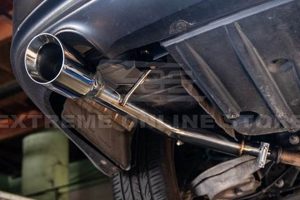
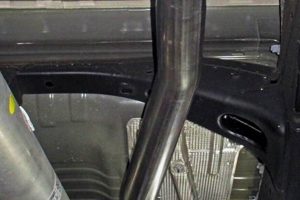
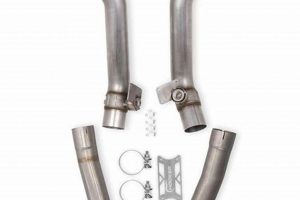
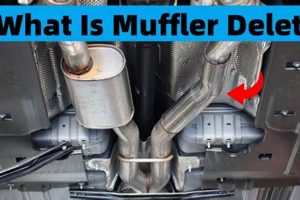
A modification performed on the exhaust system of a sixth-generation (C6) Chevrolet Corvette, the procedure involves removing the factory mufflers. As an example, a vehicle owner might choose this modification to alter the exhaust note of their C6 Corvette.
This alteration is often undertaken to enhance the vehicle’s sound profile, creating a louder and more aggressive tone. Historically, performance enthusiasts have sought ways to amplify the auditory experience of their vehicles. This particular modification offers a relatively simple method to achieve a noticeable change in exhaust acoustics.
The subsequent sections will delve into the potential performance implications, installation considerations, and legal ramifications associated with modifying the exhaust system in this manner.
Considerations for Exhaust Modification
The following provides key points to consider before undertaking exhaust modifications on a C6 Corvette. Careful planning is essential for optimal results and legal compliance.
Tip 1: Research Local Regulations: Before initiating any modifications, thoroughly investigate local noise ordinances and vehicle codes. Many jurisdictions have specific decibel limits and restrictions on exhaust modifications. Failure to comply can result in fines or vehicle inspection failures.
Tip 2: Evaluate Potential Performance Impact: While often done for sound, alterations can impact exhaust flow and potentially affect engine performance. Research the potential for power gains or losses based on the specific modification planned. Consult with a qualified mechanic or tuner for expert advice.
Tip 3: Select Quality Components: If replacing any exhaust components, opt for durable, high-quality materials, preferably stainless steel, to resist corrosion and ensure longevity. Inferior materials can degrade quickly, leading to leaks and further issues.
Tip 4: Professional Installation is Recommended: Unless possessing significant mechanical expertise, seek professional installation. Improper installation can lead to exhaust leaks, improper fitment, and potential damage to other vehicle components.
Tip 5: Assess Sound Levels: Consider the impact on daily driving. A significantly louder exhaust can become fatiguing on longer trips and may not be suitable for all drivers. Listen to sound clips or, if possible, experience a similar modification on another vehicle before committing.
Tip 6: Understand Potential Drone: Some exhaust modifications can introduce undesirable drone at certain RPM ranges. Research the potential for drone and consider solutions like resonators or sound dampening materials to mitigate this issue.
Careful planning and informed decision-making are crucial for a successful exhaust modification. Understanding the legal implications, potential performance changes, and sound characteristics ensures a satisfactory outcome.
The subsequent section will explore the tools and basic procedures sometimes associated with this modification.
1. Exhaust Note

The “c6 muffler delete” directly and significantly influences the exhaust note of a Chevrolet Corvette C6. Removing the mufflers, which are designed to attenuate sound, fundamentally alters the characteristics of the escaping exhaust gases. This absence of sound dampening results in a noticeably louder and more aggressive exhaust note. The specific tonal quality depends on the rest of the exhaust system configuration, but generally, the sound becomes deeper and more pronounced. For example, a C6 Corvette with a stock exhaust manifold and catalytic converters, but without mufflers, will produce a louder, more resonant sound compared to its factory configuration, but still be somewhat restrained. Conversely, a C6 with long tube headers, high-flow catalytic converters, and a muffler delete will generate a significantly louder and more aggressive exhaust note, potentially approaching open-header levels.
The resulting exhaust note is a crucial consideration for vehicle owners contemplating this modification. Many enthusiasts prioritize an enhanced auditory experience, finding the amplified sound more engaging and representative of the vehicle’s performance potential. However, the increased volume can also be problematic. Beyond potentially violating noise ordinances, the altered sound can be intrusive during daily driving, particularly on longer trips. Furthermore, the specific frequencies generated by the exhaust system after the modification can sometimes create an undesirable “drone” inside the vehicle cabin, especially at certain engine speeds. A proper understanding of these factors allows informed decisions to be made.
In summary, the relationship between a muffler deletion and the exhaust sound is that the deletion is usually performed for aggressive sound output. Evaluating subjective preferences against potential drawbacks, such as noise complaints, is key to a sound and satisfied decision, understanding the complex balance between an enhanced sound and potential practical or legal challenges is crucial for achieving a desired modification outcome.
2. Performance Changes

Evaluating the impact on performance is crucial when considering a “c6 muffler delete.” While often undertaken for auditory enhancement, the effects on engine power, torque, and overall vehicle dynamics warrant careful examination.
- Exhaust Flow Dynamics
The removal of mufflers can alter the exhaust flow characteristics of the engine. Factory mufflers create backpressure, which, in some engine designs, can be beneficial at lower RPMs. Removing this backpressure might increase exhaust gas velocity at higher RPMs, potentially leading to improved horsepower. However, if the exhaust system is not properly tuned, the reduced backpressure can also negatively impact low-end torque.
- Potential for Horsepower Gains
In certain circumstances, a noticeable increase in horsepower can accompany muffler removal, particularly when combined with other performance modifications such as aftermarket headers and a revised engine tune. However, the actual gains can vary significantly depending on the overall configuration of the exhaust system and the engine’s characteristics. A poorly designed exhaust system might negate any potential horsepower gains, or even lead to a reduction in power.
- Torque Curve Considerations
Removing mufflers can affect the engine’s torque curve, shifting the peak torque to higher RPMs. This shift can alter the vehicle’s drivability, particularly in daily driving situations where low-end torque is essential for acceleration from a standstill or at lower speeds. This alteration can be less advantageous for street driving as opposed to track use.
- Need for Engine Tuning
To fully realize any performance benefits from exhaust modifications, including the removal of mufflers, engine tuning is often necessary. A properly calibrated engine tune can optimize the air-fuel ratio and ignition timing to match the new exhaust flow characteristics, maximizing horsepower and torque output while maintaining engine reliability. Without proper tuning, the engine might not be operating at its peak efficiency, potentially limiting any performance gains and, in some cases, causing detrimental effects.
The performance implications of a “c6 muffler delete” are not solely positive. While horsepower gains are possible, they are contingent on the overall exhaust system design, engine tuning, and the specific application. A thorough understanding of these interrelated factors is essential for making an informed decision and achieving the desired performance outcome.
3. Legal Compliance
Legal compliance is a critical consideration when contemplating a “c6 muffler delete.” Exhaust modifications are frequently subject to regulations at the federal, state, and local levels, impacting the legality of altering or removing factory-installed emission control devices.
- Noise Ordinances
Many municipalities have established noise ordinances that set permissible decibel levels for vehicle exhaust. The removal of mufflers typically results in a significant increase in exhaust volume, potentially exceeding these legal limits. Enforcement can involve fines, warnings, or even mandatory vehicle inspections to restore compliance. For instance, a vehicle operating within a residential area that generates excessive exhaust noise may violate local noise regulations, leading to penalties.
- Emissions Regulations
Federal and state emissions regulations, such as those enforced by the Environmental Protection Agency (EPA), prohibit tampering with or removing emission control devices. While mufflers are primarily intended for sound attenuation and not direct emissions control, modifications that affect the catalytic converter or other emissions-related components can trigger legal repercussions. Altering exhaust systems in ways that bypass or compromise emissions control can result in substantial fines and mandated vehicle remediation.
- State Vehicle Codes
Individual states often have their own vehicle codes that govern exhaust system requirements. These codes can address muffler presence, exhaust routing, and overall system integrity. A “c6 muffler delete” may violate state vehicle codes if it leads to an exhaust system that is deemed unsafe, excessively loud, or non-compliant with established standards. Periodic vehicle inspections can identify non-compliant exhaust systems, potentially leading to failure and required corrective actions.
- Inspection Procedures
Regular vehicle inspections are conducted in many jurisdictions to ensure compliance with safety and emissions regulations. During an inspection, exhaust systems are often visually examined to verify the presence of required components, such as mufflers and catalytic converters. A “c6 muffler delete” is readily detectable during a visual inspection, and may result in the vehicle failing the inspection if the absence of the mufflers violates state or local regulations.
In summary, the intersection of “c6 muffler delete” and legal compliance involves navigating a complex web of federal, state, and local regulations. Vehicle owners must carefully research and understand the specific laws governing exhaust modifications in their jurisdiction to avoid potential fines, vehicle inspection failures, and other legal consequences. Adhering to these regulations is essential for ensuring responsible and lawful vehicle operation.
4. Installation Complexity
The ease or difficulty of installation represents a significant factor when considering a “c6 muffler delete.” The process can range from relatively straightforward to considerably challenging, depending on several variables, including the vehicle owner’s mechanical aptitude, available tools, and the specific design of the aftermarket components being installed.
- Required Tools and Equipment
The basic “c6 muffler delete” typically necessitates common automotive tools, such as wrenches, sockets, a ratchet, and potentially a saw or cutting tool to remove the existing mufflers. More complex installations, particularly those involving welding or custom fabrication, may demand specialized equipment like a welding machine, cutting torch, and metal fabrication tools. Access to a vehicle lift can significantly simplify the process by providing easier access to the exhaust system components.
- Mechanical Skill Level
A successful “c6 muffler delete” generally requires at least a moderate level of mechanical skill. Competencies such as accurately measuring and cutting exhaust pipes, properly aligning and securing exhaust components, and achieving leak-free connections are essential. Individuals lacking experience in these areas may encounter difficulties, potentially resulting in an improperly installed exhaust system or damage to the vehicle.
- Potential for Complications
Several potential complications can arise during the installation process. These can include rusted or corroded fasteners that are difficult to remove, limited access to certain exhaust system components, and the need to modify or fabricate custom brackets or hangers to properly secure the new exhaust components. The presence of these complications can significantly increase the time and effort required for the “c6 muffler delete.”
- Professional Assistance
Due to the potential complexities involved, many vehicle owners opt to seek professional assistance with a “c6 muffler delete.” Professional mechanics possess the necessary tools, experience, and expertise to perform the installation quickly and efficiently, while also ensuring that all connections are secure and that the exhaust system is properly aligned. Although professional installation incurs additional costs, it minimizes the risk of errors and ensures a high-quality outcome.
In conclusion, the installation complexity associated with a “c6 muffler delete” should be carefully considered. Evaluating the available tools, mechanical skill level, and the potential for complications enables vehicle owners to make informed decisions about whether to attempt the installation themselves or seek professional assistance. Choosing the appropriate course of action ensures a successful outcome and minimizes the risk of damaging the vehicle.
5. Drone Potential
The inherent potential for drone is a significant consideration when contemplating a “c6 muffler delete.” Drone, characterized as an undesirable low-frequency resonance within the vehicle’s cabin, often manifests at specific engine speeds, creating a persistent and often irritating auditory experience for both the driver and passengers. This phenomenon is directly linked to the altered exhaust dynamics resulting from the removal of the factory-installed mufflers, which are designed to dampen and mitigate such resonant frequencies. In essence, the absence of mufflers allows certain sound waves to propagate more freely through the exhaust system and into the vehicle’s interior.
The “c6 muffler delete” creates a domino effect. Removing the mufflers alters the carefully engineered balance of the exhaust system and amplifies some frequencies while eliminating others. For instance, a Corvette cruising on the highway at 70 mph might experience noticeable drone within the 1800-2200 RPM range following the muffler deletion. The severity and frequency range of the drone are also influenced by other factors, including the presence of aftermarket headers, the type of catalytic converters used, and the overall design of the exhaust piping. Without proper countermeasures, this low-frequency noise can compromise the overall driving experience. Mitigating the drone potential can involve installing resonators, strategically placed along the exhaust system to cancel out specific frequencies, or applying sound-deadening materials to the vehicle’s floor and firewall to reduce the transmission of noise into the cabin.
Understanding the drone potential is thus a critical component of an informed decision regarding a “c6 muffler delete.” While the modification might offer an enhanced exhaust note and potential performance gains, the accompanying drone can detract significantly from the vehicle’s comfort and usability. Addressing this issue requires careful planning and the implementation of appropriate noise-reduction strategies. Ignoring the potential for drone can lead to an unsatisfactory modification, one where the auditory benefits are overshadowed by the persistent annoyance of unwanted resonance within the vehicle.
6. Resale Value

The impact on resale value constitutes a crucial consideration when contemplating a “c6 muffler delete.” Modifications to a vehicle, including exhaust alterations, can influence its attractiveness to potential buyers, subsequently affecting its market value. A “c6 muffler delete,” while appealing to some enthusiasts, might deter others who prioritize originality or a quieter, more refined driving experience. The aftermarket for performance modifications often caters to a specific segment of the market, and alterations that deviate significantly from the factory configuration can narrow the pool of prospective purchasers. For instance, a meticulously maintained C6 Corvette with an unmodified exhaust system might command a higher price than a similar vehicle with a “c6 muffler delete,” particularly if the modification is perceived as excessively loud or potentially non-compliant with local regulations. The perception of quality and professionalism associated with the modification also plays a significant role. A poorly executed “c6 muffler delete,” characterized by subpar welding or improper fitment, is likely to negatively impact resale value more severely than a professionally installed system.
Furthermore, the impact on resale value can vary depending on the region and the prevailing market conditions. In areas with strict noise regulations or emissions standards, a “c6 muffler delete” might significantly reduce the vehicle’s appeal, as potential buyers might be concerned about compliance issues. Conversely, in areas with a strong performance-oriented car culture, the modification might be viewed as a desirable feature, potentially offsetting the negative impact on resale value. The presence of supporting documentation, such as receipts for the installation or certification of compliance with noise regulations, can also influence a buyer’s perception and willingness to pay a premium. Documented modifications can demonstrate a commitment to quality and responsible ownership, mitigating potential concerns about the alteration’s impact on the vehicle’s reliability or legality.
In summary, the correlation between “c6 muffler delete” and resale value is complex and multifaceted. While the modification might enhance the driving experience for some enthusiasts, it can simultaneously diminish the vehicle’s market value by limiting its appeal to a broader audience. Careful consideration of local market conditions, noise regulations, and the quality of the installation is essential for mitigating the potential negative impact on resale value. Thorough documentation and responsible modification practices can help preserve the vehicle’s attractiveness and maintain its overall value in the used car market.
Frequently Asked Questions
The following provides answers to common inquiries regarding the removal of mufflers from a C6 Chevrolet Corvette. These questions address potential performance impacts, legal considerations, and overall implications of such a modification.
Question 1: Does a C6 muffler delete increase horsepower?
The removal of mufflers might yield a marginal increase in horsepower, contingent upon other factors such as exhaust system design and engine tuning. Real-world gains can be negligible without corresponding adjustments to optimize exhaust flow and engine parameters. Claims of substantial horsepower increases without proper supporting modifications should be viewed with skepticism.
Question 2: Is a C6 muffler delete legal?
The legality of a C6 muffler delete depends on local and state regulations. Many jurisdictions have noise ordinances that restrict permissible exhaust volume. Removing mufflers often results in exceeding these limits, potentially leading to fines or vehicle inspection failures. A thorough understanding of local laws is essential prior to undertaking such a modification.
Question 3: Will a C6 muffler delete cause drone?
The likelihood of experiencing drone, an undesirable low-frequency resonance within the vehicle’s cabin, is significantly elevated with a C6 muffler delete. The absence of mufflers allows certain frequencies to propagate more freely, creating noticeable drone at specific engine speeds. Resonators or sound-deadening materials can be implemented to mitigate this phenomenon.
Question 4: Does a C6 muffler delete void the vehicle’s warranty?
Modifying the exhaust system, including the removal of mufflers, could potentially void portions of the vehicle’s warranty, particularly those related to the exhaust system and engine. Consult the vehicle’s warranty documentation and local dealer to ascertain the specific implications of such modifications.
Question 5: What tools are required for a C6 muffler delete?
The installation typically necessitates common automotive tools such as wrenches, sockets, a ratchet, and a cutting tool for removing the existing mufflers. Welding equipment might be required for certain installations. Access to a vehicle lift can simplify the process.
Question 6: How does a C6 muffler delete affect resale value?
The modification can have varying effects on resale value. While some enthusiasts might appreciate the enhanced exhaust note, others may find it undesirable. A well-documented and professionally installed modification may have a lesser negative impact than a poorly executed alteration.
The preceding questions and answers provide a concise overview of the key considerations associated with a C6 muffler delete. Further research and consultation with qualified professionals are encouraged before making any modifications.
The following section will explore potential alternatives for achieving a desired exhaust sound without resorting to full muffler deletion.
Conclusion
The preceding exploration of the C6 muffler delete reveals a multifaceted modification with potential benefits and drawbacks. The analysis highlighted the significance of understanding exhaust note alterations, performance impacts, legal compliance, installation complexity, drone potential, and resale value considerations. Each aspect warrants careful assessment before proceeding with this modification to a C6 Corvette.
Ultimately, the decision to pursue a C6 muffler delete should be guided by a comprehensive understanding of the related trade-offs. Prudent planning, adherence to legal regulations, and a commitment to quality workmanship will optimize the outcome and ensure a satisfactory ownership experience. Further research and consultation with qualified professionals are encouraged to facilitate well-informed decisions.