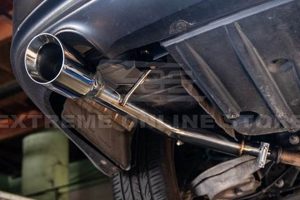
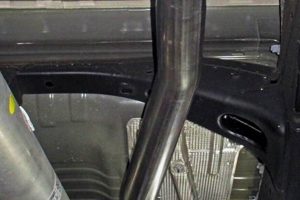
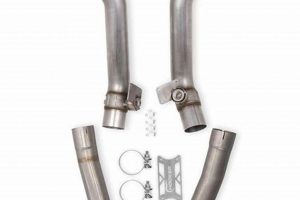
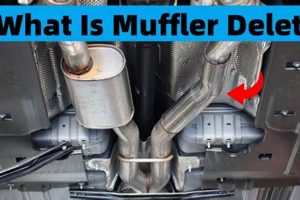
The practice of removing a vehicle’s muffler, a component designed to reduce exhaust noise, is often debated in terms of its effect on engine performance. The core question revolves around whether this modification contributes to an increase in engine power. Eliminating the muffler alters the flow of exhaust gases, potentially impacting factors like backpressure and scavenging.
The purported benefits of such an alteration typically center on the idea of reduced exhaust restriction, allowing the engine to “breathe” more freely. Historically, the understanding of exhaust dynamics has evolved from simple assumptions of backpressure being universally detrimental, to a more nuanced appreciation of its role in specific engine designs and operating conditions. The impact on horsepower is contingent upon various elements, including the engine’s original design, the presence of other exhaust modifications, and the vehicle’s engine management system.
This article will delve into the technical aspects of exhaust systems, examine the potential consequences of modifying these systems by removing components designed to reduce noise, and present a balanced perspective on the overall impact on a vehicle’s performance metrics, especially focusing on the frequently asked question about whether this modification increases an engine’s output.
Tips Regarding Aftermarket Exhaust Modifications and Engine Performance
Modifying a vehicle’s exhaust system can have both positive and negative consequences. The following considerations should be weighed before undertaking modifications to enhance engine performance.
Tip 1: Analyze Engine Design: Prior to altering the exhaust, examine the engine’s design characteristics. Turbocharged engines often benefit more from reduced exhaust restriction than naturally aspirated engines. However, the degree of benefit is dependent on the specific turbocharger and engine configuration.
Tip 2: Understand Backpressure Effects: Backpressure, while often perceived negatively, can be essential for proper cylinder scavenging, especially at lower engine speeds. Complete elimination of backpressure may lead to a loss of low-end torque in some engines.
Tip 3: Consider Exhaust Diameter: Increasing exhaust pipe diameter excessively can reduce exhaust gas velocity, negating potential performance gains. The optimal diameter should be matched to the engine’s displacement and intended use.
Tip 4: Evaluate Emissions Compliance: Removing or modifying exhaust components may violate emissions regulations in certain jurisdictions. Verify local laws and regulations before performing any exhaust modifications.
Tip 5: Address Potential Resonance Issues: Modifying the exhaust system may introduce undesirable resonance or drone at specific engine speeds. Consider adding resonators or tuning the exhaust system to mitigate these issues.
Tip 6: Research Reputable Manufacturers: Choosing aftermarket exhaust components from reputable manufacturers ensures quality and proper fitment. Investigate the company’s engineering and testing procedures.
Tip 7: Consult with Professionals: Seek advice from experienced mechanics or performance specialists before implementing any exhaust modifications. Their expertise can prevent costly mistakes and ensure optimal results.
Careful planning, research, and professional guidance are essential for achieving the desired performance improvements while avoiding negative consequences. A holistic approach that considers the entire vehicle’s performance characteristics will yield the best results.
The subsequent sections will provide a detailed exploration of the potential impacts on engine output, and an examination of the various factors that influence performance after exhaust modifications.
1. Backpressure Reduction

Backpressure reduction is a key consideration when evaluating the effects of muffler deletion on engine output. The degree to which muffler removal alters backpressure directly impacts engine performance, and is central to the debate about whether horsepower increases.
- Definition of Backpressure
Backpressure refers to the resistance to exhaust gas flow within the exhaust system. It is created by components such as catalytic converters, mufflers, and pipe bends. While often viewed as detrimental, some level of backpressure can be beneficial in certain engine designs.
- Muffler Deletion and Backpressure
Mufflers are designed to reduce noise by creating a restriction in the exhaust flow. Removing the muffler inherently reduces the amount of backpressure in the exhaust system. This is a direct consequence of simplifying the exhaust path.
- Impact on Engine Scavenging
Reduced backpressure can improve engine scavenging, the process of removing exhaust gases from the combustion chamber. Efficient scavenging can lead to increased cylinder filling with fresh air/fuel mixture, potentially resulting in more power. The effectiveness of this process is highly dependent on engine design and RPM range.
- Potential Trade-offs
While reduced backpressure can increase horsepower at higher RPM, it may also lead to a decrease in low-end torque. Some engines rely on a certain amount of backpressure to maintain optimal cylinder filling at lower speeds. This trade-off must be considered when evaluating the overall impact on vehicle performance.
In summary, muffler deletion invariably leads to backpressure reduction. However, the resulting change in engine output depends on numerous factors, including the engine’s original design parameters, the operational RPM range, and the presence of other modifications. A simple reduction in backpressure does not guarantee an increase in overall performance.
2. Exhaust Velocity

Exhaust velocity, the speed at which exhaust gases travel through the exhaust system, is intricately linked to whether muffler removal yields increased engine output. Muffler deletion invariably alters the exhaust velocity profile, impacting the engine’s ability to effectively expel spent combustion gases. If the alteration enhances exhaust scavenging without detrimental effects on cylinder filling, an increase in horsepower may be realized. Conversely, if exhaust velocity becomes too low, particularly at lower engine speeds, scavenging efficiency can decrease, leading to a loss of power.
The relationship between exhaust velocity and engine performance is further modulated by the exhaust pipe diameter. Excessively large diameter pipes, often implemented in conjunction with muffler removal, can reduce exhaust velocity, hindering low-end torque production. Conversely, pipes that are too narrow can restrict exhaust flow at higher engine speeds, limiting peak horsepower. For example, consider a high-performance V8 engine. Removing the mufflers and replacing the stock exhaust piping with excessively large diameter pipes might initially seem advantageous. However, unless the engine is heavily modified and intended for high-RPM operation, the reduced exhaust velocity at lower speeds can lead to a noticeable decrease in throttle response and overall drivability. This underscores the importance of balancing exhaust velocity with engine characteristics.
In conclusion, the impact of muffler deletion on engine output is significantly influenced by its effect on exhaust velocity. The modification’s success hinges on maintaining an optimal balance between exhaust flow and scavenging efficiency across the engine’s operating range. A thorough understanding of engine characteristics, exhaust system design, and the interplay between exhaust velocity, backpressure, and cylinder filling is crucial for achieving desired performance improvements. Simply removing the muffler without considering these factors can lead to unintended consequences, potentially resulting in a decrease, rather than an increase, in horsepower.
3. Engine Tuning
Engine tuning plays a crucial role in determining whether a muffler delete actually translates to increased horsepower. Removing a muffler alters the exhaust flow dynamics, and the engine’s control system must be properly calibrated to take advantage of these changes. Without appropriate tuning, the theoretical benefits of a less restrictive exhaust may not be realized, and in some cases, performance could be negatively impacted.
- Air-Fuel Ratio Adjustment
Muffler deletion can affect the engine’s volumetric efficiency, altering the ideal air-fuel ratio. Engine tuning allows recalibration of the fuel injection system to optimize the mixture, ensuring efficient combustion and preventing lean or rich conditions. Failure to adjust the air-fuel ratio could result in decreased power, increased emissions, or even engine damage.
- Ignition Timing Optimization
Changes in exhaust flow can influence cylinder pressures and combustion characteristics. Engine tuning permits adjustments to ignition timing, allowing the spark to occur at the optimal point for efficient power production. Advancing or retarding the timing can maximize combustion efficiency and power output in response to the altered exhaust system.
- Lambda Sensor Calibration
Lambda sensors (oxygen sensors) provide feedback to the engine control unit (ECU) regarding the exhaust gas composition. Tuning allows for recalibration of the ECU’s response to lambda sensor readings, ensuring accurate monitoring and control of the air-fuel ratio. This is critical for maintaining optimal performance and emissions levels after a muffler delete.
- Dynamometer Tuning for Optimization
Dynamometer testing provides a controlled environment for measuring engine output and performance characteristics. Engine tuning in conjunction with dyno testing allows for precise optimization of various parameters, such as fuel maps and ignition timing, to maximize horsepower and torque gains from the muffler delete across the entire RPM range. This method ensures that the engine is operating at its peak efficiency and power potential.
In conclusion, while a muffler delete might theoretically reduce exhaust restriction and improve airflow, engine tuning is essential to realize any potential horsepower gains. Proper tuning ensures the engine management system is calibrated to take full advantage of the altered exhaust characteristics, optimizing air-fuel ratio, ignition timing, and other critical parameters for peak performance and efficiency. Without appropriate tuning, the modification may yield negligible or even detrimental results, underscoring the importance of considering engine tuning as an integral part of any exhaust modification.
4. Resonance Effects

Resonance effects, characterized by the amplification of sound waves at specific frequencies within the exhaust system, represent a critical factor influencing the perceived and actual performance changes following muffler removal. Understanding these effects is essential for accurately assessing the impact on engine output.
- Standing Waves and Exhaust Tuning
Exhaust systems, like any acoustic chamber, are prone to the formation of standing waves. These waves occur when sound waves reflect within the system, creating areas of constructive and destructive interference. The frequency at which these standing waves occur is dictated by the length and geometry of the exhaust pipes. Manufacturers carefully tune the exhaust system to minimize undesirable resonance, often using the muffler to dampen these frequencies. Muffler deletion can disrupt this tuning, potentially creating new resonance points.
- Helmholtz Resonance and Drone
Helmholtz resonance, a phenomenon where a volume of air resonates at a specific frequency due to an opening, can be exacerbated by muffler removal. The resulting “drone” or booming sound at certain engine speeds is a common consequence. This resonance not only affects the auditory experience but can also influence exhaust gas flow. While not directly affecting horsepower in a measurable sense, the perceived increase in noise can lead to a subjective feeling of increased power, despite actual performance remaining unchanged.
- Impact on Exhaust Scavenging
While the primary effect of resonance is audible, it can indirectly influence exhaust scavenging. The pressure waves created by resonance can either aid or hinder the expulsion of exhaust gases from the cylinder. Constructive interference at the exhaust port can improve scavenging, while destructive interference can impede it. The frequency at which these effects occur is dependent on engine speed, meaning that resonance can have a varying impact on performance across the RPM range.
- Mitigation Strategies
If muffler deletion results in undesirable resonance, various mitigation strategies can be employed. Resonators, specifically designed to dampen specific frequencies, can be added to the exhaust system. Exhaust pipe length modifications can also be implemented to shift the resonance frequencies away from common operating ranges. The effectiveness of these strategies depends on a careful analysis of the exhaust system’s acoustic properties and the specific frequencies causing the problem.
In summary, resonance effects represent a significant but often overlooked factor when evaluating the impact of muffler deletion on engine performance. While the direct effect on measured horsepower may be minimal, the alteration of exhaust system acoustics can significantly influence both the perceived performance and the actual exhaust gas dynamics, underscoring the importance of considering these effects when modifying an exhaust system.
5. Emissions Impact

The removal of a muffler from a vehicle’s exhaust system, often undertaken with the aim of increasing horsepower, invariably affects the vehicle’s emissions profile. Mufflers, while primarily designed for noise reduction, can also play a role in optimizing exhaust gas flow and temperature, thereby influencing the efficiency of catalytic converters and other emissions control devices. The elimination of the muffler can disrupt this optimized environment, potentially leading to an increase in harmful emissions. The extent of this increase is contingent upon the vehicle’s make, model, engine type, and the specific configuration of the exhaust system.
Many modern vehicles rely on sophisticated engine management systems that continuously monitor and adjust various parameters to maintain optimal combustion and minimize emissions. These systems are calibrated based on the original exhaust system configuration, including the presence and characteristics of the muffler. Removing the muffler without recalibrating the engine management system can lead to a mismatch between the intended and actual exhaust gas properties, potentially compromising the effectiveness of the catalytic converter. For instance, an engine calibrated for a specific backpressure level might experience incomplete combustion or altered exhaust gas temperatures after muffler removal, reducing the converter’s ability to effectively neutralize pollutants such as hydrocarbons, carbon monoxide, and nitrogen oxides. Some jurisdictions have implemented stringent emissions testing programs, and vehicles modified in this manner may fail to meet regulatory standards, resulting in fines or restrictions on vehicle operation. The modification could also render the vehicle non-compliant with the original manufacturer’s emissions certification, potentially affecting warranty coverage.
Therefore, while a muffler delete may, under certain circumstances and with proper tuning, contribute to a marginal increase in horsepower, the associated impact on emissions must be carefully considered. The potential increase in pollutants released into the atmosphere represents a significant environmental concern, and non-compliance with emissions regulations carries legal and financial ramifications. A balanced approach requires weighing the potential performance benefits against the environmental consequences and ensuring that any modifications are accompanied by appropriate tuning and emissions control measures to mitigate the negative impact on air quality.
6. Torque Curve

The torque curve, a graphical representation of an engine’s torque output across its RPM range, is intrinsically linked to the question of whether muffler removal increases horsepower. Modifications to the exhaust system, including muffler deletion, can significantly alter this curve, influencing the engine’s power delivery characteristics at different speeds. While a modification may increase peak horsepower at high RPM, its impact on the torque curve dictates the overall drivability and usability of the engine’s power.
Muffler removal typically reduces backpressure in the exhaust system. This can lead to improved high-RPM horsepower due to enhanced scavenging of exhaust gases. However, the altered exhaust flow dynamics can simultaneously reduce low-end torque. The torque curve shifts, potentially becoming less favorable for everyday driving conditions where lower RPM performance is critical. For example, a vehicle used primarily for commuting may experience a noticeable decrease in acceleration and responsiveness at low speeds, despite any gains in peak horsepower that may be achieved. Conversely, a race car designed for high-speed track performance may benefit from the shift in the torque curve, as the reduced backpressure facilitates greater power output at higher RPMs.
In conclusion, the impact of muffler removal cannot be assessed solely on the basis of peak horsepower figures. The alteration of the torque curve is a crucial consideration, determining the usability and practicality of any performance gains. A comprehensive understanding of engine characteristics and driving requirements is necessary to make informed decisions regarding exhaust modifications, ensuring that any increase in horsepower is accompanied by a favorable or acceptable change in the torque curve. The trade-off between high-RPM power and low-end torque must be carefully evaluated to achieve the desired performance outcome.
Frequently Asked Questions
This section addresses common inquiries regarding the impact of removing a vehicle’s muffler on engine horsepower, offering concise and informative answers.
Question 1: Does removing a muffler automatically increase horsepower?
No, muffler removal does not guarantee an increase in horsepower. The effect depends on several factors, including engine design, exhaust system configuration, and the presence of other modifications.
Question 2: What are the potential benefits of muffler deletion?
Potential benefits may include reduced exhaust backpressure and improved exhaust scavenging at higher engine speeds, potentially leading to increased horsepower in specific scenarios.
Question 3: What are the potential drawbacks of muffler deletion?
Drawbacks can include a reduction in low-end torque, increased exhaust noise, potential drone or resonance, non-compliance with emissions regulations, and potential warranty issues.
Question 4: Is engine tuning required after muffler removal?
Engine tuning is highly recommended after muffler removal to optimize air-fuel ratio and ignition timing for the altered exhaust flow, maximizing potential benefits and preventing negative consequences.
Question 5: Does muffler removal affect fuel economy?
Muffler removal can affect fuel economy, either positively or negatively, depending on the engine and driving conditions. Changes in backpressure and engine efficiency can influence fuel consumption.
Question 6: Is muffler deletion legal?
The legality of muffler deletion varies by jurisdiction. Many regions have noise regulations and emissions standards that may be violated by removing a muffler. Verify local laws before proceeding with this modification.
In summary, while muffler removal can potentially increase horsepower under specific circumstances, it also carries potential drawbacks and legal considerations. A thorough understanding of the factors involved is essential for making informed decisions.
The following section will explore alternative approaches to enhancing engine performance without resorting to muffler deletion.
Conclusion
This exploration into whether a muffler delete adds horsepower reveals a complex interplay of factors. While a reduction in exhaust backpressure may theoretically improve engine breathing and increase peak power at higher RPMs, the reality is nuanced. The alteration of exhaust velocity, potential resonance issues, the necessity for engine tuning, and the impact on emissions compliance all contribute to the final outcome. A simple removal of the muffler does not guarantee a performance increase and may, in some cases, lead to a decrease in overall engine efficiency and drivability.
Therefore, any decision regarding muffler modification should be based on a comprehensive understanding of the engine’s specific characteristics, intended use, and local regulations. The pursuit of increased horsepower should not come at the expense of responsible environmental stewardship or adherence to legal requirements. Thorough research and professional consultation are paramount before undertaking such modifications.