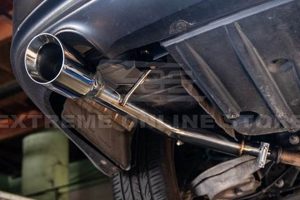
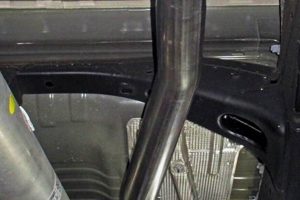
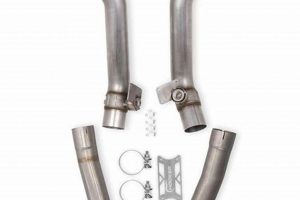
The removal of specific exhaust system components, namely the resonator and the muffler, alters a vehicle’s sound profile and potentially affects its performance. These parts are designed to reduce noise levels produced by the engine. Deleting them results in a louder, often more aggressive, exhaust note.
Modifying a vehicle’s exhaust system can provide an enhanced auditory experience for the driver. Historically, such modifications were driven by a desire to improve engine output, although the actual performance gains can be minimal and sometimes offset by undesirable side effects. The perceived value lies largely in the altered sound and aesthetic appeal.
The following sections will detail the specific implications of this modification, including legal considerations, potential performance impacts, and factors to consider before proceeding with such alterations.
Considerations for Exhaust System Modification
Altering a vehicle’s exhaust by removing or replacing components requires careful consideration. The following tips address key factors to evaluate before proceeding with such modifications.
Tip 1: Legal Compliance: Prior to any modification, thoroughly research local and national regulations regarding exhaust noise levels. Failure to comply may result in fines or mandatory vehicle inspections.
Tip 2: Performance Impact Evaluation: While an enhanced sound is often the primary goal, analyze potential impacts on engine performance. Changes to exhaust backpressure can, in some cases, reduce horsepower or torque, particularly at lower RPMs.
Tip 3: Sound Quality Expectations: Understand the resulting sound profile. The absence of sound-dampening components can lead to excessive drone, a low-frequency hum that can be unpleasant during extended driving periods.
Tip 4: Professional Installation Recommended: For optimal results and to minimize potential issues, seek professional installation services. Experienced technicians can ensure proper fitment and avoid leaks or other problems.
Tip 5: Material Quality Considerations: If replacing existing components, select high-quality materials, such as stainless steel, for increased durability and resistance to corrosion. This will extend the life of the modified exhaust system.
Tip 6: Resale Value Implications: Be aware that modifications to a vehicle’s exhaust system may negatively impact its resale value. Potential buyers may be deterred by the altered sound or concerns about legal compliance.
Tip 7: Consider Alternatives: Explore less drastic options, such as performance mufflers or resonators, which can provide a more refined sound enhancement without the potentially negative consequences of complete removal.
Thoughtful planning and research are essential to ensure that exhaust modifications align with both personal preferences and practical considerations, and avoid any legal or functional problems.
The next section will provide guidance on alternative exhaust system upgrades and their respective advantages and disadvantages.
1. Increased Exhaust Volume
The deliberate removal of sound-dampening components from a vehicle’s exhaust system directly correlates with a noticeable increase in exhaust volume. This alteration is a primary consequence, and often the intended outcome, of modifications involving resonator and muffler deletion.
- Source of Sound Amplification
The resonator and muffler are designed to attenuate sound waves generated by the engine’s combustion process. Removing these components eliminates the barriers to sound propagation, allowing a greater proportion of the engine’s acoustic output to be emitted directly into the surrounding environment. The resulting increase in volume is directly proportional to the attenuation provided by the removed parts.
- Frequency Profile Shift
While the overall volume increases, the removal also affects the frequency profile of the exhaust note. Mufflers often target specific frequency ranges to reduce drone or harshness. Without these, certain frequencies may become more prominent, resulting in a less refined and potentially more abrasive sound. The acoustic characteristics shift from dampened to raw.
- Environmental Impact Considerations
Elevated exhaust volume contributes to noise pollution. In urban environments, significantly increased noise levels can violate local ordinances and negatively impact the quality of life for residents. The responsible implementation of such modifications requires consideration of the broader community impact.
- Instrumentation and Measurement
Exhaust volume is quantitatively measurable using sound level meters. Before and after measurements can provide concrete data on the magnitude of the increase resulting from resonator and muffler modifications. Such data can be critical for assessing compliance with legal noise limits or for comparing the effects of different exhaust configurations.
The correlation between the absence of sound-dampening components and increased exhaust volume is a fundamental principle governing vehicle acoustics. Understanding this relationship, along with the specific factors that influence sound propagation, is crucial for managing the potential consequences of resonator and muffler removal, encompassing environmental considerations, legal compliance, and acoustic preferences.
2. Altered exhaust tone

The removal of resonators and mufflers invariably leads to an alteration in the vehicle’s exhaust tone. These components are designed to manipulate sound waves, mitigating specific frequencies and modulating the overall auditory output of the engine. Their absence directly results in a louder, often raspier, and less refined exhaust note. The character of the sound shifts from a controlled rumble to a more aggressive roar, characterized by increased high-frequency components and a reduced presence of lower, mellow tones.
This altered tone is not merely a quantitative increase in volume; it represents a qualitative change in the sound’s characteristics. For example, a vehicle with a factory exhaust system might produce a deep, resonant sound at low RPMs. Removing the muffler and resonator can transform this into a higher-pitched, metallic sound, particularly under acceleration. This can be desirable for some drivers seeking a more visceral driving experience, but it is crucial to understand that this change is not universally appealing and may be perceived as intrusive or unpleasant by others. The specific alteration also varies depending on the engine type, exhaust manifold design, and other factors.
In summary, the elimination of resonators and mufflers causes a distinct change in the exhaust tone. Understanding this shift in sound quality is critical for making informed decisions about exhaust system modifications. Factors such as personal preference, legal restrictions, and the potential for increased drone must all be weighed to determine if the altered tone is a desirable outcome.
3. Potential performance changes
The removal of resonators and mufflers, while primarily intended to alter exhaust sound, can also influence a vehicle’s performance characteristics. This section examines the complex relationship between exhaust system modifications and engine output, focusing on potential gains, losses, and factors that mediate these effects.
- Exhaust Backpressure
Exhaust backpressure, the resistance to exhaust gas flow, plays a critical role in engine performance. Removing resonators and mufflers reduces backpressure. While intuitively beneficial, excessive reduction can negatively impact engine efficiency, particularly at lower engine speeds. Insufficient backpressure may lead to scavenging inefficiencies, where the expulsion of exhaust gases is incomplete, hindering the intake of fresh air-fuel mixture. The optimal backpressure level is engine-specific and varies based on factors like camshaft timing and cylinder head design.
- Engine Tuning and Calibration
Significant alterations to the exhaust system necessitate adjustments to the engine’s fuel and ignition maps. The engine control unit (ECU) manages these parameters. Removing resonators and mufflers can alter the air-fuel ratio (AFR) and timing requirements. Without proper tuning, the engine may run lean, leading to potential engine damage, or rich, resulting in reduced fuel economy and increased emissions. Dyno tuning by a qualified technician is recommended to optimize engine performance following exhaust modifications.
- Torque and Horsepower Characteristics
The impact on torque and horsepower is not universally positive. In some cases, removing resonators and mufflers may increase horsepower at higher RPMs, but at the expense of low-end torque. This shift in the power band can make the vehicle less responsive in everyday driving situations. Careful consideration should be given to the intended use of the vehicle. If low-end torque is crucial, retaining or modifying, rather than removing, these components may be a better strategy.
- Exhaust Gas Velocity
Maintaining adequate exhaust gas velocity is important for efficient scavenging. While removing restrictions seems beneficial, an excessively large exhaust diameter can reduce gas velocity, especially at lower RPMs. Slower gas velocity can hinder the evacuation of exhaust gases from the cylinders, negatively affecting engine performance. Selecting an appropriate exhaust diameter, in conjunction with resonator and muffler modifications, is crucial for balancing flow and velocity.
The correlation between exhaust system modifications and engine performance is complex and multifaceted. Removing resonators and mufflers without considering the implications for backpressure, engine tuning, torque characteristics, and exhaust gas velocity can lead to undesirable outcomes. A holistic approach, involving careful planning, professional installation, and appropriate engine tuning, is essential for maximizing performance gains while minimizing potential drawbacks. Understanding these factors enables informed decision-making when contemplating such modifications.
4. Legality

The legal ramifications of exhaust system modifications, specifically the removal of resonators and mufflers, are a critical consideration for vehicle owners. Regulations governing exhaust noise and emissions vary significantly across jurisdictions, making compliance a complex and potentially challenging issue.
- Noise Ordinances
Many municipalities have noise ordinances that establish maximum permissible sound levels for vehicles. These ordinances are often enforced through roadside inspections or noise monitoring systems. Removing resonators and mufflers invariably increases exhaust noise, potentially exceeding these limits. Violations can result in fines, mandatory vehicle repairs, or impoundment. The stringency of noise regulations varies; some jurisdictions have specific decibel limits, while others rely on subjective assessments of “excessive” noise. Understanding local noise ordinances is essential before undertaking exhaust modifications.
- Emissions Standards
Resonators and mufflers, while primarily intended for noise reduction, can also play a role in emissions control. Some vehicles incorporate catalytic converters within the muffler assembly. Removing such a unit would violate emissions regulations, potentially leading to failure to pass mandatory vehicle inspections. Even without a catalytic converter, altering the exhaust flow can impact engine efficiency and emissions output. Tampering with emissions control devices is generally prohibited and can result in substantial penalties.
- Vehicle Inspection Requirements
Many states and countries require periodic vehicle safety and emissions inspections. During these inspections, exhaust systems are scrutinized for compliance with applicable regulations. Removing resonators and mufflers may constitute a modification that renders the vehicle non-compliant, leading to inspection failure. Depending on the jurisdiction, this may result in a temporary or permanent ban on operating the vehicle on public roads.
- Federal Regulations
In some countries, federal regulations govern the design and modification of vehicle exhaust systems. These regulations may prohibit the removal or alteration of original equipment components intended for noise or emissions control. Violating these regulations can carry significant financial penalties for both the vehicle owner and the installer of the modifications. Familiarity with relevant federal regulations is crucial for avoiding potential legal repercussions.
The legal landscape surrounding exhaust modifications is diverse and often intricate. Due diligence is paramount; vehicle owners contemplating resonator and muffler deletion must thoroughly research and understand the applicable regulations in their jurisdiction. Ignoring these legal considerations can result in significant financial penalties, vehicle restrictions, and potential legal liabilities. Compliance should be a primary consideration throughout the planning and execution of any exhaust system modifications.
5. Drone and resonance
Removing resonators and mufflers often introduces or exacerbates drone and resonance within a vehicle’s cabin. These phenomena are directly linked to the elimination of components designed to attenuate specific sound frequencies generated by the engine and exhaust system. Drone manifests as a low-frequency humming or booming sound, typically most noticeable at cruising speeds. Resonance, conversely, occurs when certain frequencies amplify within the exhaust system or vehicle structure, leading to a sustained, often irritating, vibration or sound. The absence of resonators and mufflers allows these previously dampened frequencies to propagate freely, resulting in noticeable and potentially unpleasant auditory experiences for vehicle occupants. For example, a vehicle driven at 70 mph on the highway may exhibit a pronounced drone at approximately 2000-2500 RPM after such modifications.
The severity of drone and resonance is influenced by various factors, including engine type, exhaust system design, vehicle chassis characteristics, and even cabin insulation. Certain engine configurations, such as inline-four or V6 engines, are inherently more prone to drone at specific RPM ranges. Likewise, vehicles with less sound-deadening material in the cabin will generally experience higher levels of audible drone and resonance. Understanding these contributing factors is vital for predicting the likelihood and intensity of these effects following modifications. Addressing drone and resonance may require the addition of aftermarket resonators, strategically placed sound-deadening materials, or alterations to exhaust routing.
In conclusion, the elimination of resonators and mufflers frequently results in increased drone and resonance, detracting from the overall driving experience. While achieving a desired exhaust note may be a motivating factor, the potential for these undesirable auditory effects must be carefully considered. Mitigation strategies, such as aftermarket components or sound insulation, may be necessary to balance performance aspirations with driver comfort. Careful planning and realistic expectations are crucial when contemplating exhaust system modifications.
Frequently Asked Questions
This section addresses common inquiries regarding the removal of resonators and mufflers from vehicle exhaust systems. The information provided aims to offer clarity on the practical implications, potential drawbacks, and relevant considerations surrounding this modification.
Question 1: What is the primary purpose of a resonator and a muffler?
Resonators and mufflers serve the primary function of attenuating sound waves generated by the engine’s combustion process, thereby reducing exhaust noise. Resonators target specific frequencies to minimize drone, while mufflers generally dampen overall sound levels.
Question 2: Does removing these components guarantee a performance increase?
Not necessarily. While reduced backpressure is often cited as a potential benefit, performance gains are not always realized and can be engine-specific. In some cases, low-end torque may decrease.
Question 3: Is it legal to operate a vehicle with removed resonators and mufflers on public roads?
Legality depends on local and national regulations regarding exhaust noise and emissions. Many jurisdictions have noise ordinances that vehicles with modified exhaust systems may violate.
Question 4: What is “drone,” and how is it related to exhaust modifications?
Drone refers to a low-frequency humming or booming sound, often prominent at cruising speeds. Removing resonators and mufflers can amplify these frequencies, making drone more noticeable and potentially irritating.
Question 5: Will removing these components affect my vehicle’s emissions?
The impact on emissions varies. If the muffler or resonator incorporates a catalytic converter, removal will violate emissions regulations. Even without a converter, altered exhaust flow can affect engine efficiency and emissions output.
Question 6: Can I expect to achieve a specific exhaust sound after this modification?
The resulting exhaust sound is highly dependent on the vehicle’s engine, exhaust manifold design, and other factors. The sound will generally be louder and more aggressive, but specific tonal qualities are difficult to predict precisely.
In summary, the decision to remove resonators and mufflers requires careful consideration of legal implications, potential performance impacts, and the likelihood of increased noise and drone. Thorough research and realistic expectations are essential.
The subsequent section will delve into the potential impact on vehicle resale value resulting from exhaust system modifications.
Resonator and Muffler Delete
This exploration has detailed the multifaceted implications of resonator and muffler removal. While the allure of an enhanced exhaust note is understandable, it is paramount to acknowledge the potential consequences. These include legal ramifications, unpredictable performance changes, and the intrusion of undesirable auditory phenomena like drone. The alteration fundamentally changes the characteristics of the vehicle’s sound profile.
Ultimately, the decision to proceed with a resonator and muffler delete should be grounded in informed assessment and a realistic understanding of the trade-offs involved. Adherence to local regulations, careful consideration of engine-specific factors, and a proactive approach to mitigating potential drawbacks are essential to ensure a responsible and satisfactory outcome. Further research into alternative exhaust modifications may provide a more balanced solution.