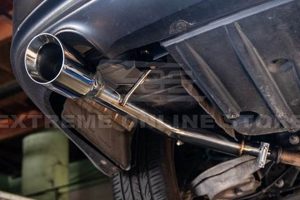
The removal of the exhaust system’s final component, designed to reduce noise, from a specific vehiclethe Audi A4is a modification frequently considered by automotive enthusiasts. This component’s purpose is primarily to attenuate the sound generated by the engine’s combustion process. Deleting it results in a more direct path for exhaust gases to exit the vehicle. For example, the standard A4 exhaust system incorporates this sound-dampening device; its elimination alters the vehicle’s sound profile.
This alteration to the exhaust system is often pursued to enhance the auditory experience of driving. The resultant amplified exhaust note can be perceived as more aggressive or sporty. Historically, modifications of this nature were relatively simple and inexpensive to execute. Today, with advancements in engine management systems and increasingly stringent emissions regulations, the impact on performance and legality requires careful consideration. Potential benefits may include a perceived increase in horsepower, though this is often marginal without accompanying modifications to the engine or exhaust system.
The subsequent sections will delve into the specific considerations, implications, and potential outcomes of modifying an Audi A4’s exhaust system in this manner. These topics will encompass the impact on sound levels, potential performance changes, legal and regulatory compliance, and alternative modification options.
Essential Considerations for an Audi A4 Muffler Delete
This section outlines critical aspects to evaluate prior to undertaking modification of the exhaust system by removing its final noise-reducing component. Careful consideration of these points can mitigate potential negative consequences.
Tip 1: Sound Level Assessment: Removing this component significantly increases exhaust volume. Prior to modification, research local noise ordinances to ensure compliance. Exceeding permissible sound levels can result in fines or vehicle impoundment.
Tip 2: Performance Expectations Management: A noticeable horsepower increase is unlikely with the deletion alone. Changes to air intake, exhaust manifolds, or engine tuning offer more substantial performance gains. Misplaced expectations may lead to disappointment.
Tip 3: Potential for Drone: The absence of the sound-dampening device can introduce “drone,” a low-frequency resonance inside the vehicle cabin at certain engine speeds. Evaluate tolerance for this before proceeding, as it can be irritating during long drives.
Tip 4: Impact on Resale Value: Modifications, particularly those affecting emissions or sound levels, may negatively affect the vehicle’s resale value. Documenting any modifications and retaining original components is advisable.
Tip 5: Professional Installation Recommendation: While seemingly straightforward, proper welding and alignment are crucial for a secure and leak-free exhaust system. Consider professional installation to avoid complications and ensure longevity.
Tip 6: Catalytic Converter Considerations: Ensure the catalytic converters remain intact and functional. Removing or modifying catalytic converters is illegal in many jurisdictions and can result in significant penalties.
Tip 7: Alternative Exhaust System Options: Before resorting to a complete deletion, investigate alternative aftermarket exhaust systems. These systems often provide a balance of enhanced sound and acceptable noise levels, while maintaining legal compliance.
Thorough evaluation of these factors is paramount to making an informed decision regarding altering the exhaust system by removing a key sound-reducing device. Prioritize legality, personal preferences, and potential drawbacks.
The concluding section will provide a summary of the discussed topics and offer final recommendations based on these considerations.
1. Increased exhaust sound

The modification of an Audi A4’s exhaust system through the removal of the noise-reducing component invariably results in a perceptible increase in exhaust volume. This alteration is a primary driver for individuals seeking this modification, fundamentally altering the auditory profile of the vehicle.
- Direct Correlation to Component Removal
The noise-reducing components purpose is to dampen the sound generated by the engine. Its removal provides a more direct pathway for exhaust gases to exit the vehicle, resulting in less sound attenuation. For example, a stock Audi A4 typically emits a subdued exhaust note; this devices removal significantly amplifies that note.
- Frequency and Tone Alteration
Beyond a simple increase in volume, the modification often alters the tonal characteristics of the exhaust. The absence of the device can result in a deeper, more resonant sound, or introduce higher frequencies that were previously suppressed. The specific sound characteristics will vary depending on the engine, exhaust system design, and removal method.
- Subjective Perception and Acceptability
The acceptability of the amplified exhaust sound is subjective. While some individuals perceive the increased volume and altered tone as desirable, others may find it intrusive or fatiguing, particularly during extended driving. Furthermore, neighbors or community members may express concerns about excessive noise, potentially leading to complaints or legal issues.
- Legal and Regulatory Ramifications
Many jurisdictions have regulations regarding vehicle noise levels. Modifying the exhaust system in a manner that exceeds these limits can result in fines or require remediation to restore the vehicle to compliance. Prior to undertaking such modifications, thorough research of local ordinances is imperative. Certain areas may have decibel limits, visual inspection requirements, or specific restrictions on exhaust system alterations.
The pursuit of increased exhaust sound through modification to an Audi A4’s exhaust system presents a multifaceted consideration. The alteration is not simply a matter of amplified volume, but also involves changes to tone, subjective perception, and potential legal ramifications. A comprehensive understanding of these elements is essential for making an informed decision.
2. Potential drone effect
The removal of the exhaust system’s sound-reducing component from an Audi A4 frequently introduces a phenomenon known as “drone,” a persistent, low-frequency resonance within the vehicle’s cabin. This effect is a direct consequence of altering the exhaust system’s design, which is originally engineered to mitigate such undesirable sounds. The sound-reducing component plays a critical role in canceling out certain frequencies. The absence of this cancellation mechanism allows these frequencies to propagate unimpeded through the exhaust system and into the passenger compartment.
The intensity of the drone effect is contingent on several factors, including engine speed, exhaust system geometry, and vehicle acoustics. Typically, drone manifests at specific engine RPM ranges, often encountered during steady-state highway cruising. For instance, an Audi A4 with the exhaust modification, may exhibit pronounced drone around 2,000-3,000 RPM. This resonance can be particularly bothersome on extended journeys, as the constant low-frequency hum can cause fatigue and discomfort for occupants. The practical significance of understanding this potential effect lies in the need to weigh the desired auditory enhancement against the potential for an uncomfortable driving experience.
Minimizing the potential for drone requires careful consideration of exhaust system design and alternative sound-dampening strategies. While complete elimination may be challenging, resonators or strategically placed sound-absorbing materials can mitigate the effect. Addressing this potential drawback is crucial to ensuring a satisfactory outcome for owners seeking a modified exhaust system. Ignoring this aspect can lead to dissatisfaction and the need for costly corrective measures. The link to the broader theme of exhaust system modifications is clear: any alteration should be approached with a comprehensive understanding of its potential consequences, not solely focused on the perceived benefits.
3. Legality concerns
Modifying a vehicle’s exhaust system by removing its sound-reducing component is subject to varying legal frameworks across different jurisdictions. Understanding these regulations is crucial to avoid potential fines, penalties, or the requirement to restore the vehicle to its original configuration. The following details pertinent areas of legal concern when considering altering the exhaust system of a vehicle by removing a key sound-reducing device.
- Noise Ordinances
Many municipalities and regions have established noise ordinances that dictate permissible sound levels for vehicles. Modifying an exhaust system to exceed these limits can result in citations. Enforcement methods vary, ranging from subjective assessments by law enforcement to objective measurements using decibel meters. For instance, an Audi A4 exhibiting demonstrably elevated exhaust noise during routine street driving may be targeted for inspection. Non-compliance often requires correcting the modification to meet the specified noise thresholds.
- Emissions Regulations
Although the modification in question primarily affects sound output, it is crucial to ensure that the alteration does not compromise the vehicle’s emissions control systems. Tampering with catalytic converters or other emissions-related components is strictly prohibited in many regions and can result in substantial fines. The presence and functionality of catalytic converters must remain intact, irrespective of exhaust modifications. The focus must be solely on the section of the exhaust system located downstream of these critical emission control devices.
- Vehicle Inspection Requirements
Periodic vehicle inspections are mandated in many jurisdictions to ensure compliance with safety and emissions standards. Modifications to the exhaust system may trigger closer scrutiny during these inspections. A vehicle with a demonstrably altered exhaust system may fail inspection if it exceeds noise limits or if the modifications are deemed unsafe. Successful completion of inspection necessitates adherence to established regulations concerning exhaust system integrity and sound output.
- State and Federal Laws
Beyond local ordinances, state and federal laws may also govern vehicle modifications. Certain states have specific statutes pertaining to exhaust system alterations, including restrictions on the removal of sound-reducing devices. At the federal level, the Environmental Protection Agency (EPA) regulates vehicle emissions and prohibits tampering with emissions control systems. These overarching regulations further underscore the importance of understanding the legal implications of modifying a vehicle’s exhaust system.
Navigating the legal landscape surrounding alterations to a vehicle’s exhaust system, such as removing its sound-reducing component, requires careful consideration of local, state, and federal regulations. Failure to comply with these regulations can result in penalties ranging from fines to the requirement to restore the vehicle to its original configuration. Prudent research and adherence to established legal frameworks are paramount when contemplating such modifications.
4. Marginal power gains

The pursuit of increased engine power is a common motivation behind automotive modifications. In the context of an Audi A4, the removal of the final sound-reducing component is sometimes considered as a potential method to unlock additional horsepower. However, the gains realized from this modification are typically minimal, rarely providing a significant performance improvement. This section details the factors contributing to the limited power increase associated with removing the sound-reducing component of an Audi A4’s exhaust system.
- Exhaust Restriction and Flow Dynamics
The standard exhaust system is designed to provide a balance between sound attenuation and exhaust gas flow. While the sound-reducing component does introduce some level of restriction, its contribution to overall backpressure is often relatively small in a stock configuration. Removing this component may marginally improve exhaust flow, but the effect on engine power is generally subtle, particularly at lower engine speeds. The most significant restriction points often lie upstream, within the catalytic converter or exhaust manifold design.
- Engine Management System Adaptation
Modern Audi A4 models are equipped with sophisticated engine management systems that adapt to changing operating conditions. These systems can compensate for minor alterations to the exhaust system, potentially negating any potential power gains. The engine control unit (ECU) relies on various sensors to optimize fuel delivery and ignition timing. Removing the sound-reducing component will, at best, prompt the ECU to make small adjustments, which often result in negligible increases in horsepower or torque. A custom ECU tune, specifically designed to take advantage of the modified exhaust system, is typically necessary to realize more substantial power gains.
- Perception vs. Reality
The increase in exhaust sound often creates a subjective perception of increased power. The amplified auditory feedback can lead drivers to believe that the vehicle is accelerating more quickly or producing more power. However, this sensation is not always supported by quantifiable data. Dyno testing, which measures actual engine output, often reveals that the power gains are within the margin of error, effectively indistinguishable from the vehicle’s baseline performance. The psychological effect of the increased sound can outweigh the actual performance benefits.
- Limitations of Stock Components
The removal of the noise-reducing components does not address the limitations inherent in other components of the exhaust system or the engine itself. The stock exhaust manifold, catalytic converter, and intake system may still represent significant bottlenecks. To achieve more substantial power increases, comprehensive modifications to the entire intake and exhaust systems, along with engine tuning, are often required. Removing the sound-reducing component alone provides a limited impact when other restrictions remain in place. A holistic approach to performance modification is typically necessary to yield meaningful results.
In summary, while the removal of the sound-reducing component from an Audi A4 exhaust may result in a slight improvement in exhaust flow, the corresponding power gains are generally minimal. Factors such as the adaptability of the engine management system, the limitations of other stock components, and the subjective perception of increased sound contribute to the limited impact on overall performance. Individuals seeking significant power increases should consider more comprehensive modifications and professional engine tuning rather than relying solely on the deletion of the sound-reducing component.
5. Installation complexity
The alteration of an Audi A4’s exhaust system through sound-reducing component removal presents varying degrees of installation complexity, dependent on the approach and available resources. The simplicity often associated with this modification can be misleading, as proper execution necessitates careful planning and technical skill to ensure a safe, reliable, and aesthetically acceptable outcome.
- Welding Requirements
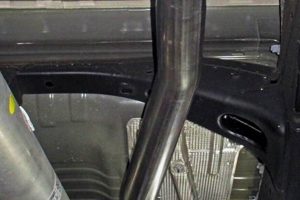
A clean and lasting Audi A4 sound-reducing component removal typically requires welding. Connecting the replacement pipe or directly sealing the exhaust system after sound-reducing component removal necessitates precise welding to prevent leaks and ensure structural integrity. Inadequate welding skills or improper equipment can result in compromised joints, leading to exhaust leaks, vibrations, and potential damage to other vehicle components. Professional welding services are often recommended to avoid these complications.
- Exhaust System Alignment
Correct alignment of the exhaust system is essential to prevent stress on the exhaust hangers and potential contact with the vehicle’s undercarriage. Sound-reducing component removal can disrupt the original alignment. If not properly corrected, this misalignment can lead to premature wear of exhaust components, increased vibrations, and potential damage to heat shields or other underbody elements. Careful measurements and adjustments are necessary to maintain proper alignment.
- Compatibility Considerations
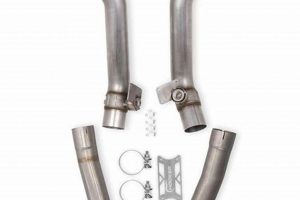
When replacing the sound-reducing component with aftermarket piping, compatibility with the existing exhaust system is paramount. Variations in pipe diameter, flange design, and hanger placement can create installation challenges. Adapters may be required to bridge differences in pipe size or flange configurations. Furthermore, ensuring adequate clearance between the replacement piping and surrounding components is crucial to prevent rattling or heat-related issues. Addressing these compatibility concerns proactively minimizes installation setbacks.
- Tool and Equipment Accessibility
Successful sound-reducing component removal requires specific tools and equipment, including a vehicle lift or jack stands, cutting tools, welding equipment (if applicable), and various hand tools. Limited access to these resources can significantly increase the complexity of the installation process. Working in a confined space without proper lifting equipment can pose safety risks and hinder the ability to perform precise cuts and welds. Prior access to these facilities is essential to avoid complications.
The installation complexity associated with modifying an Audi A4’s exhaust system by removing its sound-reducing component is a multifaceted consideration. While the procedure may appear straightforward, attention to welding requirements, exhaust system alignment, compatibility concerns, and tool accessibility is crucial for a successful outcome. Neglecting these factors can lead to complications, compromising the safety and reliability of the vehicle.
6. Resale value impact

The removal of the sound-reducing component on an Audi A4 exhaust system often negatively impacts the vehicle’s resale value. This decrease stems from several factors, primarily the perception of diminished vehicle integrity and potential non-compliance with noise regulations. A potential buyer may perceive the modification as a sign of aggressive driving or inadequate maintenance, leading to a decreased willingness to pay the market price. Furthermore, the altered exhaust note can be perceived as undesirable, narrowing the pool of potential buyers to those specifically seeking an amplified exhaust sound. For instance, a 2018 Audi A4 with a clean title and documented service history might command a premium price; however, the presence of the modification could deter buyers prioritizing a factory-standard vehicle, resulting in a lower offer.
The extent of the impact depends on several variables, including the age and overall condition of the vehicle, the quality of the modification, and the prevailing market demand. A poorly executed modification, characterized by sloppy welding or mismatched components, will likely have a more substantial negative effect than a professionally installed system. Furthermore, retaining the original factory sound-reducing component allows a seller to offer the option of reverting the vehicle to its original state, mitigating potential concerns from prospective buyers. For example, an owner selling a modified Audi A4 who can provide the original part increases the vehicle’s appeal, allowing a potential buyer to restore the vehicle to stock condition.
In conclusion, while the removal of the sound-reducing component may appeal to some enthusiasts, it is essential to consider the potential consequences for resale value. Maintaining detailed records of all modifications, ensuring professional installation, and retaining original components can help mitigate the negative impact. However, the reality remains that a modified vehicle generally commands a lower price than its factory-standard counterpart. Balancing the desire for auditory enhancements with the long-term financial implications is crucial.
7. Alternative options

When considering alterations to the sound profile of an Audi A4’s exhaust system, sound-reducing component removal represents one potential pathway. However, a range of alternative modifications exist that offer varying degrees of sound enhancement, performance modification, and regulatory compliance. Evaluating these alternatives is crucial to making an informed decision that aligns with individual preferences and constraints.
- Aftermarket Exhaust Systems
Complete aftermarket exhaust systems, ranging from cat-back to turbo-back designs, offer a comprehensive alternative to simply removing the sound-reducing component. These systems are engineered to optimize exhaust flow, potentially improving engine performance while also providing a desired exhaust note. For instance, a Magnaflow cat-back system is designed to provide a noticeable increase in sound without excessive drone, ensuring a balance between auditory enhancement and driving comfort. Such systems undergo extensive testing to ensure compatibility with the vehicle’s engine management system and emissions controls.
- Performance Sound-reducing components
Rather than a complete sound-reducing component removal, performance-oriented replacements offer a middle ground. These sound-reducing components are designed with less restrictive internal baffling, allowing for a louder and more aggressive sound while still maintaining a degree of sound attenuation. A Borla sound-reducing component, for example, uses a straight-through design that minimizes backpressure while still muffling high-frequency sounds. This approach offers a moderate increase in volume without the excessive drone often associated with complete sound-reducing component removal.
- Resonator Modifications
Adding or modifying resonators within the exhaust system can be employed to fine-tune the exhaust note and mitigate drone. Resonators function as Helmholtz resonators, canceling out specific frequencies to reduce unwanted sounds. Strategically adding a resonator to an exhaust system can target drone frequencies, improving the overall driving experience. For example, adding a Vibrant Performance resonator to the mid-pipe of an Audi A4 can effectively reduce drone without significantly affecting the overall exhaust volume.
- Electronic Exhaust Valves
Electronic exhaust valves provide a means to dynamically control exhaust sound. These valves can be opened or closed via a remote control or engine management system, allowing the driver to switch between a quiet, stock-like sound and a louder, more aggressive exhaust note. A valve system can offer versatility for drivers who want to control the sound depending on the driving situation.
These alternative options provide a spectrum of choices for Audi A4 owners seeking to modify their vehicle’s exhaust sound. Each option offers a unique balance of sound enhancement, performance modification, regulatory compliance, and cost. Thoroughly researching and comparing these alternatives is critical to selecting the most suitable modification for individual needs and preferences.
Frequently Asked Questions
This section addresses common inquiries and concerns regarding the modification of an Audi A4’s exhaust system by removing its sound-reducing component. The answers provided aim to offer clarity and informed decision-making.
Question 1: Will removing the sound-reducing component significantly increase engine horsepower?
The removal typically yields marginal gains in horsepower. Any increase realized is often within the margin of error for performance measurements and may not be perceptible during normal driving. Significant power gains necessitate comprehensive modifications.
Question 2: Is modifying the exhaust system legal?
Legality varies by jurisdiction. Many areas have noise ordinances that restrict permissible exhaust sound levels. Modifying the exhaust system to exceed these limits can result in fines or the requirement to restore the vehicle to its original configuration. Researching local regulations is essential.
Question 3: What is “drone,” and will it be a problem?
“Drone” refers to a low-frequency resonance that can occur within the vehicle’s cabin after sound-reducing component removal. The intensity varies, but can be irritating during extended driving. Alternative sound-dampening methods may mitigate the effect, but do not eliminate it completely.
Question 4: How difficult is it to remove the sound-reducing component?
The difficulty depends on the individual’s skill and access to tools. Welding is typically required to ensure a secure and leak-free exhaust system. Improper welding can lead to complications and potential damage. Professional installation is often recommended.
Question 5: Will this modification affect the car’s emissions?
The modification should not affect emissions if catalytic converters remain in place and functional. Tampering with catalytic converters is illegal and can result in substantial penalties. The focus should be on the section downstream of these crucial emission control devices.
Question 6: Will this modification decrease the resale value of my Audi A4?
The removal typically negatively affects resale value. Potential buyers may view the modification as a sign of aggressive driving or inadequate maintenance. Retaining original components and documenting modifications can help mitigate this impact.
In summary, altering an Audi A4’s exhaust system by removing the device involves various considerations. These considerations include potential performance changes, legal compliance, the likelihood of experiencing in-cabin drone, and the impact on a vehicle’s potential resale value. The potential risks and rewards associated with this modification requires careful evaluation before commencing this action.
The next section provides additional related insights.
Conclusion
This exploration of the Audi A4 muffler delete modification has illuminated several critical facets. It has been established that the removal of this component primarily affects exhaust sound, often with negligible performance gains. Furthermore, such modifications carry implications for legality, in-cabin drone, and a vehicle’s potential resale value. The alternative options examined reveal a spectrum of choices for achieving desired sound profiles while potentially mitigating negative consequences.
The information presented serves as a resource for making informed decisions regarding altering an Audi A4’s exhaust system. Prudence suggests careful consideration of all implications before undertaking modifications that may compromise legal compliance, driving comfort, or long-term vehicle value. Further research and consultation with qualified professionals are encouraged to ensure outcomes align with individual needs and expectations.