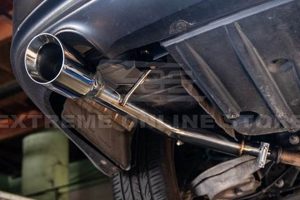
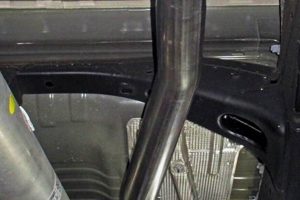
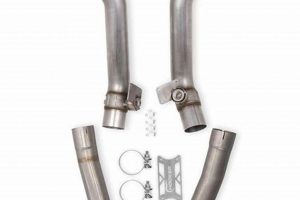
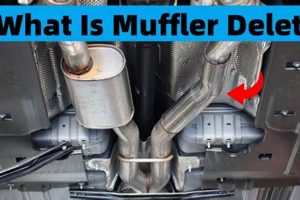
A modification involving the removal of a specific component within the exhaust system of a Volkswagen Golf GTI, seventh generation (MK7), is the focus. This alteration directly affects the vehicle’s exhaust flow and, consequently, its sound profile. The original equipment manufacturer (OEM) muffler is taken out, typically replaced by a straight pipe section.
Such alteration is frequently pursued for its potential to enhance the auditory experience emanating from the vehicle’s engine. The removal can result in a louder and potentially more aggressive exhaust note, which some drivers find desirable. There may also be a marginal increase in horsepower due to slightly reduced backpressure; however, this gain is often minimal and may not be readily perceptible. Considering local noise regulations is crucial before implementing this change, as it may impact the vehicle’s legality for road use in certain jurisdictions.
The subsequent discussion will delve into specific considerations surrounding this exhaust modification, examining its potential impacts on vehicle performance, legal ramifications, and alternative options available to drivers seeking similar results. Factors such as drone, potential performance changes, and warranty implications require careful assessment.
Considerations for Modification
This section outlines critical considerations when evaluating an exhaust system modification. Prudent planning and research can mitigate potential adverse effects and ensure regulatory compliance.
Tip 1: Research Local Regulations: Noise ordinances vary significantly by jurisdiction. Prior to undertaking any exhaust modification, ascertain the specific legal requirements in the operating area. Non-compliance can result in fines or mandatory vehicle remediation.
Tip 2: Evaluate Drone Potential: Removing an exhaust component may introduce unwanted resonance or “drone,” particularly at cruising speeds. Research the experiences of other vehicle owners with similar modifications to gauge the likelihood of this phenomenon.
Tip 3: Assess Performance Impact: While a minimal horsepower gain may be realized, changes to exhaust backpressure can, in some cases, negatively affect engine performance. Consider dyno testing to empirically measure any performance alterations.
Tip 4: Scrutinize Warranty Implications: Modifying the exhaust system could potentially void the vehicle’s warranty, specifically concerning components directly affected by the alteration. Consult with a dealership representative to clarify the warranty coverage post-modification.
Tip 5: Explore Alternative Options: Before opting for a complete removal, investigate aftermarket exhaust systems designed for the vehicle. These systems often provide an enhanced sound profile while maintaining emissions compliance and mitigating drone potential.
Tip 6: Professional Installation: If proceeding with the modification, seek professional installation services. Proper welding and fitment are critical to ensure exhaust integrity and prevent leaks.
Adhering to these considerations helps ensure a well-informed decision, mitigating potential downsides and maximizing the benefits of modifying the vehicle’s exhaust system.
The following sections will explore specific performance changes attributed to the vehicle.
1. Increased Exhaust Volume

The removal of the muffler directly corresponds with an escalation in the volume of exhaust emissions from a MK7. The muffler is engineered to attenuate sound waves generated by the engine. Deleting this component allows a greater proportion of these sound waves to propagate freely, leading to a more pronounced auditory presence.
- Elimination of Sound Dampening
The primary function of a muffler is to reduce noise. By removing it, the obstruction to sound wave propagation is eliminated. The exhaust gases exit the system with less impedance, resulting in a significantly louder and more aggressive sound signature.
- Frequency Spectrum Alteration
Removing the muffler not only increases the overall volume but also modifies the frequency spectrum of the exhaust note. The higher frequencies, which are typically dampened by the muffler, become more prominent. This shift contributes to a raspier or more metallic sound. The change might be desirable for some enthusiasts; it is essential to consider the potential impact on overall driving comfort.
- Resonance and Drone Amplification
The muffler also helps to mitigate undesirable resonance, commonly referred to as “drone.” This phenomenon manifests as a low-frequency humming or booming sound within the cabin, particularly at specific engine speeds. Removal can amplify drone, especially within the 2000-3000 RPM range. Mitigation strategies, such as adding resonators, may be required to address this issue.
- Impact on Neighborhood Sound Levels
The increased exhaust volume extends beyond the vehicle itself, affecting ambient sound levels in the surrounding environment. Residential areas and locations with strict noise regulations are particularly susceptible to the disturbance. Exercising caution and adhering to local noise ordinances are essential to maintaining community harmony.
These interconnected elements underscore the intricate relationship between removing the muffler and the resultant augmentation of exhaust volume in a MK7. The amplified sound signature presents a duality, offering an enhanced auditory experience for some while posing potential challenges related to drone, regulatory compliance, and community disturbance.
2. Potential Performance Changes
The alteration of a Volkswagen Golf GTI MK7’s exhaust system through the removal of its muffler is often associated with potential performance changes. This modification directly affects exhaust flow dynamics, impacting engine efficiency and power output. Although frequently cited as a method to increase horsepower and torque, the real-world effects are often subtle and dependent on various factors, including engine tuning, overall exhaust system design, and environmental conditions. The removal reduces backpressure within the exhaust system, theoretically allowing the engine to expel exhaust gases more efficiently. In a naturally aspirated engine, this may lead to a modest improvement in performance, particularly at higher RPMs. However, turbocharged engines, like those found in the GTI MK7, are more sensitive to changes in exhaust backpressure. Altering the exhaust system without proper tuning can potentially disrupt the turbocharger’s spooling characteristics, leading to a loss of low-end torque, even if high-end horsepower sees a small increase.
For example, a GTI MK7 with a stock engine management system may not fully capitalize on the reduced backpressure offered by the modification. In contrast, a GTI MK7 equipped with aftermarket engine tuning software specifically designed to optimize performance with an altered exhaust system might demonstrate a more pronounced performance gain. Furthermore, the performance effect may be negligible if the rest of the exhaust system remains restrictive. In such cases, the bottleneck shifts to other exhaust components, such as the catalytic converter or exhaust piping diameter. A complete exhaust system upgrade, rather than simply removing the muffler, may be necessary to realize significant performance improvements. Independent dyno testing of modified GTI MK7 vehicles has shown results ranging from negligible horsepower gains to modest increases of around 5-10 horsepower, with the actual outcome varying considerably based on the specific vehicle configuration and tuning.
In summary, the alteration affects the engine’s operational efficiency, typically leading to a minor increase in horsepower, although results can vary substantially. Without corresponding adjustments to engine tuning or other exhaust system components, the benefits of removal may be minimal. The alteration primarily offers an enhanced exhaust sound profile rather than a significant increase in performance. The modification may not present a substantial increase in horsepower to be a worthwhile performance trade for some drivers. Before implementing this modification, one should carefully consider the potential impacts, weighing any potential performance changes against potential drawbacks.
3. Legality Considerations

The action of removing the muffler from a Volkswagen Golf GTI MK7 directly impacts the vehicle’s compliance with established legal standards. Vehicle noise regulations, which exist at the local, state, and potentially federal levels, establish permissible decibel limits for vehicles operating on public roadways. The component’s removal invariably leads to an increase in exhaust noise, which can exceed these pre-defined thresholds. For example, many municipalities have ordinances specifying maximum permissible sound levels at a set distance from a vehicle. A GTI MK7 lacking a muffler is highly likely to violate such regulations, subjecting the owner to fines or requirements to restore the exhaust system to its original configuration.
Furthermore, the legality of this alteration extends to emission control systems. While the component itself is not directly responsible for emissions reduction, modifications that affect the exhaust flow may indirectly influence the efficiency of catalytic converters or other emissions control devices. In some jurisdictions, any alteration to the exhaust system, regardless of its direct impact on emissions, may be considered a violation of anti-tampering laws. A practical illustration of this can be found in states with stringent vehicle inspections, where a modified exhaust system will result in the vehicle failing inspection, rendering it ineligible for legal road use. The significance of this understanding lies in preventing unintended legal repercussions and ensuring responsible vehicle operation.
In summary, the interaction between legality and the modification is multifaceted and context-dependent. Drivers contemplating such alterations must proactively investigate and comply with all applicable noise and emission regulations to avoid potential legal penalties. Due diligence in researching specific jurisdictional requirements is paramount before modifying the exhaust system. Failure to do so may compromise the vehicle’s roadworthiness and expose the owner to legal consequences.
4. Drone/Resonance Issues
The elimination of the muffler from a Volkswagen Golf GTI MK7 frequently introduces or exacerbates undesirable drone and resonance within the vehicle’s cabin. This phenomenon stems from altering the exhaust system’s acoustic properties, leading to the amplification of specific frequencies that resonate uncomfortably within the passenger compartment. Understanding the factors contributing to drone is crucial for mitigating its effects following the modification.
- Standing Wave Formation
Exhaust systems, including the GTI MK7’s, are designed to manage and dissipate sound waves. Removing the muffler disrupts this engineered balance, allowing standing waves to form within the exhaust piping. These standing waves, characterized by fixed locations of high and low pressure, can resonate with the vehicle’s chassis and interior components, producing a droning sound, particularly at certain engine speeds (typically between 2000-3000 RPM). The frequency of these standing waves is influenced by the length and diameter of the exhaust piping, as well as the engine’s firing order. Specific design modifications, such as incorporating Helmholtz resonators or strategically placed sound-deadening materials, can be employed to counteract the formation of these waves and minimize the resulting drone.
- Chassis and Body Panel Vibration
The low-frequency sound waves generated by an exhaust lacking a muffler can induce vibrations in the vehicle’s chassis and body panels. These vibrations, transmitted through the metal structure, contribute to the overall perception of drone within the cabin. Reinforcing specific areas of the chassis, such as the floorboards or firewall, and applying sound-deadening materials to body panels can help dampen these vibrations and reduce the intensity of the drone. Furthermore, ensuring that exhaust hangers are properly installed and isolated from the chassis can prevent direct transmission of vibrations.
- Helmholtz Resonance
Helmholtz resonance occurs when the exhaust system’s volume and geometry create a cavity that resonates at a specific frequency. This resonance can amplify certain frequencies, leading to a pronounced droning sound. Mufflers are specifically designed to disrupt Helmholtz resonance within the exhaust system. Their removal allows these resonant frequencies to become more prominent. Mitigation strategies involve incorporating Helmholtz resonators tuned to the specific frequency causing the drone, effectively canceling out the undesirable sound wave.
- Exhaust Gas Pulsation
The pulsating flow of exhaust gases exiting the engine generates pressure waves within the exhaust system. Mufflers play a crucial role in smoothing out these pulsations and reducing the amplitude of pressure fluctuations. Without a muffler, these pressure waves can become more pronounced, leading to increased noise and vibration. Furthermore, the amplified pressure waves can induce fatigue in exhaust components over time, potentially leading to leaks or structural failures. Installing a resonator or a high-flow catalytic converter can help dampen these pressure waves and mitigate the associated noise and vibration.
These factors, either individually or in combination, contribute to the emergence of drone following the removal of the muffler from a GTI MK7. Recognizing the underlying causes of drone is essential for selecting appropriate mitigation strategies and achieving a balance between enhanced exhaust sound and acceptable levels of cabin noise.
5. Warranty Implications
The removal of the muffler from a Volkswagen Golf GTI MK7 carries significant warranty implications. Automakers typically offer a limited warranty covering defects in materials or workmanship. However, this warranty is not absolute; it can be voided or partially invalidated by modifications that are deemed to have caused or contributed to the failure of a covered component. Altering the exhaust system, specifically through the procedure in question, falls under this category. A direct causal link between the modification and a subsequent component failure is not always necessary for the warranty to be affected. If a dealership or manufacturer determines that the alteration increased the likelihood of the failure, warranty coverage may be denied.
For instance, consider a scenario where the engine of a GTI MK7 experiences premature valve failure after the exhaust system has been modified. While valve failure is not directly related to the exhaust, the dealership might argue that the altered exhaust flow characteristics impacted engine backpressure, contributing to increased stress on the valves. This argument could be used to deny warranty coverage for the engine repair. Similarly, if the catalytic converter fails prematurely, the manufacturer could contend that the altered exhaust flow, resulting from the absence of the muffler, caused the converter to overheat or otherwise malfunction. In such cases, the owner bears the burden of proving that the alteration did not contribute to the failure. Moreover, the removal could indirectly affect unrelated components; for example, increased engine strain resulting from improper tuning after the removal could lead to transmission or drivetrain issues, voiding the respective warranties. The risk of warranty denial is further amplified if the modification is performed improperly, resulting in damage to the exhaust system or adjacent components.
In conclusion, while removing the muffler from a GTI MK7 may offer perceived benefits in terms of sound or potentially minimal performance gains, the potential impact on the vehicle’s warranty must be carefully weighed. The burden of proof often rests with the vehicle owner to demonstrate that the modification did not contribute to any subsequent failures. Before undertaking such alterations, consulting with a dealership to understand the specific warranty implications and documenting all modifications is strongly advised. Electing to proceed with awareness of the potential risks empowers informed decision-making.
6. Installation Complexity
The action involving a component from the exhaust system of a Volkswagen Golf GTI MK7 is characterized by a specific degree of installation complexity that merits careful consideration. This complexity is not solely determined by the physical act of component removal but also encompasses the requisite preparatory steps, potential complications, and the necessary post-installation adjustments. The process generally entails detaching the existing muffler from the exhaust piping, frequently involving the loosening of bolted connections or cutting and welding procedures depending on the specific exhaust system design. Access to appropriate tools, including a jack, jack stands, cutting tools (if necessary), welding equipment (if required), and various wrenches and sockets, is fundamental to successful execution.
Moreover, the installation complexity can increase significantly based on several factors. The presence of corrosion on exhaust components can hinder disassembly, requiring the application of penetrating lubricants or the use of specialized tools to avoid damaging fasteners. Furthermore, ensuring a leak-free seal after the removal process is paramount. Improper welding, misalignment of exhaust piping, or the use of unsuitable clamps can result in exhaust leaks, compromising performance and generating unwanted noise. The complexity also increases if the vehicle owner opts to install a straight pipe in place of the removed muffler, necessitating precise cutting and welding to ensure proper fitment and alignment with the existing exhaust system. Safety considerations, such as working with hot exhaust components and handling welding equipment, also contribute to the overall complexity. Therefore, while the theoretical concept of removing this component may seem straightforward, the actual implementation demands a certain level of mechanical skill and attention to detail.
In conclusion, the action, while seemingly simple, involves intricacies that demand careful planning, appropriate tools, and a degree of mechanical proficiency. Neglecting these aspects can lead to complications such as exhaust leaks, improper fitment, and potential safety hazards. For individuals lacking the necessary skills or experience, seeking professional installation services is advisable to mitigate these risks and ensure a satisfactory outcome. Installation difficulty is a pivotal consideration in the evaluation of the entire modification undertaking.
7. Alternative Systems

The decision to remove a specific exhaust component from a Volkswagen Golf GTI MK7 often prompts consideration of alternative exhaust system configurations. These “Alternative Systems” offer a spectrum of options designed to achieve similar goals enhanced exhaust sound, potential performance improvements while addressing the drawbacks associated with a complete removal, such as increased drone and potential legal non-compliance.
- Cat-Back Systems
Cat-back systems replace the exhaust components from the catalytic converter back to the exhaust tips. These systems typically include a less restrictive muffler or resonator, which can provide a more aggressive exhaust note without the extreme volume and drone often associated with a removal. Performance gains may be realized through reduced backpressure, while emissions compliance is generally maintained. Examples include systems from reputable manufacturers like Magnaflow or Borla, designed specifically for the GTI MK7.
- Axle-Back Systems
Axle-back systems are a less extensive modification, replacing only the components from the rear axle to the exhaust tips. These systems primarily focus on altering the exhaust sound, offering a more cost-effective solution than cat-back systems. While performance gains are typically minimal, axle-back systems can provide a noticeable improvement in exhaust tone without significantly increasing drone. Systems of this type frequently retain the stock muffler location, replacing it with a less restrictive unit. A common example is aFe Power’s axle-back system for the GTI MK7.
- Resonator Addition
Instead of removing the muffler entirely, installing a resonator in conjunction can help mitigate drone while still achieving a louder exhaust note. Resonators are designed to cancel out specific frequencies that contribute to drone, providing a more refined sound experience. This approach offers a middle ground between a completely stock exhaust and a completely altered system. Vibracoustic offers resonators that could provide such drone reduction.
- Electronic Exhaust Cutouts
Electronic exhaust cutouts provide the option to bypass the muffler on demand. These systems consist of a valve placed in the exhaust piping that can be opened or closed electronically. When the valve is closed, the exhaust flows through the muffler, maintaining a relatively quiet sound. When the valve is opened, the exhaust bypasses the muffler, resulting in a significantly louder and more aggressive exhaust note. While offering versatility, electronic cutouts may still be subject to noise regulations and require careful installation to prevent leaks.
These alternative systems represent a range of options for GTI MK7 owners seeking to modify their exhaust systems. The choice between a complete removal and one of these alternatives depends on individual preferences, budget considerations, and adherence to local regulations. These provide tailored approaches to adjust the exhaust profile.
Frequently Asked Questions
The following questions address common inquiries and concerns regarding the modification of a Volkswagen Golf GTI MK7’s exhaust system, specifically the elimination of a specific component.
Question 1: Will a removal demonstrably increase horsepower in a GTI MK7?
The quantifiable horsepower increase attributable to this modification is often minimal, typically ranging from negligible to a marginal gain of approximately 5-10 horsepower. The realized benefit is contingent upon factors such as engine tuning and overall exhaust system configuration.
Question 2: Does the component’s removal affect the turbocharger’s performance characteristics?
The removal can potentially alter the turbocharger’s spooling behavior. Without appropriate engine tuning, a reduction in low-end torque may occur, negating potential high-end horsepower gains.
Question 3: Are there legal ramifications associated with modifying the exhaust system?
The action of removing the component frequently violates local noise ordinances. Strict adherence to noise regulations within the operational area is imperative to avoid fines and penalties.
Question 4: What are the typical drone frequencies experienced after a removal?
Drone, or unwanted resonance, commonly manifests within the 2000-3000 RPM range following the modification. This phenomenon can be mitigated through the installation of resonators or sound-deadening materials.
Question 5: Can this exhaust modification void the vehicle’s warranty?
Modifying the exhaust system can potentially void the warranty, particularly concerning components directly affected by the alteration. Consultation with a dealership representative is recommended to clarify warranty coverage post-modification.
Question 6: What are viable alternative exhaust system options?
Alternative options include cat-back systems, axle-back systems, resonator additions, and electronic exhaust cutouts. These alternatives offer varying degrees of sound enhancement and performance gains while potentially mitigating drone and maintaining emissions compliance.
These FAQs offer a concise overview of critical considerations pertaining to modifying the MK7’s exhaust system. Thorough research and careful evaluation are essential prior to undertaking such alterations.
Subsequent sections will discuss the implications of the modification in certain use case.
Muffler Delete GTI MK7
This exploration of the “muffler delete gti mk7” modification has illuminated the complex interplay of factors involved. The potential for enhanced auditory experience and marginal performance gains must be carefully weighed against the risks of legal non-compliance, increased drone, and potential warranty complications. Installation considerations further contribute to the decision-making process, necessitating a realistic assessment of one’s mechanical capabilities.
Ultimately, undertaking this modification represents a calculated decision. A comprehensive understanding of the implications is crucial. Prioritization of factors and considerations of regulations is paramount. Prudent deliberation, informed by the information, will enable one to make a choice aligned with individual needs and priorities.