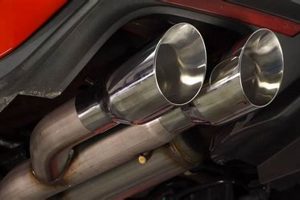
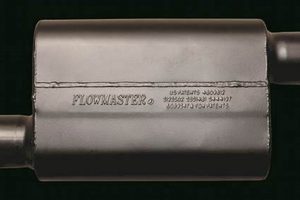
The tonal quality emitted by a vehicle’s exhaust system, often modified or enhanced through aftermarket components, contributes significantly to the overall driving experience. This characteristic sound, influenced by factors such as muffler design and internal baffling, can range from a subtle purr to an aggressive roar, appealing to diverse preferences.
The aural signature produced by an exhaust system plays a vital role in perceived vehicle performance and brand identity. Throughout automotive history, specific exhaust notes have become intrinsically linked to particular makes and models, evoking emotions and contributing to a sense of driving pleasure. Optimizing this sound can enhance driver satisfaction and improve the vehicle’s perceived value.
Subsequent sections will delve into the various muffler technologies employed to achieve specific sound profiles, discussing the trade-offs between performance, noise levels, and regulatory compliance. Furthermore, factors to consider when selecting a muffler based on individual needs and vehicle type will be examined.
Achieving Optimal Exhaust Tone
Maximizing the desired aural characteristics from a vehicle’s exhaust system requires careful attention to several factors. Understanding these principles will facilitate informed decision-making regarding muffler selection and installation.
Tip 1: Evaluate Vehicle Compatibility: Ensure the chosen muffler is specifically designed for the vehicle’s make, model, and engine displacement. Mismatched components can lead to performance degradation and undesirable sound characteristics.
Tip 2: Consider Muffler Construction: Chambered mufflers generally produce a deeper, more resonant tone, while straight-through designs offer increased flow and a louder, more aggressive sound. Select a design that aligns with desired aural qualities.
Tip 3: Analyze Material Composition: Stainless steel mufflers provide superior corrosion resistance and longevity compared to aluminized steel, particularly in regions with harsh weather conditions.
Tip 4: Assess Noise Regulations: Be aware of local noise ordinances and select a muffler that complies with legal sound level limits to avoid potential fines or legal issues.
Tip 5: Optimize Installation Practices: Proper installation is crucial for achieving the intended exhaust note and preventing leaks. Ensure all connections are secure and utilize high-quality clamps and gaskets.
Tip 6: Explore Resonator Integration: The addition of a resonator can further refine the exhaust note, reducing drone and unwanted frequencies while maintaining desired sound characteristics.
Tip 7: Account for Exhaust System Diameter: Matching the muffler’s inlet and outlet diameter to the existing exhaust system ensures optimal flow and prevents restriction, which can negatively impact sound and performance.
By carefully considering these factors, it is possible to achieve a satisfying exhaust note that enhances the driving experience while adhering to legal requirements and maintaining vehicle performance.
The subsequent section will summarize the principles discussed and offer further guidance on selecting an appropriate muffler for specific applications.
1. Subjective Preference
The assessment of the “best muffler sound” is intrinsically linked to individual auditory preferences. This subjectivity arises from varying personal experiences, cultural backgrounds, and the intended application of the vehicle. An exhaust note deemed desirable by one driver may be considered objectionable by another. This variability necessitates a nuanced understanding of the factors contributing to individual preferences. For example, an individual prioritizing minimal cabin noise during highway cruising will likely favor a muffler designed for quiet operation, even if it sacrifices the aggressive tone preferred by performance enthusiasts. Conversely, a driver seeking to enhance the perceived sportiness of their vehicle may prioritize a muffler that amplifies engine sounds and generates a more pronounced exhaust note, despite the potential for increased cabin noise. The perceived quality of the sound, including its richness, depth, and absence of undesirable frequencies, also contributes significantly to subjective satisfaction.
Furthermore, the intended use of the vehicle significantly influences subjective preference. A truck owner utilizing their vehicle for heavy-duty work may prioritize a robust and durable muffler capable of withstanding harsh conditions, even if it produces a less refined sound. Conversely, the owner of a classic car may seek a muffler that replicates the original exhaust note of the vehicle, even if modern designs offer superior performance or noise reduction capabilities. This highlights the crucial role of context in shaping individual preferences. Marketing efforts can also influence perception; brands often associate specific exhaust notes with performance or luxury, conditioning consumers to favor certain sounds. Therefore, selecting an appropriate muffler requires careful consideration of personal tastes, vehicle usage, and the desired emotional response.
In summary, the connection between subjective preference and the “best muffler sound” underscores the importance of a personalized approach. Understanding individual auditory sensitivities, intended vehicle use, and the influence of marketing are all crucial factors in achieving satisfaction. Manufacturers and installers must recognize this variability and provide consumers with sufficient information to make informed decisions. Failure to acknowledge the subjective nature of sound can lead to dissatisfaction, highlighting the necessity for individualized solutions in exhaust system design and selection.
2. Frequency Spectrum
The frequency spectrum plays a defining role in shaping the perceived quality of exhaust acoustics, directly influencing whether a sound is considered desirable. The exhaust note, analyzed in terms of its frequency components (measured in Hertz), determines the overall tonal character. A preponderance of low frequencies creates a deep, rumbling sound often associated with powerful engines. Conversely, a dominance of high frequencies generates a raspy or tinny sound, generally considered less appealing. The distribution of energy across the frequency spectrum is therefore critical in achieving what is subjectively deemed the “best muffler sound.” For example, performance vehicles frequently employ mufflers tuned to emphasize lower frequencies, creating an aggressive and authoritative exhaust note. In contrast, luxury vehicles often utilize mufflers designed to suppress higher frequencies, resulting in a smoother, more refined sound profile. This distinction exemplifies how the controlled manipulation of the frequency spectrum achieves distinctly different auditory characteristics.
The importance of the frequency spectrum extends beyond mere subjective preference. Specific frequency ranges can contribute to undesirable phenomena such as “drone,” a low-frequency resonance that causes discomfort within the vehicle’s cabin. Effective muffler design incorporates techniques to mitigate these problematic frequencies. Examples include Helmholtz resonators, which are tuned to cancel out specific unwanted frequencies, and strategically placed baffles that alter the flow of exhaust gases, thereby modifying the frequency spectrum. Furthermore, the interaction between the exhaust system’s natural frequencies and the engine’s firing order influences the overall sound. A properly designed muffler takes these factors into account, ensuring a harmonious and pleasing auditory experience. Understanding the frequency spectrum also enables precise customization of exhaust notes. Through careful selection of muffler materials, internal geometry, and resonator configuration, it is possible to tailor the exhaust sound to align with specific aesthetic goals or performance requirements.
In conclusion, the frequency spectrum is a foundational element in defining the “best muffler sound.” Its influence extends from subjective perception to the mitigation of unwanted acoustic phenomena and the precise customization of exhaust notes. A thorough understanding of the frequency spectrum allows for informed muffler selection and design, ultimately contributing to a more enjoyable and satisfying driving experience. While challenges remain in accurately predicting and controlling the complex acoustic interactions within an exhaust system, the principles of frequency analysis provide a crucial framework for optimizing exhaust sound quality.
3. Decibel Level
The decibel level, a logarithmic unit measuring sound intensity, is intrinsically linked to the subjective perception of an exhaust note. While the best muffler sound is often associated with a desirable tone or character, its acceptability is fundamentally constrained by the overall sound pressure level. Excessive decibel levels can lead to noise pollution, regulatory non-compliance, and diminished driver comfort. Conversely, insufficient decibel levels may result in a perceived lack of power or performance. Therefore, achieving the “best muffler sound” necessitates a careful balance between tonal quality and sound intensity, adhering to legal limits and satisfying personal preferences.
The practical significance of understanding decibel levels is evident in muffler design and selection. Manufacturers employ various techniques, such as baffling and sound-absorbing materials, to control the decibel output of their products. Consumers, in turn, must consider local noise ordinances and vehicle usage when choosing a muffler. For example, a performance enthusiast may seek a muffler with a relatively high decibel level to accentuate the engine’s sound, but must ensure compliance with legal limits to avoid fines. Similarly, an individual residing in a densely populated area may prioritize a quieter muffler, even if it compromises the perceived “sportiness” of the vehicle. Furthermore, the impact of decibel level on driver comfort is a critical consideration, especially during long journeys. Prolonged exposure to high decibel levels can lead to fatigue and even hearing damage, underscoring the importance of selecting a muffler that provides an acceptable balance between sound intensity and driver well-being.
In summary, the decibel level is a crucial determinant of the perceived “best muffler sound.” Its influence extends beyond mere subjective preference, encompassing regulatory compliance, environmental impact, and driver health. While the ideal decibel level varies depending on individual needs and circumstances, a thorough understanding of its effects is essential for informed muffler selection and responsible vehicle operation. Ongoing research into noise reduction technologies and regulatory standards will continue to shape the relationship between decibel levels and the pursuit of optimal exhaust acoustics.
4. Resonance Control
Resonance control is a pivotal factor in achieving a subjectively pleasing exhaust note. Uncontrolled resonance can produce undesirable frequencies and drone, detracting from the overall auditory experience. Effective resonance management shapes the sound profile, contributing significantly to what is perceived as the “best muffler sound”.
- Helmholtz Resonators
Helmholtz resonators are specifically tuned chambers within the exhaust system designed to attenuate particular frequencies. By precisely targeting unwanted resonance frequencies, such as those responsible for drone at cruising speeds, these resonators create a more refined and comfortable driving experience. For instance, a vehicle experiencing drone at 2000 RPM may incorporate a Helmholtz resonator tuned to cancel out that specific frequency, resulting in a smoother sound profile.
- Quarter-Wave Tubes
Quarter-wave tubes utilize the principle of acoustic cancellation to mitigate resonance. These tubes are designed with a specific length corresponding to a quarter of the wavelength of the target frequency. When the reflected sound wave from the tube interacts with the original sound wave, it creates destructive interference, effectively reducing the amplitude of the unwanted frequency. This technique is often employed to eliminate high-pitched frequencies, producing a deeper and more controlled exhaust note.
- Chambered Muffler Design
Chambered mufflers utilize internal chambers and baffles to redirect and dampen sound waves. The size and configuration of these chambers influence the frequencies that are attenuated and amplified. By carefully designing the chamber arrangement, manufacturers can tailor the exhaust note to achieve a desired sound profile, minimizing unwanted resonance and enhancing the overall tonal quality. This contrasts with straight-through muffler designs, which prioritize flow and tend to produce a louder, more aggressive sound with less resonance control.
- Acoustic Absorption Materials
The strategic use of sound-absorbing materials, such as fiberglass packing or specialized damping compounds, within the muffler can effectively reduce resonance and high-frequency noise. These materials convert sound energy into heat, dampening vibrations and attenuating unwanted frequencies. The selection and placement of these materials are crucial in achieving optimal resonance control without significantly restricting exhaust flow, which can negatively impact performance.
Effective resonance control, achieved through the implementation of Helmholtz resonators, quarter-wave tubes, chambered muffler designs, and acoustic absorption materials, is essential in shaping a desirable exhaust note. The careful manipulation of resonance contributes significantly to achieving the “best muffler sound”, enhancing the driving experience and minimizing unwanted noise and vibration.
5. Harmonic Balance
Harmonic balance, in the context of exhaust acoustics, refers to the proportional relationship among the various frequencies present in the overall sound signature. The achievement of harmonic balance is a critical determinant of whether an exhaust note is perceived as pleasing or grating. When the fundamental frequency and its related overtones are proportionally aligned, the resultant sound is typically described as rich, full, and musical. Conversely, an imbalance, wherein certain frequencies are either excessively amplified or unduly suppressed, can lead to a dissonant and unpleasant sound. This equilibrium is a cornerstone of what constitutes the “best muffler sound.” A real-world example lies in comparing two identical vehicles, one equipped with a muffler meticulously engineered for harmonic balance, and the other with a generic, mass-produced muffler. The former will likely exhibit a smooth, sonorous exhaust note, while the latter may produce an uneven, raspy sound due to the inconsistent amplification and attenuation of different frequencies. The practical significance of this understanding lies in enabling informed muffler selection and design, ultimately contributing to an enhanced driving experience.
Further analysis reveals that the harmonic balance within an exhaust note is influenced by a multitude of factors, including the engine’s firing order, the exhaust system’s geometry, and the internal design of the muffler itself. Certain muffler designs, such as those employing strategically placed baffles and resonance chambers, are specifically engineered to manipulate the harmonic content of the exhaust sound. For instance, a chambered muffler may be designed to amplify specific harmonics associated with a particular engine type, resulting in a more pronounced and characteristic exhaust note. Similarly, the length and diameter of the exhaust pipes can significantly affect the resonant frequencies within the system, altering the harmonic balance and overall sound. Practical applications of this knowledge are evident in the aftermarket exhaust industry, where manufacturers offer a diverse range of mufflers designed to achieve specific harmonic profiles, catering to various aesthetic preferences and performance objectives. Understanding these factors is critical for automotive engineers seeking to optimize exhaust sound quality and for consumers seeking to enhance their vehicle’s auditory signature.
In conclusion, harmonic balance is a fundamental, yet often overlooked, aspect of exhaust acoustics and is inextricably linked to the perception of “best muffler sound.” Its achievement necessitates a comprehensive understanding of the interplay between engine characteristics, exhaust system design, and muffler technology. While precisely quantifying and controlling harmonic balance remains a complex engineering challenge, the principles outlined above provide a valuable framework for optimizing exhaust sound quality and achieving a subjectively pleasing auditory experience. Future research focused on advanced acoustic modeling and materials science will likely contribute to further advancements in harmonic control and the pursuit of the ideal exhaust note.
Frequently Asked Questions
The following addresses common inquiries regarding the characteristics and selection of mufflers for achieving desirable exhaust acoustics.
Question 1: What factors primarily influence exhaust sound?
Several elements contribute, including muffler design (chambered vs. straight-through), internal baffling, material composition (stainless steel vs. aluminized steel), exhaust system diameter, and the presence of resonators. Engine characteristics, such as firing order and displacement, also play a significant role.
Question 2: How does muffler design affect sound?
Chambered mufflers typically produce a deeper, more resonant tone due to internal chambers that redirect and dampen sound waves. Straight-through mufflers offer increased flow and a louder, more aggressive sound with less resonance control.
Question 3: What is “drone” and how can it be mitigated?
“Drone” refers to low-frequency resonance within the vehicle’s cabin, often occurring at specific RPM ranges. Mitigation strategies include utilizing Helmholtz resonators tuned to cancel out the problematic frequencies, implementing quarter-wave tubes, or optimizing muffler design for better resonance control.
Question 4: Are louder mufflers always better for performance?
Not necessarily. While a less restrictive muffler can improve exhaust flow and potentially increase power, excessive noise levels may not correlate with performance gains. A properly designed muffler balances flow characteristics with sound attenuation to optimize both performance and driver comfort.
Question 5: How important is material selection?
Material selection impacts durability and longevity. Stainless steel mufflers offer superior corrosion resistance compared to aluminized steel, particularly in environments with harsh weather conditions. However, stainless steel may also be more expensive.
Question 6: Do local noise ordinances need to be considered?
Adherence to local noise ordinances is imperative. Exceeding permissible sound levels can result in fines or legal repercussions. Prior to muffler selection, research and understand applicable noise regulations in the relevant jurisdiction.
Proper understanding of these aspects enhances the selection and optimization process of Mufflers, ultimately creating a balance between desired sound characteristics and other elements
Subsequent article sections provide in-depth analysis regarding the best muffler sound
Concluding Observations on Exhaust Acoustic Optimization
The foregoing analysis has underscored the multifaceted nature of achieving optimal exhaust acoustics. The pursuit of the “best muffler sound” transcends mere volume; it demands a nuanced understanding of frequency spectra, resonance control, harmonic balance, and adherence to regulatory noise limits. Successful implementation requires careful consideration of vehicle specifications, intended application, and individual preferences. Trade-offs between performance, sound quality, and environmental responsibility must be carefully evaluated.
Continued advancements in materials science, acoustic modeling, and manufacturing techniques promise further refinements in exhaust system design. Engineers and enthusiasts alike should remain vigilant in their pursuit of responsible and aesthetically pleasing exhaust solutions, recognizing the delicate balance between personal expression and the collective need for a harmonious acoustic environment. The ultimate success lies not merely in achieving a desirable sound, but in doing so with an awareness of the broader implications.