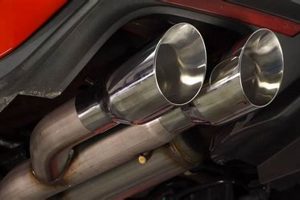
The components affixed to the exhaust system’s outlet modify the auditory characteristics of a vehicle. These additions, typically crafted from materials such as stainless steel or chrome, alter the way exhaust gases are expelled, thereby influencing the perceived noise emanating from the tailpipe. A larger diameter or a different internal design can result in a deeper, more resonant tone, while other configurations might produce a higher-pitched or more aggressive sound.
Altering a vehicle’s aural profile allows for personal expression and can enhance the perceived performance of the automobile. Historically, modifying exhaust systems was primarily driven by performance gains. However, the focus has evolved to include aesthetic appeal and the subjective improvement of the driving experience through auditory customization. The selection of aftermarket parts is extensive, offering diverse options to cater to individual preferences.
The following discussion will delve into the various types of these components, their impact on sound characteristics, and considerations for installation and regulatory compliance.
Maximizing Auditory Modification Through Exhaust Outlets
This section presents key considerations for individuals seeking to adjust the acoustic properties of their vehicle’s exhaust through alterations to its terminal components.
Tip 1: Material Selection Impacts Tone. The composition of the aftermarket component directly influences the sound produced. Stainless steel generally provides a brighter, more metallic tone, while titanium results in a sharper, higher-frequency output.
Tip 2: Diameter Affects Sound Volume. Increasing the diameter typically amplifies the overall volume of the exhaust note. A larger opening allows for a greater volume of exhaust gases to escape more rapidly, contributing to a louder sound.
Tip 3: Resonator Integration Can Minimize Drone. Resonators mitigate unwanted frequencies, particularly those associated with drone, which can be fatiguing during prolonged driving. Integrating a resonator into the exhaust system helps refine the overall sound quality.
Tip 4: Angle Cuts Influence Perceived Aggressiveness. Angled cuts project sound differently compared to straight cuts. Aggressively angled outlets tend to produce a sharper, more direct sound projection, potentially perceived as more assertive.
Tip 5: Consider Local Noise Ordinances. Prior to modifying any exhaust component, research local noise regulations. Exceeding permissible noise levels can result in fines or require restoration to original specifications.
Tip 6: Professional Installation Ensures Optimal Results. While some installations can be completed by experienced individuals, engaging a qualified mechanic ensures correct fitment and minimizes the risk of leaks or damage to the exhaust system.
Tip 7: Matching to Car Models Each exhaust component has the potential to maximize the sound qualities of the original model, especially in luxury vehicles where owners may not want to eliminate the original sound from the model.
Careful attention to these elements allows for a customized auditory experience while adhering to legal requirements. Thoughtful planning and execution will yield satisfactory results.
The following section will address legal implications and environmental considerations associated with aftermarket exhaust components.
1. Diameter expansion

Diameter expansion, in the context of exhaust system modifications, represents a deliberate increase in the cross-sectional area of the terminal component. This alteration directly influences the flow dynamics of exhaust gases and, consequently, the auditory characteristics emanating from the vehicle. The following points detail specific aspects of diameter expansion and its effect on sound.
- Flow Rate Augmentation
Enlarging the outlet permits a greater volume of exhaust gas to exit the system within a given timeframe. This accelerated outflow contributes to an increase in the overall sound pressure level, often perceived as increased loudness.
- Frequency Modulation
Diameter expansion influences the resonant frequencies within the exhaust system. A larger diameter can shift these frequencies downward, resulting in a deeper, more bass-heavy exhaust note. Conversely, insufficient expansion may lead to higher-pitched sounds or undesirable raspiness.
- Backpressure Reduction
Increasing the diameter reduces backpressure within the exhaust system. This reduction can impact engine performance and, indirectly, the sound profile. Lower backpressure often correlates with a more aggressive or unrestricted exhaust sound, particularly at higher engine speeds.
- Acoustic Amplification
The outlet acts as a natural amplifier for the sound waves generated within the exhaust system. Enlarging this opening amplifies these waves, projecting them further and increasing their audibility. This amplification contributes to the increased presence of the exhaust note.
These facets illustrate how diameter expansion is a critical factor in shaping a vehicle’s exhaust note. The interplay between flow dynamics, resonant frequencies, backpressure, and acoustic amplification dictates the final auditory output, enabling precise control over the acoustic signature. Understanding these principles allows for informed selection and modification of exhaust system components to achieve a desired sound profile.
2. Material composition

The selection of materials plays a crucial role in defining the sonic characteristics of an exhaust system. Different materials exhibit distinct acoustic properties that directly influence the sound emanating from the vehicle. This influence makes material composition a key determinant in shaping the final auditory signature.
- Stainless Steel Characteristics
Stainless steel, a frequently employed material, provides a bright, crisp tonal quality. Its inherent resonant properties result in a pronounced, metallic sound that is often preferred for its clarity and responsiveness. Its corrosion resistance is beneficial; however, the metal itself will affect the decibel level produced.
- Titanium Resonance
Titanium, known for its lightweight and high strength, produces a sharper, higher-frequency exhaust note. Its resonant characteristics result in a distinct, high-pitched sound, often associated with performance applications. Typically, titanium made components are popular for owners with luxury vehicles.
- Carbon Fiber Dampening Properties
Carbon fiber, while primarily used for aesthetic purposes, possesses inherent dampening qualities. Integrating carbon fiber into exhaust components can subtly reduce resonance, resulting in a smoother, more refined exhaust note. However, it is seldom used as a primary noise control medium.
- Aluminized Steel Attributes
Aluminized steel, a cost-effective alternative, tends to produce a deeper, more muted sound compared to stainless steel. Its dampening characteristics reduce high-frequency resonance, resulting in a less aggressive sound profile. It is a budget material that produces more bass than stainless steel, however, stainless steel tends to be preferred over aluminized steel.
In summary, the material composition significantly influences the perceived sound profile of an exhaust. By carefully selecting materials with specific acoustic properties, manufacturers can manipulate the tone, resonance, and overall character of the exhaust note, catering to diverse preferences and performance requirements. For these reasons, many owners take the material into consideration for aesthetics and performance.
3. Internal baffling

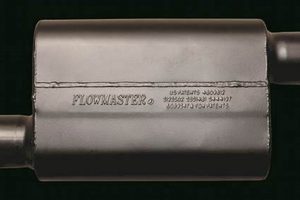
Internal baffling within an exhaust system significantly affects the resultant sound profile. The design and configuration of these baffles dictate the path exhaust gases take, directly influencing the frequencies that are attenuated or amplified. Modifying these baffles, or the addition of aftermarket components with altered internal baffling, serves as a primary method for altering a vehicle’s auditory signature. Without the support of internal baffling, muffler tips change sound is limited.
For example, a straight-through muffler design with minimal baffling often produces a louder, more aggressive sound by allowing exhaust gases to flow unimpeded. Conversely, a chambered muffler with intricate internal baffling directs gases through a series of passages, reducing noise levels and producing a quieter, more refined tone. The practical significance lies in the ability to fine-tune the sound by strategically manipulating the internal structure of the muffler.
In conclusion, the relationship between internal baffling and the resultant sound is a direct and crucial one. An understanding of baffle design and its impact allows for precise control over exhaust noise, enabling customization while addressing regulatory compliance and driver preferences. Further research into specific baffle configurations and their corresponding acoustic properties is essential for achieving optimal results in sound modification.
4. Outlet angle

The directional orientation of the exhaust terminus influences the perceived acoustic properties of a vehicle. The angle at which exhaust gases are discharged affects the propagation of sound waves, leading to discernible differences in the vehicle’s auditory signature. A straight, rearward-facing outlet projects sound directly behind the vehicle, maximizing its audibility to trailing vehicles and observers. Conversely, angled outlets can deflect sound waves, altering the perceived sound intensity and directionality.
Angled outlets, particularly those directed laterally, can create a more immersive sound experience for the vehicle’s occupants. This configuration allows sound waves to reflect off the surrounding environment, enhancing the perceived volume and richness of the exhaust note within the cabin. The degree of angulation impacts the specific frequencies that are emphasized; steeper angles may attenuate certain frequencies while amplifying others, shaping the overall tonal quality. For example, a downward-facing angle could muffle the sound more than an upward-facing angle. However, it is important to note that upward-facing angles have the potential to be dangerous in high-precipitation areas.
Therefore, the outlet angle functions as a critical parameter in exhaust system design, enabling nuanced control over the vehicle’s acoustic profile. This variable provides a means to customize the auditory experience, catering to individual preferences while also adhering to noise regulations and optimizing the overall aesthetic design of the vehicle. Furthermore, by altering the angles to affect the car’s acoustics, designers are able to manipulate the overall decibel levels that can be produced.
5. Resonance frequencies

Resonance frequencies, inherent to an exhaust system’s geometry, are significantly altered by modifications to its terminal components. The interplay between these frequencies and the physical characteristics of the component dictates the resulting auditory output, making resonance a critical consideration in exhaust system design and aftermarket modification.
- Helmholtz Resonance and Cavity Design
The design of an exhaust tip can create a Helmholtz resonator, a cavity that resonates at a specific frequency determined by its volume and neck dimensions. Changing the dimensions of the outlet creates a different Helmholtz resonator. This alters the frequencies that are amplified, thereby shaping the perceived exhaust note. Certain aftermarket tips are designed to dampen or eliminate certain frequencies to make more pleasant sounds, and eliminating the drone effect that may occur.
- Standing Waves and Pipe Length
Exhaust systems, including the tip, can support standing waves, where sound waves reflect and interfere with each other, creating points of high and low pressure at specific frequencies. Altering the length or diameter of the outlet shifts these standing wave patterns, resulting in changes to the resonant frequencies and tonal characteristics. Different lengths and diameters will determine the waves to be amplified or dampened.
- Material Damping and Frequency Attenuation
The material composition influences the way the material resonates, some dampen or limit resonance. The material can influence the frequencies that it resonates, or it may alter the harmonics of the tones, which can change the resultant sounds that come from the system.
- Interference and Phase Cancellation
Different frequencies can interfere with one another in the system and affect harmonics. The components may amplify or deaden sounds to create the optimal decibel levels and to make the sound pleasing to the driver and passengers.
The modification of terminal components directly affects the resonance frequencies within an exhaust system. These changes are key to achieving desired sound profiles. Manipulating the physical properties of components allows for precise control over the auditory characteristics of the vehicle.
Frequently Asked Questions
The following section addresses common inquiries regarding the influence of exhaust outlet modifications on vehicular acoustics.
Question 1: Can a change in terminal component design substantially alter a vehicle’s sound profile?
Yes, alterations to the design of the exhaust outlet can produce noticeable changes in the vehicle’s sound characteristics. Factors such as diameter, material, and internal structure directly influence the perceived exhaust note.
Question 2: Does material composition influence the sound produced?
Material composition is a critical factor. Stainless steel typically generates a brighter, more metallic tone, while aluminized steel tends to produce a deeper, more subdued sound.
Question 3: How does diameter affect the volume of the exhaust sound?
Increasing the diameter generally amplifies the overall volume. A larger diameter allows for a greater volume of exhaust gas to escape, resulting in a louder sound.
Question 4: Are there legal considerations associated with modifying exhaust components?
Local noise ordinances must be considered. Exceeding permissible noise levels can result in fines or the requirement to revert to the original exhaust system configuration.
Question 5: Can aftermarket components eliminate drone?
Integration of resonators can mitigate unwanted frequencies associated with drone, which can be fatiguing during sustained driving. Resonators refine the overall sound quality.
Question 6: Is professional installation recommended?
While experienced individuals may undertake installation, professional installation ensures proper fitment and minimizes the risk of leaks or damage to the exhaust system.
These answers provide a foundational understanding of the effects of aftermarket components on vehicular acoustics. Careful consideration of these factors allows for a customized auditory experience while adhering to legal requirements.
The subsequent section will explore specific case studies illustrating the practical applications of exhaust system modifications.
Muffler Tips Change Sound
This exploration has demonstrated that aftermarket components significantly impact a vehicle’s auditory signature. Factors such as material composition, diameter expansion, internal baffling, outlet angle, and resonance frequencies dictate the resultant exhaust note. Informed selection and strategic manipulation of these parameters enable a tailored acoustic experience, balancing personal preferences with regulatory compliance.
Continued research and development in exhaust system technology will further refine the capacity to control and customize vehicular sound. A thorough understanding of these principles remains crucial for both automotive engineers and enthusiasts seeking to optimize the aural performance of their vehicles while upholding responsible noise management practices.