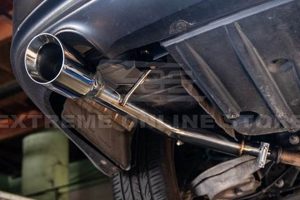
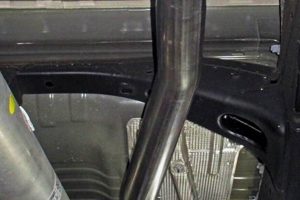
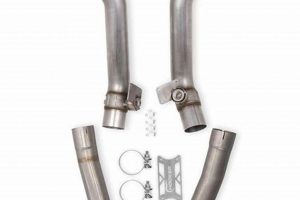
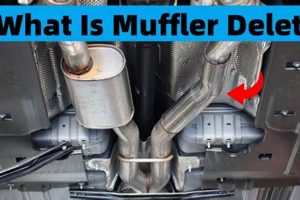
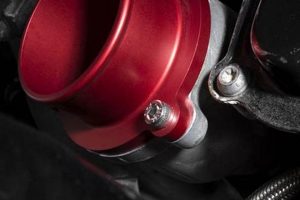
A turbo muffler delete replaces the factory-installed muffler situated on the outlet of a turbocharger. This modification is intended to streamline exhaust flow exiting the turbo, reducing backpressure. For example, a restrictive stock muffler can impede the expulsion of exhaust gases, whereas a delete aims to alleviate this obstruction.
The primary benefit of this modification is the potential for improved turbocharger response and a subtle increase in horsepower. By reducing exhaust backpressure, the turbocharger may spool up more quickly, leading to enhanced throttle response. Historically, these deletes have been popular in the aftermarket performance scene for vehicles where enthusiasts seek to optimize engine performance.
The subsequent sections will explore the specific advantages, potential drawbacks, installation considerations, and the overall impact on vehicle performance and sound characteristics associated with this modification.
Installation and Usage Considerations
This section provides important considerations for those contemplating a turbo muffler delete, designed to ensure informed decision-making and proper execution.
Tip 1: Research Compatibility: Prior to purchase, confirm the turbo muffler delete is specifically designed for the vehicle’s make, model, and engine configuration. Mismatched parts can lead to performance issues or installation difficulties.
Tip 2: Assess Local Regulations: Investigate local noise regulations and emission standards. Deleting the muffler might result in a louder exhaust note, potentially violating legal limits in certain jurisdictions.
Tip 3: Consider Professional Installation: If unfamiliar with automotive modifications, engaging a qualified mechanic for installation is advisable. Improper installation can damage the turbocharger or exhaust system.
Tip 4: Understand Potential Performance Impact: While a turbo muffler delete may improve turbo response, the actual gain can vary based on other engine modifications and overall vehicle setup. Manage expectations accordingly.
Tip 5: Evaluate Sound Preference: Be aware that deleting the muffler typically increases exhaust volume and alters the exhaust note. Listen to sound clips or consult with other users to gauge whether the resulting sound is desirable.
Tip 6: Check for Boost Leaks: After installation, verify that all connections are secure and that no boost leaks are present. Leaks can negate any performance gains and potentially damage the engine.
Adhering to these guidelines can help ensure a successful turbo muffler delete installation and minimize potential complications, while maximizing the intended performance benefits.
The subsequent section will conclude the discussion, summarizing the key points and offering final thoughts on this performance modification.
1. Improved airflow dynamics
Improved airflow dynamics are a central consideration when evaluating the effects of a turbo muffler delete. The modification aims to enhance the efficiency with which exhaust gases exit the turbocharger, thereby impacting engine performance.
- Reduced Flow Restriction
The factory turbo muffler often introduces flow restrictions due to its internal baffling and design. A turbo muffler delete replaces this component with a more direct path, reducing turbulence and backpressure. This facilitates a smoother exit for exhaust gases, improving airflow.
- Enhanced Turbo Spool
With less restriction, the turbocharger can spool up more rapidly. This translates to quicker boost onset and improved throttle response. A reduction in backpressure allows the turbine to reach its optimal operating speed with greater ease.
- Lower Exhaust Temperatures
Improved airflow can contribute to lower exhaust gas temperatures (EGTs). By efficiently expelling exhaust gases, the engine experiences reduced heat buildup, potentially enhancing engine longevity and reducing the risk of detonation. This is particularly relevant in high-performance applications.
- Increased Volumetric Efficiency
Volumetric efficiency refers to how well an engine fills its cylinders with air/fuel mixture. By improving exhaust airflow, a turbo muffler delete can positively influence volumetric efficiency. This can result in a more complete combustion process and contribute to slight gains in horsepower and torque.
These interconnected aspects of improved airflow dynamics illustrate how a turbo muffler delete aims to optimize the turbocharger’s performance. By addressing restrictions in the exhaust path, the modification can contribute to a more responsive and efficient forced induction system.
2. Reduced Backpressure

Reduced backpressure is a primary objective and consequential outcome of a turbo muffler delete. This reduction influences several key performance characteristics of a turbocharged engine.
- Exhaust Gas Evacuation Efficiency
The stock turbo muffler often creates resistance to exhaust flow. Removing this obstruction via a delete kit facilitates more efficient evacuation of exhaust gases from the turbine housing. Improved efficiency translates to a quicker, more responsive turbocharger.
- Turbocharger Spool Time
Backpressure inhibits the turbocharger’s ability to spool rapidly. Lowering backpressure allows the turbine to spin up faster, reducing turbo lag. This results in improved throttle response and increased low-end torque. For example, the turbo can reach peak boost pressure sooner after throttle input.
- Potential Power Increase
While the power gains from reduced backpressure alone may be modest, they contribute to the overall efficiency of the engine. A more efficient exhaust system allows the engine to breathe easier, potentially unlocking a small increase in horsepower and torque, especially in conjunction with other performance modifications.
- Decreased Pumping Losses
The engine expends energy to push exhaust gases out of the cylinders. By reducing backpressure, the turbo muffler delete minimizes these “pumping losses,” which frees up additional power. The engine operates more efficiently when it encounters less resistance during the exhaust cycle.
The facets outlined above collectively underscore the significance of reduced backpressure in the context of what a turbo muffler delete accomplishes. By facilitating more efficient exhaust flow, the modification aims to improve turbocharger performance and unlock the engine’s potential, albeit within the limitations of the engine’s overall design and configuration.
3. Enhanced turbo spool
Enhanced turbo spool, the rate at which a turbocharger reaches its optimal operating speed, is a key performance metric directly impacted by a turbo muffler delete. Understanding this relationship is critical in evaluating the efficacy of the modification.
- Reduced Turbine Inertia Resistance
The factory turbo muffler often presents a convoluted exhaust path, increasing resistance against the turbine blades. A turbo muffler delete streamlines this path, reducing the inertial load on the turbine. For example, consider a scenario where the engine transitions from idle to full throttle; the turbine, encountering less resistance, accelerates more rapidly to generate boost pressure. This results in a quicker power delivery.
- Minimized Exhaust Gas Backpressure
Excessive backpressure hinders the efficient expulsion of exhaust gases from the engine. By removing the restrictive muffler, backpressure is reduced, allowing the turbine to spin up more freely. This is akin to removing a physical barrier from the exhaust stream, enabling a more direct and unimpeded flow. The consequence is improved responsiveness to throttle inputs.
- Optimized Pressure Differential
A turbocharger functions based on the pressure differential between the exhaust side (turbine) and the intake side (compressor). A muffler delete, by reducing backpressure, helps maintain a more favorable pressure differential. The higher the pressure difference, the faster the turbine spins. This is crucial for achieving optimal boost levels and maintaining power output across the engine’s RPM range.
- Improved Transient Response
Transient response refers to the turbocharger’s ability to quickly adapt to changing engine loads. A turbo muffler delete enhances this response by allowing the turbine to accelerate and decelerate more rapidly. For instance, during gear changes or when encountering varying driving conditions, the turbocharger can adjust its output more effectively, leading to a more consistent and predictable power delivery.
The improved turbo spool resulting from a turbo muffler delete directly influences the driving experience, providing quicker throttle response and enhanced acceleration. The degree of improvement depends on the specific vehicle and other existing modifications, but the principle remains constant: reducing restrictions in the exhaust path allows the turbocharger to operate more efficiently.
4. Subtle power gains

The incorporation of a turbo muffler delete aims to provide subtle power gains through a modification of the exhaust flow dynamics of a turbocharged engine. The original equipment manufacturer’s (OEM) muffler, designed to attenuate exhaust noise, often introduces a degree of flow restriction. By replacing this component with a straight-through design, a turbo muffler delete reduces backpressure, allowing the turbocharger to spool up more efficiently. The anticipated effect is a marginal increase in horsepower and torque, especially within the mid-range RPM band. Real-world examples demonstrate that these gains are often most perceptible when combined with other performance-enhancing modifications, such as ECU tuning or upgraded intake systems. The practical significance lies in optimizing the engine’s breathing capability, potentially resulting in a more responsive driving experience.
The extent of power gains is not uniform across all applications. Factors such as engine size, turbocharger specifications, and the overall condition of the engine significantly influence the outcome. In instances where the OEM muffler presents a substantial restriction, the gains achieved through a turbo muffler delete are more pronounced. Conversely, if the factory muffler is already relatively free-flowing, the impact on power output may be minimal and, in some instances, difficult to quantify without precise dyno testing. Furthermore, it’s important to acknowledge that improved airflow dynamics can influence the engine’s overall efficiency, potentially leading to slight improvements in fuel economy under certain driving conditions.
In summary, subtle power gains represent a potential, but not guaranteed, benefit of installing a turbo muffler delete. While the modification is designed to enhance exhaust flow and reduce backpressure, the actual impact on power output is contingent upon a confluence of variables, including the specific vehicle, existing modifications, and overall engine health. The primary objective remains optimizing the engine’s breathing capabilities, with any ensuing power gains considered a supplementary outcome.
5. Altered exhaust sound

The alteration of exhaust sound is a direct consequence of installing a turbo muffler delete. Removing the factory-installed muffler, designed to suppress exhaust noise, inevitably leads to a change in the acoustic characteristics of the vehicle’s exhaust system. This modification influences both the volume and the tonal quality of the emitted sound.
- Increased Volume
A turbo muffler delete typically results in a noticeably louder exhaust. The factory muffler’s baffles and sound-deadening materials impede the passage of sound waves. Eliminating this obstruction allows exhaust pulses to propagate more freely, amplifying the overall sound level. The increased volume can be particularly apparent during acceleration and at higher engine speeds. The degree of amplification is dependent on the design of the delete component and the existing exhaust system.
- Shift in Tone
Beyond simple amplification, a turbo muffler delete alters the tonal characteristics of the exhaust. The factory muffler often filters specific frequencies, creating a more muted or refined sound. Removing this filter can expose more raw, unfiltered engine noise. This may result in a deeper, more aggressive exhaust note. Furthermore, the turbocharger’s characteristic “whistle” or “whoosh” sound can become more prominent, adding to the altered sound profile.
- Potential for Drone
In certain configurations, a turbo muffler delete can introduce exhaust drone, a low-frequency resonance that occurs at specific engine speeds. This drone can be particularly noticeable during steady-state cruising on the highway. The presence and severity of drone depend on the vehicle’s exhaust system design, the characteristics of the turbocharger, and the specific frequencies amplified by the delete component.
- Subjective Perception
The altered exhaust sound associated with a turbo muffler delete is a subjective element. Some drivers find the increased volume and more aggressive tone desirable, associating it with enhanced performance and a sportier driving experience. Others may find the noise excessive or irritating, particularly during prolonged periods of driving. Legal considerations, such as local noise ordinances, also influence the acceptability of the altered exhaust sound.
The altered exhaust sound is an inherent trade-off when implementing a turbo muffler delete. While performance benefits such as reduced backpressure and improved turbo spool are often cited, the acoustic impact must be carefully considered. Evaluating personal preferences, legal restrictions, and the potential for drone are crucial factors in determining whether a turbo muffler delete is a suitable modification for a given vehicle and driver.
6. Installation complexity

The installation complexity of a turbo muffler delete directly influences its accessibility and overall benefit. A simplified installation process enables a broader range of individuals, including those with limited mechanical experience, to undertake the modification, thereby increasing the potential for performance enhancement. Conversely, a complex installation can necessitate professional assistance, raising the cost and potentially deterring some individuals. Therefore, the ease or difficulty of installation is an integral component in determining the practical value of the modification.
For example, some turbo muffler delete kits are designed as direct bolt-on replacements, minimizing the need for specialized tools or modifications. These kits typically include detailed instructions and require only basic hand tools for installation. Other kits, however, may require cutting, welding, or intricate adjustments to ensure proper fitment. Such installations demand a higher level of skill and specialized equipment, often making professional installation the more prudent option. The success of the modification, in terms of both performance gains and longevity, is often contingent upon the correct execution of the installation procedure.
In conclusion, the installation complexity of a turbo muffler delete serves as a critical factor in evaluating its practicality. While the potential performance benefits, such as enhanced turbo spool and reduced backpressure, are attractive, the difficulty and cost associated with installation can significantly impact the overall value proposition. Understanding the intricacies of the installation process is essential for making an informed decision about whether to proceed with this modification.
7. Compatibility considerations

Compatibility considerations are paramount when evaluating the suitability of a turbo muffler delete. The modification’s effectiveness and safety are contingent on proper alignment with the vehicle’s specifications.
- Engine Configuration
The turbo muffler delete must be specifically designed for the engine’s make, model, and year. Variations in turbocharger design, exhaust manifold configuration, and overall engine architecture necessitate precise compatibility. Installing an incompatible delete can result in improper fitment, reduced performance, or even engine damage. For example, a delete designed for a 2.0L engine will likely not fit or function correctly on a 3.0L engine due to differences in exhaust port size and turbocharger placement.
- Exhaust System Design
Compatibility with the existing exhaust system is crucial. The turbo muffler delete must seamlessly integrate with the downpipe and subsequent exhaust components. Variations in flange types, pipe diameters, and mounting points require careful attention. An improperly matched delete can lead to exhaust leaks, reduced flow efficiency, and increased noise levels. For instance, if the delete uses a different flange pattern than the downpipe, an adapter or welding may be required, adding complexity and potential points of failure.
- ECU Calibration
While a turbo muffler delete is a hardware modification, it can influence engine management parameters. In some cases, the changed exhaust flow characteristics may necessitate adjustments to the engine control unit (ECU) calibration to optimize performance and prevent issues such as overboost or lean conditions. For example, if the delete significantly reduces backpressure, the turbocharger might spool faster, potentially exceeding the programmed boost limits and triggering a fault code.
- Aftermarket Modifications
The presence of other aftermarket modifications can impact the compatibility and effectiveness of a turbo muffler delete. For instance, an upgraded intercooler or a high-flow air intake might influence the engine’s airflow characteristics, requiring a different approach to exhaust modification. Furthermore, modifications to the exhaust system downstream of the delete can affect its overall performance. Integrating the delete with other modifications requires a holistic understanding of the engine’s performance characteristics.
These compatibility considerations underscore the importance of careful research and informed decision-making when considering a turbo muffler delete. Ensuring proper fitment, integration with existing systems, and appropriate ECU calibration are vital for realizing the intended performance benefits and preventing potential problems.
Frequently Asked Questions
This section addresses common inquiries regarding the function, effects, and considerations surrounding a turbo muffler delete modification.
Question 1: Is a turbo muffler delete street legal?
The legality of a turbo muffler delete is contingent upon local noise regulations and emissions standards. Many jurisdictions have limits on permissible exhaust noise levels, and altering the exhaust system, including the removal of a muffler, may violate these regulations. Furthermore, if the modification affects emissions control systems, it may conflict with emissions standards.
Question 2: What is the typical horsepower gain from a turbo muffler delete?
Horsepower gains are generally subtle and vary based on engine configuration and existing modifications. Increases typically range from 5 to 10 horsepower. Gains are often more noticeable in conjunction with other performance enhancements, such as ECU tuning or upgraded intake systems.
Question 3: Does a turbo muffler delete void the vehicle’s warranty?
The impact on a vehicle’s warranty depends on the specific terms and conditions outlined by the manufacturer. While a turbo muffler delete may not automatically void the entire warranty, any damage demonstrably caused by the modification will likely not be covered. It is advisable to consult the warranty documentation or a qualified service advisor prior to installation.
Question 4: How does a turbo muffler delete affect exhaust drone?
A turbo muffler delete can increase the likelihood of exhaust drone, a low-frequency resonance that occurs at certain engine speeds. The presence and severity of drone depend on the vehicle’s exhaust system design, the characteristics of the turbocharger, and the specific frequencies amplified by the delete component.
Question 5: Can a turbo muffler delete damage the turbocharger?
When installed correctly and under normal operating conditions, a turbo muffler delete should not damage the turbocharger. However, improper installation or operation with an inadequately tuned ECU can potentially lead to issues such as overboost, which could negatively impact the turbocharger’s lifespan.
Question 6: Is professional installation required for a turbo muffler delete?
Professional installation is not strictly required, but it is highly recommended for individuals with limited mechanical experience. The complexity of the installation process can vary, and improper installation can lead to performance issues or damage to the turbocharger or exhaust system. Engaging a qualified mechanic ensures proper fitment and optimal performance.
In summary, a turbo muffler delete is a modification with potential performance benefits, but it also carries certain considerations related to legality, warranty, and installation. A thorough understanding of these factors is essential for making an informed decision.
The subsequent section will conclude this article, summarizing key insights and providing final recommendations.
Conclusion
This analysis has explored what a turbo muffler delete does, outlining its impact on exhaust flow dynamics, turbocharger response, and overall engine performance. The modification’s primary function is to reduce backpressure, potentially leading to enhanced turbo spool, subtle power gains, and an altered exhaust note. However, considerations such as installation complexity, compatibility with the vehicle, and potential legal implications are crucial.
The decision to implement a turbo muffler delete should be predicated on a comprehensive assessment of the vehicle’s specifications, the driver’s performance objectives, and adherence to applicable regulations. Thorough research and professional consultation are advised to ensure a successful and beneficial outcome. The performance and acoustic ramifications of altering an engine’s exhaust system warrant careful consideration.