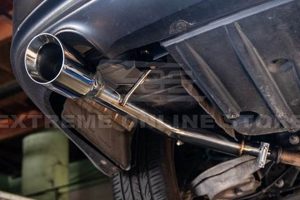
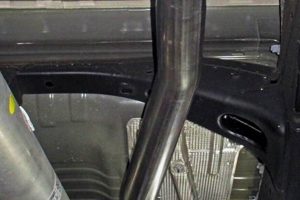
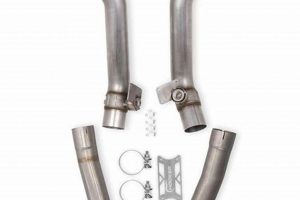
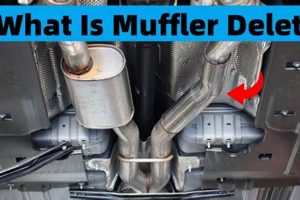
The modification of a vehicle’s exhaust system by removing the muffler is a practice often considered by automotive enthusiasts. The central question surrounding this alteration concerns its effect on engine power output. A muffler’s primary function is to reduce exhaust noise. Consequently, its removal is expected to alter the sound profile of the vehicle.
The perceived improvement in performance often stems from the change in auditory experience. However, any actual gain is frequently marginal and may even be detrimental, particularly if not accompanied by other modifications and recalibration of the engine management system. Historically, simplified exhaust systems were implemented for racing applications where noise abatement was secondary to maximizing power. The effectiveness of such a change hinges on the specific engine design and the overall exhaust system configuration.
This analysis will examine the potential impact on engine dynamics, exploring factors influencing any realized improvements or declines in performance. It will also consider the legality of such modifications and the potential drawbacks associated with alterations to the exhaust system’s intended design.
Considerations Regarding Exhaust Modification
Modifying a vehicle’s exhaust system requires careful consideration. Factors such as legal compliance, potential performance alterations, and the vehicle’s intended use must be evaluated prior to undertaking any changes.
Tip 1: Noise Level Compliance: Before removing a muffler, verify local regulations concerning vehicle noise emissions. Many jurisdictions have strict limits, and non-compliance can result in fines or vehicle impoundment.
Tip 2: Potential Performance Impact: The removal of a muffler might not automatically increase horsepower. In some cases, it can reduce backpressure to the point of negatively affecting low-end torque. A full exhaust system redesign is usually needed for meaningful gains.
Tip 3: Engine Management System: Following any significant exhaust modification, consider recalibrating the engine management system (ECU). This ensures the engine is operating efficiently with the altered exhaust flow characteristics, preventing potential damage and optimizing performance.
Tip 4: Welding and Fabrication: Removal of the muffler may require welding and fabrication skills to properly connect the exhaust piping. Inadequate welding can lead to leaks, affecting both performance and noise levels.
Tip 5: System Compatibility: Ensure the exhaust modification is compatible with the rest of the vehicle’s systems, including catalytic converters and oxygen sensors. Disrupting these components can lead to engine issues and emissions failures.
Tip 6: Consult a Professional: If unsure about the process, consult with a qualified automotive technician. Their expertise can help avoid costly mistakes and ensure the modification is performed correctly.
Careful assessment of the potential consequences of muffler removal is crucial. While a more aggressive exhaust note might be desirable, prioritizing legal compliance and avoiding potential performance drawbacks is essential.
These tips provide a framework for informed decision-making when considering alterations to a vehicle’s exhaust system.
1. Noise Level

The removal of a muffler from a vehicle’s exhaust system invariably results in a substantial increase in noise level. This alteration, while often perceived as an indicator of enhanced performance, does not inherently equate to a corresponding increase in horsepower. The auditory perception of power can be misleading; the increased sound is a direct consequence of less restricted exhaust flow, not necessarily greater engine output.
Regulations governing permissible vehicle noise levels exist in most jurisdictions. These regulations are often enforced, and vehicles exceeding the stipulated decibel limits may be subject to fines or required to undergo corrective modifications. The heightened noise associated with muffler removal can attract unwanted attention from law enforcement, regardless of whether any actual performance gains are achieved. In some instances, vehicles modified in such a manner are deemed unfit for road use due to the disruption of residential areas and violation of noise ordinances.
Therefore, while the audible impact is undeniable, the relationship between noise level and the actual impact on “does a muffler delete add horsepower” is not straightforward. Increased noise does not guarantee a performance increase; rather, it represents a readily detectable byproduct of exhaust system modification. The practicality of understanding this distinction lies in mitigating legal risks and avoiding the false assumption that louder equates to more powerful.
2. Backpressure Changes

The alteration of backpressure is a critical factor when evaluating the potential effects of a muffler removal on engine performance. Backpressure, defined as the resistance to exhaust gas flow within the exhaust system, plays a role in cylinder scavenging and overall engine efficiency. The removal of a muffler, which inherently presents a restriction to exhaust flow, typically reduces backpressure. This reduction, however, does not automatically translate to an increase in horsepower. Optimal engine performance relies on a delicate balance of backpressure tailored to the engine’s specific design and operating characteristics.
In some engine configurations, particularly those with forced induction or designed for high-RPM operation, a reduction in backpressure can facilitate improved exhaust gas expulsion, thereby increasing volumetric efficiency and potentially contributing to a horsepower gain. Conversely, in naturally aspirated engines designed for low-to-mid range torque, excessive reduction in backpressure can hinder cylinder scavenging, leading to a decrease in low-end torque and overall performance. A practical example is observed in smaller displacement engines where a drastic reduction in backpressure from muffler removal often results in a noticeable loss of responsiveness at lower engine speeds.
Therefore, the impact on backpressure is not a simple “more is better” scenario. It is a nuanced aspect, influenced by factors such as engine design, camshaft profile, and intended operating range. Understanding the relationship between backpressure and engine performance is crucial in determining whether muffler removal will yield any tangible benefits. Careful consideration of these factors and potentially dyno-testing can help ascertain whether “does a muffler delete add horsepower” or ultimately detract from overall engine performance.
3. ECU Recalibration

Electronic Control Unit (ECU) recalibration represents a critical, often overlooked, component in realizing any potential horsepower gains from exhaust system modifications. While a muffler delete alters exhaust flow dynamics, the factory ECU is programmed to operate within a predetermined set of parameters dictated by the original exhaust configuration. A discrepancy between the modified exhaust and the ECU’s programmed parameters can lead to suboptimal engine performance, negating any gains theoretically attainable through reduced exhaust restriction. Without adjusting the ECU to account for the increased airflow, the engine may not optimize fuel delivery or ignition timing, resulting in inefficient combustion and potentially even decreased power output.
The importance of ECU recalibration can be illustrated through real-world examples. Consider a vehicle with a mass airflow (MAF) sensor. A muffler delete, by increasing exhaust flow, changes the pressure dynamics that the MAF sensor uses to measure incoming air. The ECU, relying on the inaccurate MAF readings, may deliver an incorrect fuel mixture, resulting in a lean or rich condition. A lean condition can cause engine knocking and potentially damage components, while a rich condition leads to decreased fuel economy and increased emissions. Through recalibration, the ECU can be reprogrammed to correctly interpret the MAF sensor data and adjust fuel delivery and ignition timing accordingly. This ensures that the engine operates efficiently and unlocks any horsepower potential from the exhaust modification.
In conclusion, any analysis of “does a muffler delete add horsepower” must fundamentally incorporate the necessity of ECU recalibration. The alteration of exhaust flow dynamics without corresponding adjustments to engine management parameters is unlikely to yield significant horsepower improvements and may, in fact, detrimentally affect overall engine performance and longevity. The practical significance of this understanding emphasizes the need for a comprehensive approach to exhaust system modifications, integrating ECU tuning as an essential element for achieving desired power gains and maintaining engine health.
4. Torque Impact

The modification of an exhaust system, particularly through the removal of the muffler, can significantly influence engine torque characteristics. This consideration is crucial when evaluating whether a muffler delete contributes to increased horsepower or alters overall engine performance. Torque, the rotational force of the engine, dictates its pulling power and responsiveness, especially at lower engine speeds. The effect on torque is not always positive and depends heavily on engine design and operating parameters.
- Low-End Torque Reduction
The removal of a muffler can decrease backpressure in the exhaust system. While often perceived as beneficial, reduced backpressure can hinder the scavenging effect within the cylinders, particularly at lower engine speeds. This impaired scavenging can result in a decrease in low-end torque, making the vehicle feel less responsive during acceleration from a standstill or at lower RPMs. For example, a small displacement engine that relies on backpressure for efficient cylinder filling may experience a noticeable reduction in torque, diminishing drivability in everyday scenarios.
- Mid-Range Torque Alteration
The impact on mid-range torque is less predictable and more engine-specific. In some cases, if the muffler was a significant restriction in the stock exhaust system, its removal could lead to a slight improvement in mid-range torque. However, this is less common than a reduction in low-end torque. Any alteration in mid-range torque may necessitate adjustments to the engine control unit (ECU) to optimize fuel delivery and ignition timing for the new exhaust flow characteristics. Without these adjustments, any potential gains may not be fully realized, and the engine could operate less efficiently.
- High-End Torque Effects
At higher engine speeds, where exhaust gas velocity is higher, the effect of backpressure is less pronounced. Therefore, the removal of a muffler might have a negligible impact on torque at the upper end of the RPM range. In some high-performance engines designed for high-RPM operation, the muffler may present a significant restriction, and its removal could contribute to a slight improvement in torque at higher RPMs. However, this benefit is typically accompanied by a substantial increase in noise, which may not be desirable for street applications.
- Resonance and Wave Tuning
Advanced exhaust systems are often designed to utilize resonance and wave tuning to enhance cylinder filling and scavenging. The muffler, as part of the overall exhaust system design, can contribute to these effects. Removing the muffler disrupts this carefully engineered system, potentially leading to a loss of torque at specific engine speeds. While less common in modern vehicles, some older designs rely heavily on exhaust tuning for optimal performance, and altering the exhaust system without considering these factors can negatively impact torque output.
In summary, the influence on torque is a critical consideration when contemplating muffler removal. While potential gains in horsepower may be touted, the alteration in torque characteristics must be carefully evaluated to ensure that the modification enhances overall engine performance and drivability. Often, the perceived benefit of increased horsepower is overshadowed by a reduction in low-end torque, making the vehicle less practical for everyday use. Therefore, a comprehensive understanding of engine dynamics and the potential impact on torque is essential when determining whether “does a muffler delete add horsepower” in a way that is beneficial for the specific application.
5. Legality

The modification of a vehicle’s exhaust system through muffler removal intersects directly with various legal regulations. While the subjective pursuit of enhanced engine performance drives some to consider such alterations, the legal ramifications must be thoroughly understood. Noise pollution laws exist at the federal, state, and local levels, establishing permissible decibel limits for vehicle exhaust emissions. Muffler removal invariably increases noise levels, potentially exceeding these legal thresholds. Consequently, vehicles failing to meet noise standards may be subject to fines, repair orders, or even impoundment.
Beyond noise regulations, some jurisdictions also scrutinize modifications that tamper with emissions control devices. While a muffler itself is not typically considered an emissions control device (like a catalytic converter), its removal can indirectly affect emissions performance. The altered exhaust flow dynamics resulting from a muffler delete may impact the efficiency of the catalytic converter, leading to increased pollutant output. Regular vehicle inspections, mandated in many areas, often include visual checks for exhaust system modifications. Evidence of muffler removal could result in inspection failure, requiring the vehicle owner to restore the system to its original configuration to comply with legal requirements. For example, states like California have stringent emissions standards and actively enforce these regulations through visual inspections and emissions testing.
Therefore, any evaluation of whether “does a muffler delete add horsepower” must invariably account for the legal consequences. The potential gains in performance, even if realized, are overshadowed by the risks of non-compliance with noise and emissions laws. The practical significance of this understanding resides in the need for thorough research into local regulations before undertaking any exhaust system modifications, ensuring that the pursuit of increased power does not conflict with legal obligations. Ignoring the legal aspects can result in financial penalties, vehicle restrictions, and ultimately, a diminished driving experience.
6. System compatibility
System compatibility is a crucial determinant when assessing the impact of a muffler deletion on a vehicle’s horsepower output. The integration of the exhaust system with other vehicle components necessitates a holistic understanding to avoid detrimental effects. Simply removing the muffler without considering the broader implications can negate any potential performance gains.
- Engine Management System Integration
The engine management system (EMS), including the ECU, controls fuel delivery and ignition timing. Modifications to the exhaust system, such as muffler removal, alter exhaust flow dynamics. These changes can disrupt the EMS’s calibrated parameters, leading to suboptimal performance. Without recalibration, the EMS may not adequately compensate for the modified exhaust, potentially reducing horsepower. For instance, a vehicle with a lambda sensor positioned downstream of the muffler may experience inaccurate readings after its removal, causing improper air-fuel mixture adjustments.
- Catalytic Converter Functionality
The catalytic converter is a vital component for reducing harmful emissions. The removal of a muffler can affect the operating temperature of the catalytic converter. Altered exhaust flow can lead to either insufficient heating, reducing conversion efficiency, or overheating, potentially damaging the converter. A malfunctioning catalytic converter will trigger error codes and reduce engine performance, thus negating any intended horsepower increase from the muffler deletion. Certain vehicles also rely on backpressure from the muffler to ensure efficient catalytic converter operation.
- Oxygen Sensor Placement and Readings
Oxygen sensors are strategically positioned within the exhaust system to monitor exhaust gas composition and provide feedback to the EMS. The removal of a muffler can change the exhaust gas velocity and temperature at the sensor location. This can lead to inaccurate readings, causing the EMS to make incorrect adjustments to fuel delivery. Consequently, the engine may run lean or rich, both of which can decrease horsepower and fuel efficiency. For example, a vehicle with an oxygen sensor directly after the muffler may exhibit erratic readings after its removal, resulting in poor engine performance.
- Exhaust Manifold Design and Flow
The exhaust manifold’s design plays a role in efficient exhaust gas evacuation from the cylinders. Muffler removal can alter the pressure waves within the exhaust system, potentially disrupting the intended flow pattern from the manifold. This disruption can hinder cylinder scavenging and reduce volumetric efficiency, thereby diminishing horsepower. If the exhaust manifold is not designed for free-flowing exhaust, the muffler removal might not provide any benefits and could even decrease engine performance at certain RPM ranges.
These facets highlight the interconnectedness of the exhaust system with other vehicle components. A unilateral modification, such as removing a muffler, without addressing potential compatibility issues, may not yield the anticipated horsepower gains. Furthermore, it could compromise the proper function of other systems, leading to reduced overall performance and potential damage. A comprehensive approach, considering all aspects of system compatibility, is essential when evaluating the impact of muffler removal.
Frequently Asked Questions
The following questions address common concerns and misconceptions regarding the removal of a muffler from a vehicle’s exhaust system. The answers provided aim to offer clear and factual information, devoid of subjective opinion.
Question 1: Does a muffler delete add horsepower under all circumstances?
The assertion that it invariably increases engine output is inaccurate. Potential gains are contingent upon several factors, including engine design, exhaust system configuration, and engine management calibration. In certain engine designs, there can be negligible gains in engine output by removing the muffler.
Question 2: Will removing the muffler automatically improve fuel efficiency?
It is unlikely to improve fuel efficiency and it may decrease the mile per gallon (MPG) due to the changes in the exhaust flow. Changes in the efficiency require engine management system (EMS) recalibration.
Question 3: What are the legal implications of removing a muffler?
Removing it may violate local, state, and federal noise regulations. Most jurisdictions have established decibel limits for vehicle exhaust emissions. Exceeding these limits may result in fines or other penalties.
Question 4: Does removing the muffler impact vehicle emissions?
While it is not directly related to the emissions device, it can impact emissions system performance. If the catalytic converter is placed after the muffler, it can alter the exhaust temperature that leads to inaccurate emissions readings.
Question 5: Is professional installation necessary for a muffler delete?
Professional installation is advisable. Improper installation can lead to exhaust leaks, reduced performance, and potential damage to other vehicle components.
Question 6: Can a muffler delete negatively affect engine performance?
Yes, in some cases, it can. The deletion may reduce backpressure, potentially leading to a loss of low-end torque and overall drivability. The negative influence can be significant.
In summary, while certain scenarios may offer marginal power gains, muffler removal is not universally beneficial and can have adverse legal, environmental, and performance-related consequences. A thorough understanding of these factors is essential before undertaking such modifications.
The next section will delve into alternative exhaust system modifications that may offer more controlled and beneficial performance enhancements.
Conclusion
The inquiry of whether “does a muffler delete add horsepower” necessitates a nuanced response, moving beyond simplistic assertions. The preceding analysis reveals that the impact on engine power is not universally positive and is contingent on a multitude of factors. These include the specific engine design, the existing exhaust system configuration, and the calibration of the engine management system. Furthermore, potential legal ramifications and the alteration of vehicle sound profiles must be carefully considered. A straight muffler delete may harm the overall performance of the vehicle.
In light of these considerations, it is advisable to approach exhaust system modifications with informed prudence. The pursuit of enhanced performance should be balanced against the potential for negative consequences. Alternative modifications, such as performance exhaust systems designed for specific engine applications, may offer a more controlled and beneficial pathway to achieving desired power gains. Consequently, thorough research and professional consultation are recommended prior to undertaking any modifications to a vehicle’s exhaust system. Understanding the whole scope of the modification must take into consideration backpressure, engine torque, and exhaust flow in a vehicle.