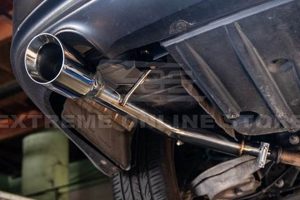
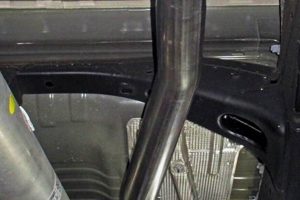
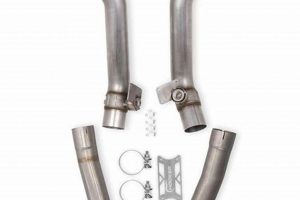
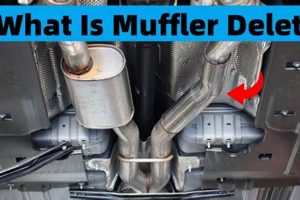
A modification involving the removal of the muffler, a component in a vehicle’s exhaust system designed to reduce noise, is a topic of interest for some vehicle enthusiasts. The practice centers around the belief that eliminating this restriction can lead to improved engine performance. However, the results of such a change can vary significantly based on the vehicle’s make, model, and overall exhaust system design.
The perceived benefits often revolve around a louder, more aggressive exhaust note and the potential for a small power increase due to reduced backpressure. In some cases, there might be a slight improvement in throttle response. Historically, modifications to exhaust systems have been a common method employed to extract additional performance from engines. However, it is crucial to consider that altering an exhaust system, especially removing components like the muffler, can have legal implications and may not always yield the desired results.
The following sections will delve into the potential gains and drawbacks associated with modifying the exhaust system in this manner, including an examination of the impact on engine efficiency, emissions, and legal compliance. It will also consider alternative modifications that may offer a more balanced approach to performance enhancement.
Considerations Regarding Muffler Removal and Power Augmentation
Modifying a vehicle’s exhaust system by removing the muffler can present both potential benefits and significant drawbacks. Careful consideration must be given to the implications before proceeding with such a modification.
Tip 1: Evaluate Existing Exhaust System Design: Before contemplating such an alteration, assess the vehicle’s existing exhaust system. Systems designed for high performance may not benefit significantly, and the removal of a muffler could even lead to a decrease in power due to altered backpressure characteristics.
Tip 2: Investigate Local Regulations: Prior to altering the exhaust system, research and understand local noise regulations. Removing the muffler often leads to increased exhaust volume, potentially resulting in legal repercussions and fines.
Tip 3: Assess Potential Impact on Emissions: While the removal of a muffler does not directly affect catalytic converter function, it can impact overall emissions system performance. This is especially true in vehicles with sophisticated engine management systems sensitive to exhaust backpressure changes. Scrutinize potential impacts on emission testing.
Tip 4: Acknowledge Potential Decrease in Low-End Torque: While a perceived horsepower gain might occur at higher engine speeds, the elimination of backpressure could negatively impact low-end torque, reducing the vehicle’s acceleration performance in everyday driving conditions.
Tip 5: Explore Alternative Performance Enhancements: Investigate alternative performance modifications such as aftermarket exhaust systems designed to improve airflow without drastically increasing noise levels. These systems often provide a more balanced approach to performance enhancement.
Tip 6: Consider Professional Consultation: Engage with qualified automotive technicians to discuss the specific vehicle and potential ramifications of modifying the exhaust system. Professional guidance can provide valuable insight into the most appropriate performance enhancement strategies.
Removing a muffler is not a guaranteed method of increasing horsepower and may lead to undesirable outcomes. Careful evaluation of the vehicle, regulations, and potential consequences is crucial before proceeding.
The next section will provide further analysis of the impact of such modifications on engine function.
1. Backpressure Modification

Backpressure, the resistance to exhaust flow within an exhaust system, is inextricably linked to the concept of enhanced engine output through muffler removal. The assumption often made is that reducing backpressure via muffler removal inherently leads to increased engine output. However, the relationship is complex and not always directly proportional. A certain amount of backpressure is often engineered into exhaust systems to optimize scavenging the process of drawing exhaust gases out of the cylinder particularly at lower engine speeds. Removing the muffler alters this balance, potentially disrupting the scavenging effect and negatively impacting low-end torque. For example, a naturally aspirated engine designed with a specific backpressure profile might experience a decrease in low-end power upon muffler removal because the exhaust pulses no longer effectively aid in cylinder evacuation at lower revolutions.
The importance of backpressure modification within the context of performance enhancement lies in understanding its influence on engine efficiency. An unrestricted exhaust flow, while seemingly beneficial, can lead to inefficient cylinder filling at certain engine speeds. The ideal scenario is one where exhaust gases are efficiently removed without creating excessive backpressure, which necessitates careful consideration of exhaust pipe diameter, length, and the presence or absence of components like mufflers. In turbocharged vehicles, for example, the turbocharger itself generates a significant amount of backpressure, making muffler removal less likely to negatively impact low-end performance and potentially offering some horsepower gains at higher RPMs.
In summary, while muffler removal modifies backpressure with the intention of enhancing engine performance, it is not a universally beneficial modification. The specific engine design, the existing exhaust system, and the intended operating range of the vehicle all play crucial roles in determining whether this change will lead to a net gain or a net loss in power. A nuanced understanding of backpressure dynamics is therefore essential when considering such modifications.
2. Exhaust Velocity

Exhaust velocity, the speed at which exhaust gases exit the engine, is a critical factor influencing engine performance and the potential effects of muffler removal. The theory behind such modifications often centers on the belief that increasing exhaust velocity improves scavenging and reduces pumping losses, consequently increasing horsepower. However, simply removing the muffler does not automatically guarantee an increase in exhaust velocity. The actual outcome depends on a complex interplay of factors, including the engine’s design, exhaust manifold configuration, and the diameter of the exhaust piping.
For instance, a muffler delete may increase exhaust velocity at higher engine speeds, potentially leading to a marginal horsepower gain in certain performance-oriented vehicles. However, this increase can be offset by a decrease in velocity at lower engine speeds if the exhaust system is not properly optimized. An excessively large exhaust pipe diameter, coupled with muffler removal, can reduce exhaust velocity at low RPMs, leading to reduced torque and a less responsive throttle. Conversely, a properly designed exhaust system incorporating tuned headers and optimized piping can leverage muffler removal to enhance exhaust velocity across a broader RPM range, resulting in a more noticeable horsepower increase. Consider the example of a sports car with a high-revving engine; removing the muffler might allow for a more rapid expulsion of exhaust gases at peak RPM, leading to a demonstrable increase in horsepower. The practical significance of this understanding lies in the realization that modifications must be approached strategically, with a focus on optimizing the entire exhaust system rather than simply removing a single component.
In conclusion, while the concept of increasing exhaust velocity through muffler removal is plausible, the actual outcome is highly dependent on the specifics of the engine and exhaust system design. A blanket assumption that such a modification will universally result in increased horsepower is inaccurate. Careful consideration of factors like pipe diameter, engine operating range, and potential negative impacts on low-end torque is crucial. Ultimately, a balanced approach that optimizes exhaust velocity across the entire RPM range, rather than solely focusing on peak horsepower gains, is essential for achieving meaningful performance improvements.
3. Engine Tuning
Engine tuning is intrinsically linked to the potential benefits, or detriments, of muffler removal. While a vehicle may experience a perceived increase in airflow following the removal of a muffler, the engine’s control unit (ECU) is calibrated to operate within a specific range of parameters. Altering the exhaust system, particularly by removing a significant component like the muffler, can disrupt this calibration. The ECU relies on sensor data, including oxygen sensors and mass airflow sensors, to determine the optimal air-fuel mixture and ignition timing. A change in exhaust flow characteristics can lead to inaccurate sensor readings, resulting in a suboptimal engine operation. For instance, if the ECU detects a leaner-than-ideal air-fuel ratio after muffler removal, it may attempt to compensate by increasing fuel delivery. However, without proper engine tuning, this compensation may not be precise, potentially leading to decreased fuel efficiency, increased emissions, and even engine damage over time. Therefore, while a muffler delete might allow for freer exhaust flow, the engine’s ability to effectively utilize this flow is contingent upon appropriate tuning.
Furthermore, engine tuning can optimize the potential gains from muffler removal. A professional tuner can recalibrate the ECU to account for the altered exhaust characteristics, adjusting parameters such as fuel maps, ignition timing, and valve timing (if applicable). This recalibration ensures that the engine operates at peak efficiency and power output given the new exhaust configuration. Consider the example of a vehicle with a forced induction system, such as a turbocharger. Removing the muffler on such a vehicle may indeed improve exhaust flow and reduce backpressure, but the full potential of this modification can only be realized with a corresponding engine tune. The tuner can increase boost pressure and optimize fuel delivery to take advantage of the improved exhaust flow, resulting in a more significant horsepower increase than would be possible with muffler removal alone. Failure to tune the engine after muffler removal may lead to a situation where the engine is not operating optimally, negating any potential performance gains and possibly causing long-term damage.
In conclusion, the connection between engine tuning and muffler removal is undeniable. Simply removing the muffler without addressing the engine’s calibration can lead to suboptimal performance and potential engine damage. Engine tuning allows for the recalibration of the ECU to take full advantage of the altered exhaust characteristics, maximizing potential horsepower gains and ensuring that the engine operates efficiently and reliably. Therefore, if one is considering removing a muffler to enhance performance, professional engine tuning should be considered an essential and indispensable component of the modification process.
4. Resonance Effects

Resonance effects, specifically within an exhaust system, pertain to the acoustic properties that influence the propagation of pressure waves. These waves, generated by the engine’s combustion cycle, travel through the exhaust system and can either enhance or impede exhaust flow depending on their frequency and phase relationship. When considering the potential impact of muffler removal on horsepower, resonance effects assume significant importance. A muffler is designed not only to attenuate noise but also to influence the behavior of these pressure waves, potentially tuning the exhaust system to promote scavenging at specific engine speeds. Removing the muffler can disrupt this carefully engineered resonance, leading to unpredictable changes in engine performance. For instance, an exhaust system designed to create a resonant frequency that aids in cylinder evacuation at 3000 RPM may lose this benefit upon muffler removal, resulting in a reduction of torque in that specific operating range.
The complexity of resonance effects makes it challenging to predict the outcome of muffler removal without detailed analysis of the specific vehicle’s exhaust system. Some vehicles might experience a modest horsepower gain at certain RPMs due to a reduction in backpressure, but this gain could be offset by losses at other RPMs due to altered resonance. Furthermore, the audible resonance, often perceived as a droning sound, can become a significant drawback for daily driving. The design of aftermarket exhaust systems often incorporates resonators, which are specifically tuned to manage these pressure waves and minimize undesirable noise frequencies, while still promoting efficient exhaust flow. A practical application of understanding resonance effects lies in the ability to design and tune exhaust systems that optimize engine performance across a broader RPM range, rather than simply focusing on peak horsepower at the expense of drivability and noise levels.
In summary, the impact of muffler removal on horsepower is intricately connected to resonance effects within the exhaust system. While a reduction in backpressure may be perceived as beneficial, the disruption of carefully tuned resonance can lead to unpredictable performance changes, potentially resulting in horsepower gains at certain RPMs but losses at others. A thorough understanding of exhaust system acoustics and the role of resonators is crucial for predicting and optimizing the outcome of such modifications. Therefore, removing the muffler without considering resonance effects may lead to an undesirable outcome.
5. Legality Concerns

The removal of a muffler, frequently undertaken with the intention of increasing horsepower or altering the vehicle’s sound, introduces a range of legality concerns. These concerns are rooted in noise pollution regulations and vehicle equipment standards implemented at federal, state, and local levels. Ignoring these legal considerations can result in fines, vehicle inspection failures, and other penalties.
- Noise Emission Standards
Most jurisdictions have noise emission standards that vehicles must adhere to. Mufflers are designed to reduce exhaust noise to within these acceptable limits. Removing the muffler invariably increases the vehicle’s noise output, often exceeding legal thresholds. Enforcement of these standards varies, but excessive noise can result in citations and mandatory corrective action. The perception that a louder exhaust equates to increased power does not supersede legal requirements regarding acceptable noise levels.
- Equipment Mandates
Many states mandate that vehicles be equipped with a functioning muffler. The specific wording of these statutes often prohibits modifications that increase noise beyond factory levels. Removing a muffler, therefore, constitutes a violation of these equipment mandates, regardless of any perceived horsepower gains. Regular vehicle inspections may include a check for the presence and functionality of a muffler, leading to inspection failure if the component is absent.
- Tampering with Emissions Controls
While muffler removal does not directly impact catalytic converters or other emissions control devices, it can be interpreted as tampering with the vehicle’s original emissions configuration. Certain jurisdictions may view such modifications as a violation of emissions control laws, particularly if the alteration is deemed to negatively impact emissions performance. Although horsepower enhancement is the stated goal, regulatory agencies prioritize compliance with emissions standards.
- Local Ordinances
Beyond state and federal regulations, local municipalities often have their own noise ordinances that restrict vehicle noise levels. These ordinances may be stricter than state laws and can be enforced through local law enforcement agencies. A vehicle that complies with state noise regulations may still violate local ordinances if the muffler has been removed. The belief that modifications are permissible if they enhance performance does not negate the applicability of local noise regulations.
In summary, while the desire to increase horsepower through muffler removal may be appealing, it is essential to recognize and address the legality concerns associated with such modifications. Noise emission standards, equipment mandates, tampering restrictions, and local ordinances all impose legal constraints on vehicle modifications. The pursuit of horsepower gains must be balanced against the legal obligations and potential penalties associated with altering a vehicle’s exhaust system.
6. Noise Amplification

Noise amplification is an inherent consequence of muffler removal and constitutes a significant consideration when evaluating the practice of eliminating this component to potentially enhance horsepower. The direct correlation between removing the muffler and increasing exhaust volume necessitates careful examination of the implications.
- Decibel Level Increase
Muffler removal invariably results in a substantial increase in exhaust decibel levels. The muffler’s primary function is to attenuate sound waves generated by the engine’s combustion process. Without this component, these sound waves are emitted directly into the environment, leading to a significant amplification of exhaust noise. For example, a vehicle with a factory exhaust system might produce 70-80 decibels at idle, while the same vehicle with the muffler removed could easily exceed 90-100 decibels. This elevated noise level has ramifications for community noise pollution and compliance with local noise ordinances.
- Frequency Alteration
In addition to increasing the overall volume, muffler removal can alter the frequency characteristics of the exhaust noise. Mufflers are often designed to attenuate specific frequencies that are perceived as harsh or unpleasant. Removing the muffler can result in a more aggressive and potentially dissonant exhaust note, characterized by an increase in low-frequency rumble and high-frequency rasp. This altered frequency profile may be desirable to some enthusiasts but can also contribute to driver fatigue and public annoyance. As an example, the removal of a chambered muffler might eliminate its intended cancellation of certain frequencies, leading to a more pronounced and potentially objectionable exhaust tone.
- Resonance and Drone
Muffler removal often exacerbates the phenomenon of exhaust drone, which refers to sustained, low-frequency noise that resonates within the vehicle’s cabin. This drone is particularly noticeable at certain engine speeds and can be highly irritating to the driver and passengers. Mufflers are designed to dampen these resonant frequencies and minimize drone. Removing the muffler eliminates this damping effect, potentially leading to a significant increase in interior noise levels. A common example is the experience of driving on the highway with the muffler removed, where the constant drone can become overwhelming.
- Environmental Impact
The amplified noise resulting from muffler removal has a direct environmental impact, contributing to noise pollution in residential areas and along roadways. Elevated noise levels can negatively affect the quality of life for residents, disrupt wildlife, and potentially violate local noise ordinances. While the pursuit of increased horsepower may be a primary motivation, the broader environmental consequences of noise amplification cannot be ignored. For instance, driving a vehicle with the muffler removed through a quiet neighborhood can generate significant complaints and legal repercussions.
These facets are undeniably linked to whether a muffler delete enhances engine performance. The primary goal to remove the restriction for additional power has the side affect of a loud engine that is almost always a net negative overall. The removal has potential environmental consequences.
7. Potential Losses

The pursuit of increased horsepower through muffler removal can paradoxically lead to potential performance losses, undermining the intended benefit. The assumption that a less restrictive exhaust system invariably translates to improved engine output is a simplification that overlooks the complex interplay of factors governing engine efficiency. Backpressure, exhaust velocity, and engine tuning are all affected by muffler removal, and imbalances in these areas can manifest as tangible performance deficits. A reduction in low-end torque is a common consequence, diminishing the vehicle’s responsiveness and acceleration from a standstill. For instance, a vehicle used primarily for city driving, where low-speed maneuverability is paramount, might experience a noticeable decline in drivability following muffler removal, negating any potential horsepower gains at higher engine speeds that are rarely utilized in urban environments.
Furthermore, the absence of a muffler can disrupt the carefully engineered resonance characteristics of the exhaust system. This disruption can result in inefficient cylinder scavenging at certain engine speeds, leading to decreased overall engine efficiency and potentially lower horsepower output than the factory configuration. Consider the example of a vehicle with a tuned exhaust system designed to create a resonant frequency that aids in cylinder evacuation at a specific RPM. Removing the muffler eliminates this resonant effect, potentially causing a reduction in power at that RPM and diminishing the overall performance of the engine. Practical application of this understanding lies in recognizing that modifying an exhaust system requires a holistic approach, considering not only the potential for increased flow but also the potential disruption of established performance parameters.
In summary, while muffler removal is often associated with the aspiration for increased horsepower, it is critical to acknowledge the potential for unintended performance losses. Reductions in low-end torque and disruptions to exhaust resonance can offset any gains at higher RPMs, leading to a net decrease in overall engine performance. A comprehensive understanding of engine dynamics and exhaust system design is essential to avoid these pitfalls and ensure that modifications yield the desired results. The perceived benefit of increased horsepower must be weighed against the risk of diminished drivability and overall engine efficiency.
Frequently Asked Questions
The following addresses commonly asked questions regarding the modification of a vehicle’s exhaust system through the removal of the muffler and its impact on engine horsepower.
Question 1: Does removing the muffler guarantee a horsepower increase?
No. The effect of muffler removal on horsepower is highly dependent on the specific vehicle and its existing exhaust system design. Some vehicles may experience a marginal increase, while others may see no change or even a decrease in power.
Question 2: What factors determine whether muffler removal will increase horsepower?
Key factors include the engine’s design, the existing exhaust system’s efficiency, the diameter of exhaust piping, and the presence of other modifications. Vehicles with highly restrictive stock exhaust systems may benefit more from muffler removal than those with already efficient systems.
Question 3: Will muffler removal affect my vehicle’s low-end torque?
Potentially. Removing the muffler can alter exhaust backpressure, which may negatively impact low-end torque. A reduction in backpressure can decrease the engine’s ability to scavenge exhaust gases effectively at lower RPMs, resulting in diminished torque.
Question 4: Is engine tuning necessary after removing the muffler?
Engine tuning is highly recommended. Removing the muffler alters the exhaust flow characteristics, potentially affecting the air-fuel ratio. Tuning the engine can optimize performance for the new exhaust configuration, maximizing potential horsepower gains and preventing potential engine damage.
Question 5: Are there legal restrictions associated with muffler removal?
Yes. Many jurisdictions have noise regulations and equipment mandates that prohibit modifications that increase exhaust noise beyond factory levels. Removing the muffler may violate these laws and result in fines or vehicle inspection failures.
Question 6: Besides horsepower, what other effects can muffler removal have?
Muffler removal will significantly increase exhaust noise and may alter the exhaust tone. It can also lead to exhaust drone, which is an undesirable resonant noise within the vehicle’s cabin. Furthermore, the environmental impact of increased noise pollution should be considered.
In summary, it’s important to approach muffler removal with a clear understanding of the potential trade-offs and legal ramifications. In addition to assessing if a muffler delete increase horsepower, a comprehensive consideration should be undertaken before the alteration.
The subsequent section will address alternative methods for enhanced performance.
Concluding Remarks
The preceding analysis has explored the complex relationship between muffler removal and horsepower enhancement. While the concept of freeing up exhaust flow to increase engine output holds a degree of intuitive appeal, the reality is significantly more nuanced. As demonstrated, the success of such a modification is contingent upon a confluence of factors, including engine design, existing exhaust system characteristics, and the precision of subsequent engine tuning. The potential for increased noise, legal repercussions, and even performance losses necessitates a cautious and informed approach.
Ultimately, the decision to undertake muffler removal should not be driven by a simplistic expectation of increased power. A responsible assessment of individual vehicle characteristics, regulatory constraints, and potential trade-offs is essential. Those seeking verifiable performance gains are encouraged to pursue comprehensive exhaust system upgrades and professional engine tuning services, ensuring that modifications are executed with a focus on both performance and responsible vehicle operation. The mere desire to enhance horsepower must be tempered with a commitment to legal compliance and environmental responsibility.