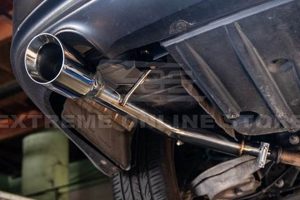
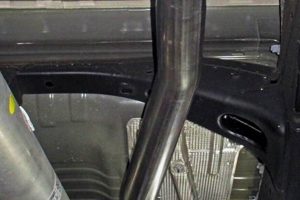
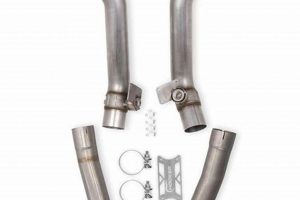
The removal of the factory-installed rear silencer on a Ford Focus ST is a modification affecting the exhaust system’s sound and backpressure characteristics. This alteration typically involves replacing the original component with a straight pipe or a less restrictive alternative. As an example, a vehicle owner might choose this modification to amplify the exhaust note produced by the engine.
This modification is undertaken to achieve a more aggressive exhaust sound and potentially reduce weight, although performance gains are typically minimal on a stock engine. Historically, such modifications have been popular among automotive enthusiasts seeking a more visceral driving experience and a distinct auditory signature. The perceived benefits often include an enhanced sense of connection with the vehicle and its mechanical operation.
The subsequent sections will delve into specific considerations regarding the implementation of this modification, encompassing potential performance impacts, legal compliance, and best practices for installation to ensure optimal results and adherence to regulatory standards.
Considerations for Rear Silencer Removal
Prior to undertaking a rear silencer removal on a Ford Focus ST, careful evaluation of several factors is crucial to ensure a satisfactory outcome and avoid potential complications.
Tip 1: Noise Level Assessment: Evaluate local noise ordinances prior to modification. The altered exhaust configuration will significantly increase exhaust volume, potentially exceeding legal limits in some jurisdictions. Investigate sound level restrictions and testing procedures in your area.
Tip 2: Potential Performance Impact: While often marketed for performance gains, the removal of the rear silencer yields negligible horsepower increases on a stock engine. In certain cases, it may even negatively impact low-end torque due to reduced backpressure. Dyno testing before and after modification is recommended to quantify any changes.
Tip 3: Fabrication Quality: Select a reputable manufacturer or fabricator for the replacement pipe. Poorly constructed components may exhibit subpar welds, improper fitment, and premature corrosion, leading to exhaust leaks and structural failure. Stainless steel construction is preferred for longevity.
Tip 4: Installation Procedure: Proper installation is paramount to prevent leaks and ensure secure fitment. Utilize new exhaust gaskets and ensure proper alignment of the replacement pipe. Consider professional installation if unfamiliar with exhaust system mechanics.
Tip 5: Drone Mitigation: Removal often introduces undesirable “drone,” a low-frequency resonance inside the vehicle cabin at specific engine speeds. Consider incorporating a Helmholtz resonator or other sound-deadening measures to mitigate drone if it becomes problematic.
Tip 6: Visual Inspection: Regularly inspect the replaced section for signs of corrosion, cracks, or loose connections. Address any issues promptly to prevent further damage and ensure continued compliance with safety standards.
Careful consideration of these factors will contribute to a successful modification, balancing desired sound enhancements with potential drawbacks.
The following sections will address specific installation techniques and legal implications related to rear silencer modification.
1. Aggressive exhaust sound

The alteration of the Ford Focus ST exhaust system via rear silencer removal, often undertaken to amplify the vehicle’s auditory profile, results in a significant shift in sound characteristics, moving towards what is commonly described as an “aggressive exhaust sound”. This transition involves a complex interplay of factors, altering the raw auditory output of the vehicle.
- Increased Amplitude
The removal of the rear silencer directly diminishes the exhaust system’s sound-dampening capability. This reduction in sound attenuation results in a higher amplitude, or volume, of exhaust noise. The resulting output is perceptibly louder than the factory configuration, particularly during acceleration and high-load driving conditions.
- Modified Frequency Spectrum
Beyond simple loudness, rear silencer removal modifies the frequency distribution of the exhaust note. The absence of sound-absorbing materials allows a wider range of frequencies to propagate, accentuating lower frequencies and introducing raspier, higher-pitched tones. This altered spectrum contributes to the perception of a more aggressive and less refined sound signature.
- Enhanced Auditory Feedback
The increased volume and altered frequency spectrum associated with rear silencer removal provides the driver with greater auditory feedback related to engine operation. Engine speed changes, turbocharger spooling, and gear shifts become more audible, enhancing the perceived connection between driver and vehicle. This increased feedback is often a primary driver behind the modification.
- Potential for Unwanted Resonance
While the primary objective is often an enhanced sound, silencer removal can introduce undesirable resonance, commonly referred to as “drone,” within the vehicle’s cabin. This low-frequency hum, prevalent at specific engine speeds, can cause discomfort and detract from the overall driving experience. Mitigating measures, such as Helmholtz resonators, may be necessary to address this side effect.
In summation, the relationship between rear silencer removal and “aggressive exhaust sound” is multifaceted, encompassing changes in volume, frequency characteristics, and auditory feedback. While the modification offers a more visceral and engaging auditory experience, potential drawbacks such as drone necessitate careful consideration and, in some cases, supplemental interventions.
2. Minimal performance gain

The assertion of “minimal performance gain” concerning the practice is a critical point, underscoring the need for realistic expectations regarding this modification. While proponents may suggest horsepower increases, empirical data generally reveals negligible improvements, particularly in the absence of supporting modifications.
- Reduced Backpressure Effects
Removal alters exhaust backpressure, which can marginally improve high-RPM flow. However, the stock engine management system may not fully capitalize on this alteration without a corresponding ECU recalibration. This limitation restricts the potential for substantial power increases. Real-world dyno tests often confirm minimal gains, typically within the margin of error.
- Engine Management Limitations
The factory ECU is calibrated for the stock exhaust system. A rear silencer removal, without ECU tuning, may not fully optimize fuel and ignition parameters to take advantage of the altered exhaust flow. Consequently, potential gains remain untapped. Custom tuning is often required to realize any significant performance improvements.
- Focus on Auditory Enhancement
The modification is primarily selected to create a louder, more aggressive exhaust note, a subjective improvement rather than an empirical performance enhancement. The focus on auditory experience often overshadows the pursuit of measurable performance gains. The perceived improvement in driving experience can be disproportionate to the actual power increase.
- Potential Torque Reduction
In some instances, removal can reduce low-end torque due to decreased exhaust scavenging. This effect is more pronounced on naturally aspirated engines but can still manifest to a lesser degree on turbocharged vehicles. The loss of low-end torque can negatively impact drivability in everyday scenarios. A well-designed aftermarket exhaust system is more likely to yield gains without sacrificing low-end power.
The pursuit of an enhanced auditory experience is the driving force, while performance gains remain secondary and often insignificant. Realistic expectations are crucial when considering this modification. Modifications to ECU and full exhasut are the way to go for increasing HP.
3. Potential drone increase
The potential for increased in-cabin resonance, commonly termed “drone,” is a salient consideration when evaluating the removal of the rear silencer on a Ford Focus ST. This phenomenon arises from the alteration of exhaust gas flow and sound wave propagation within the modified system, and can compromise the overall driving experience.
- Helmholtz Resonance Shift
The original rear silencer is engineered to dampen specific frequencies, effectively mitigating inherent exhaust resonances. Removing this component alters the Helmholtz resonance characteristics of the system, potentially amplifying previously suppressed frequencies within the 100-250 Hz range, a range particularly perceptible to the human ear. This shift can introduce or exacerbate in-cabin drone at cruising speeds.
- Exhaust Gas Velocity and Pipe Diameter
Altering the exhaust system via silencer removal can impact exhaust gas velocity and pressure waves. Changes in pipe diameter or the introduction of straight sections can create standing waves within the exhaust system. These standing waves can then transmit vibrational energy to the vehicle’s chassis, resulting in in-cabin drone. The shape and length of the replacement pipe significantly influence this effect.
- Cabin Acoustics and Sound Insulation
The degree to which an increase is perceived is influenced by the vehicle’s cabin acoustics and inherent sound insulation. Vehicles with less sound deadening material or larger cabin volumes may exhibit more pronounced drone effects. The Focus ST, while possessing some factory sound insulation, may still be susceptible to drone depending on the specific silencer removal configuration and road conditions.
- Engine Load and RPM Dependence
Drone is typically most pronounced at specific engine speeds and under certain load conditions. Cruising speeds on the highway, particularly within the 2000-3000 RPM range, often elicit the strongest drone responses. This speed dependence makes drone a significant consideration for drivers who frequently engage in long-distance travel. Load-dependent resonances may appear during uphill climbs or acceleration.
The correlation between silencer removal and increased drone stems from the complex interplay of exhaust gas dynamics, acoustic principles, and vehicle-specific characteristics. Mitigating drone often requires the strategic implementation of sound-deadening materials or the incorporation of specifically-designed resonators tuned to counteract the problematic frequencies. The alteration’s effect is dependent on many factors including driving conditions.
4. Legality concerns
The modification of a vehicle’s exhaust system, specifically through the removal of the rear silencer, raises significant questions pertaining to legal compliance. These concerns stem from noise regulations, emissions standards, and vehicle safety laws that vary by jurisdiction. The consequences of non-compliance can range from monetary fines to vehicle impoundment, highlighting the importance of understanding and adhering to applicable laws.
- Noise Ordinances
Many municipalities have noise ordinances that set decibel limits for vehicle exhaust. Removing the rear silencer invariably increases exhaust volume, potentially exceeding these limits. Enforcement often involves subjective assessment by law enforcement or objective measurement using sound level meters. Penalties for violations can include fines and requirements to restore the exhaust system to its original configuration.
- Emissions Regulations
While the rear silencer primarily functions as a sound-dampening device and does not directly impact emissions control, its removal can trigger scrutiny from emissions inspectors. In some jurisdictions, any modification to the exhaust system is prohibited, regardless of its effect on emissions. Moreover, alterations that indirectly affect engine performance can lead to increased emissions, resulting in failed emissions tests.
- Vehicle Safety Standards
Modifying the exhaust system can potentially compromise vehicle safety if not performed correctly. Improperly installed replacement pipes can lead to exhaust leaks, posing a risk of carbon monoxide poisoning. Furthermore, modifications that alter the structural integrity of the exhaust system can affect vehicle handling and stability. These safety concerns can lead to failed vehicle inspections and potential legal liabilities in the event of an accident.
- State and Local Laws
Regulations governing exhaust modifications vary significantly by state and locality. Some jurisdictions have comprehensive laws that strictly prohibit any alterations, while others have more lenient regulations. It is incumbent upon vehicle owners to research and understand the specific laws in their area before undertaking any exhaust modifications. Ignorance of the law is not a valid defense against legal penalties.
The removal of the rear silencer presents a complex legal landscape. While the modification may appeal to some drivers seeking an enhanced auditory experience, it is crucial to weigh the potential legal consequences. Prudent vehicle owners should prioritize compliance with all applicable laws and regulations to avoid fines, penalties, and potential safety hazards.
5. Installation quality

The connection between installation quality and the modification on a Ford Focus ST is paramount to ensuring the longevity, performance, and safety of the vehicle. This connection manifests in several critical areas, where poor installation practices can lead to immediate and long-term complications. For instance, inadequate welding during the fabrication of the replacement pipe can result in premature failure due to stress fatigue, necessitating costly repairs or replacements. Improper alignment during fitment may introduce exhaust leaks, diminishing engine performance and potentially exposing occupants to harmful exhaust gases. These examples underscore the necessity of meticulous attention to detail during the installation process.
A professional installation typically involves precise measurements, the use of high-quality welding techniques, and the employment of appropriate sealing materials to prevent leaks. A real-world illustration of this would be a scenario where a qualified technician utilizes a mandrel-bent pipe to ensure smooth exhaust flow, coupled with TIG welding to provide robust and corrosion-resistant joints. This contrasts sharply with a scenario involving amateur installation, where inaccurate measurements, subpar welding, and the omission of proper sealing materials can result in a system prone to leaks, rust, and premature failure. Furthermore, correct hanger placement and secure mounting are essential to prevent excessive vibration and stress on the exhaust system components.
In summary, the quality of installation directly impacts the functionality and durability of the modified exhaust system. Neglecting proper installation techniques can lead to performance degradation, safety hazards, and increased maintenance costs. Therefore, entrusting the work to qualified professionals or rigorously adhering to best practices is critical for a successful and sustainable outcome. Prioritizing quality installation is not merely an aesthetic consideration but a functional imperative.
6. Material selection
Material selection is a pivotal determinant in the durability, performance, and acoustic characteristics of the components used in a rear silencer replacement. The materials employed directly influence the system’s resistance to corrosion, its ability to withstand thermal stress, and the overall sound signature it produces.
- Stainless Steel Grade
The selection of stainless steel grade is paramount. 304 stainless steel offers a balance of corrosion resistance and cost-effectiveness, suitable for moderate climates. 316 stainless steel provides superior resistance to chloride-induced corrosion, making it ideal for coastal environments or regions with heavy road salt usage. The long-term durability of the system is directly proportional to the grade of stainless steel chosen.
- Pipe Wall Thickness
Pipe wall thickness dictates the component’s ability to withstand thermal cycling and physical stress. Thinner-walled pipes are lighter and more responsive to temperature changes, potentially leading to fatigue cracking over time. Thicker-walled pipes offer greater durability but add weight. A balance between weight and durability is essential for optimal performance.
- Welding Material Compatibility
The welding material must be compatible with the pipe material to prevent galvanic corrosion. Using dissimilar metals can create an electrolytic cell, accelerating corrosion at the weld joints. Employing the appropriate filler metal for welding stainless steel is critical to maintaining the integrity of the system.
- Hanger Material Durability
The material used for the exhaust hangers directly influences the system’s vibration isolation and long-term stability. Rubber hangers offer excellent vibration damping but are susceptible to degradation from heat and ozone. Polyurethane hangers provide greater durability but may transmit more vibration. The choice of hanger material should consider both vibration damping and environmental resistance.
The interplay of these material considerations underscores the importance of informed decision-making when opting for a rear silencer replacement. Careful material selection contributes to a system that not only enhances the auditory experience but also provides long-lasting durability and reliable performance. The lifespan of the modified exhaust and the prevention of failures are direct results of an appropriate material selection process.
Frequently Asked Questions
This section addresses common inquiries regarding rear silencer removal on the Ford Focus ST, offering detailed information to inform decision-making.
Question 1: Will rear silencer removal void the vehicle’s warranty?
The modification could potentially void portions of the vehicle’s warranty, specifically those related to the exhaust system and potentially the engine, if the modification is deemed to have contributed to a failure. Consult the vehicle’s warranty documentation and local dealership policies for clarification.
Question 2: What is the typical cost associated with rear silencer removal?
The cost varies depending on the quality of the replacement pipe, the welding services, and the installation labor involved. Costs can range from $100 for DIY installations with inexpensive materials to $500 or more for professional installations with high-grade stainless steel and custom fabrication.
Question 3: Does rear silencer removal improve fuel economy?
The modification does not typically result in a noticeable improvement in fuel economy. In some cases, a slight decrease may occur due to changes in engine backpressure and driving habits associated with the enhanced exhaust sound.
Question 4: How does rear silencer removal affect the vehicle’s resale value?
The impact on resale value is subjective and depends on the potential buyer’s preferences. Some buyers may value the enhanced exhaust sound and performance, while others may prefer a stock vehicle. It is advisable to retain the original silencer for potential reinstallation at the time of sale.
Question 5: Are there alternatives to rear silencer removal that achieve a similar exhaust sound?
Alternatives include aftermarket cat-back exhaust systems or axle-back exhaust systems, which offer a balance of sound enhancement and performance improvements. These systems are typically designed to comply with noise regulations and may offer more refined sound characteristics.
Question 6: How can drone be minimized following rear silencer removal?
Drone can be minimized through the installation of a Helmholtz resonator, sound-deadening materials within the vehicle’s cabin, or the selection of a replacement pipe with specific design features to mitigate resonance. Professional exhaust shops can provide custom solutions tailored to specific vehicle configurations.
Understanding these frequently asked questions is crucial for making informed decisions about the removal.
The subsequent sections will delve into specific installation techniques and legal implications related to rear silencer modification.
Focus ST Muffler Delete
This exploration has dissected the multifaceted aspects of the modification for the Ford Focus ST. The analysis has objectively presented the expected outcomes. These include enhanced exhaust audibility and minimal, if any, measurable performance advantages. Potential drawbacks, such as the amplification of in-cabin drone and non-compliance with local ordinances have been addressed in detail. Material selection has been identified as a pivotal factor in the modification, including long-term durability, as well as potential installation complications. It has also been observed that each aspect is contingent on a wide range of factors.
The decision to proceed with a “focus st muffler delete” requires diligent consideration of the advantages and disadvantages outlined in this examination. Ultimately, the responsibility to adhere to relevant regulations, prioritize vehicle safety, and balance the modification’s benefits with potential drawbacks rests with the vehicle owner. A well-informed decision is paramount in achieving a satisfactory outcome.