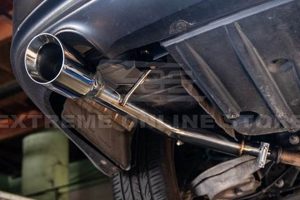
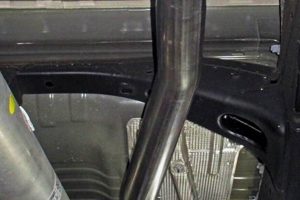
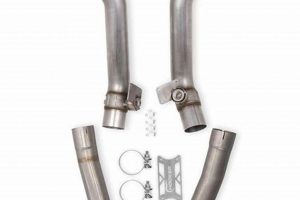
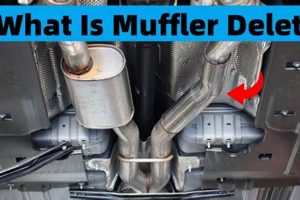
The legality of removing a vehicle’s exhaust silencing device varies significantly depending on jurisdiction. This modification, which bypasses the muffler, often results in a substantial increase in exhaust noise. Consequently, many states and municipalities have laws regulating vehicle noise levels, and altering the exhaust system in such a manner may contravene these regulations. For example, a vehicle emitting noise levels exceeding a specified decibel limit during operation could be subject to a fine or require remediation to comply with local ordinances.
Regulations regarding vehicle exhaust systems aim to mitigate noise pollution and maintain a reasonable quality of life within communities. Historically, concerns about excessive noise led to the development and enforcement of standards governing vehicle sound emissions. The benefits of adhering to these regulations include reduced disturbance to residents, particularly in densely populated areas, and a decrease in the overall level of environmental noise. Furthermore, maintaining factory-equipped or compliant aftermarket exhaust systems contributes to a more peaceful and regulated public environment.
The subsequent discussion will delve into the specific legal frameworks in different states regarding exhaust modifications, potential penalties for non-compliance, and factors influencing the enforcement of these regulations. Additionally, it will examine the potential impact on vehicle inspections and emissions testing, providing a comprehensive overview of the implications associated with modifying a vehicle’s exhaust system by eliminating its silencing components.
Considerations Regarding Exhaust System Modifications
Modifying a vehicle’s exhaust system by removing the muffler presents a multifaceted issue involving legal compliance, environmental impact, and potential performance changes. A thorough understanding of these factors is crucial before undertaking any such modification.
Tip 1: Research Local and State Regulations: Prior to any modifications, meticulously investigate the specific regulations governing vehicle exhaust systems within the relevant jurisdiction. State statutes and municipal ordinances often contain explicit restrictions on noise levels and exhaust system alterations.
Tip 2: Understand Noise Level Restrictions: Familiarize oneself with any decibel limits imposed on vehicle exhaust noise. Many jurisdictions establish maximum permissible noise levels, and exceeding these limits can result in fines or mandated corrective action.
Tip 3: Be Aware of Inspection Requirements: Determine whether the vehicle is subject to periodic safety or emissions inspections. Altering the exhaust system may cause the vehicle to fail inspection, preventing its legal operation on public roads.
Tip 4: Evaluate Potential Performance Impacts: While some perceive performance benefits from muffler removal, these are often marginal and can be offset by increased noise levels and potential backpressure issues. Consider whether the perceived performance gains justify the potential drawbacks.
Tip 5: Consider Alternatives: Explore legally compliant alternatives to muffler removal, such as performance mufflers or cat-back exhaust systems. These options can enhance exhaust flow and sound without violating noise regulations.
Tip 6: Document Existing Conditions: Before making any modifications, document the original exhaust system’s configuration and noise level. This documentation can be helpful in demonstrating compliance or defending against potential allegations of excessive noise.
Tip 7: Seek Professional Advice: Consult with a qualified automotive technician or exhaust specialist. These professionals can provide guidance on legal and performance-related aspects of exhaust system modifications.
Adhering to these considerations promotes responsible vehicle modification and minimizes the risk of legal repercussions. Prioritizing regulatory compliance safeguards the environment and contributes to a more peaceful community environment.
The ensuing sections will provide further insights into the potential environmental and societal consequences associated with excessive vehicle noise.
1. Noise Pollution Laws
Noise pollution laws establish a framework for regulating excessive or disturbing sounds that can negatively impact public health and quality of life. These laws are intrinsically linked to the legality of muffler deletes, as such modifications often lead to a substantial increase in vehicle noise emissions.
- Decibel Limits and Enforcement
Many noise pollution laws stipulate specific decibel limits for vehicle exhaust systems. These limits are often measured at a designated distance from the vehicle. Exceeding these limits, which is common with muffler deletes, can result in fines, citations, or requirements to restore the exhaust system to its original, compliant configuration. Enforcement varies by jurisdiction, ranging from routine traffic stops to targeted noise enforcement campaigns.
- Municipal Ordinances and Zoning Regulations
Beyond state-level laws, municipal ordinances can further restrict vehicle noise within city limits. These ordinances may include specific provisions addressing vehicle modifications that amplify noise. Zoning regulations can also play a role, with certain areas designated as noise-sensitive zones, such as residential neighborhoods or school zones, where stricter noise restrictions apply. Muffler deletes are more likely to be problematic in areas with robust local noise ordinances.
- Vehicle Inspection Standards
Some jurisdictions incorporate noise level checks into their vehicle inspection programs. If a vehicle equipped with a muffler delete exceeds the permissible noise level during inspection, it will fail the inspection, preventing registration renewal or sale. The stringency of these inspection standards directly influences the prevalence and acceptance of exhaust modifications that increase noise. Therefore, areas with stringent inspection standards are less likely to tolerate muffler deletes.
- Impact on Public Health and Quality of Life
Noise pollution laws are fundamentally concerned with protecting public health and preserving quality of life. Excessive vehicle noise, such as that generated by muffler deletes, can contribute to stress, sleep disturbance, and other adverse health effects. By regulating vehicle noise, these laws aim to mitigate these negative impacts and foster a more peaceful and livable environment. The justification for prohibiting muffler deletes rests primarily on their contribution to overall noise pollution and its associated health consequences.
The combined effect of decibel limits, municipal ordinances, vehicle inspection standards, and the overarching goal of protecting public health creates a regulatory environment in which muffler deletes are often deemed illegal. The specific laws and enforcement practices vary, but the underlying principle remains: excessive vehicle noise is detrimental to the community and warrants regulatory intervention.
2. State-Specific Regulations
The legality of muffler deletes is fundamentally determined by state-specific regulations. Each state possesses the authority to enact its own motor vehicle laws, including those pertaining to exhaust systems and noise emissions. Consequently, an exhaust modification permissible in one state may be explicitly prohibited in another. The variance in these regulations establishes a complex legal landscape for vehicle owners contemplating such alterations.
For instance, California maintains stringent noise emission standards and conducts visual inspections to ensure exhaust system compliance. Conversely, some states may lack comprehensive noise regulations or possess limited enforcement capabilities. The practical significance of understanding these state-specific regulations lies in avoiding potential legal penalties, such as fines or mandatory vehicle modifications to restore compliance. A vehicle owner residing in a state with strict noise regulations who installs a muffler delete risks incurring significant legal consequences. This underscores the critical importance of researching and adhering to the specific regulations of the state in which the vehicle is registered and operated.
In summary, the legality of a muffler delete is not a universal determination. State-specific regulations dictate its permissibility, creating a patchwork of laws across the country. Ignoring these regulations can result in legal penalties and vehicle inspection failures. Therefore, a thorough understanding of the applicable state laws is paramount before undertaking any exhaust system modifications. The challenge lies in the complexity and variability of these regulations, necessitating careful research and potentially consultation with legal or automotive professionals.
3. Vehicle Inspections
Vehicle inspections serve as a critical mechanism for enforcing regulations pertaining to vehicle equipment, including exhaust systems. In many jurisdictions, these inspections include an assessment of the exhaust system’s integrity and compliance with noise emission standards. The presence of a muffler delete directly contradicts these standards, leading to inspection failure. States and municipalities utilize inspections as a tool to identify and rectify vehicles operating with illegal modifications, thereby mitigating noise pollution and ensuring compliance with motor vehicle laws. For instance, a vehicle undergoing a mandatory annual inspection in a state with stringent noise regulations would likely fail if a muffler delete is discovered, preventing the vehicle’s registration renewal until the exhaust system is restored to a compliant configuration.
The stringency and scope of vehicle inspections vary significantly. Some jurisdictions conduct comprehensive inspections encompassing various aspects of vehicle safety and emissions, while others focus primarily on safety-related components. Regardless of the scope, the presence of a muffler delete represents a clear violation if the inspection includes an assessment of the exhaust system’s functionality and noise levels. This is because the removal of the muffler inherently alters the exhaust system’s design and increases noise emissions beyond permissible limits. Moreover, in some regions, visual inspections are conducted specifically to identify modified exhaust systems, making muffler deletes easily detectable.
In conclusion, vehicle inspections play a direct role in enforcing regulations related to exhaust modifications and ensuring compliance with noise emission standards. The detection of a muffler delete during a vehicle inspection invariably results in a failed inspection, requiring the vehicle owner to rectify the modification to achieve compliance and maintain legal operation on public roads. The effectiveness of vehicle inspections in this context underscores their importance in regulating vehicle noise and upholding motor vehicle laws. The impact of the laws surrounding vehicle inspections and noise emissions are to help support peaceful areas around the country and ensure that vehicle owners follow specific rules and guidelines.
4. Decibel Limits
Decibel limits are a foundational element in determining the legality of exhaust modifications, particularly concerning muffler deletes. These limits establish a quantifiable threshold for permissible vehicle noise emissions, directly impacting whether a muffler delete is considered a violation. The cause-and-effect relationship is clear: a muffler delete typically elevates exhaust noise levels beyond the established decibel limit, rendering the modification illegal in jurisdictions with such regulations. Therefore, adherence to decibel limits is a critical component of legal exhaust system operation. For instance, a vehicle equipped with a muffler delete emitting 95 decibels in a state with an 85-decibel limit would be in direct violation of the law. This regulation serves to mitigate noise pollution and maintain a reasonable quality of life within communities.
The practical significance of understanding decibel limits extends to several domains. Vehicle owners must be cognizant of these limits to ensure their modifications comply with local regulations, avoiding potential fines or legal action. Law enforcement agencies rely on decibel limits to identify and penalize vehicles exceeding permissible noise levels. Automotive technicians and exhaust system specialists need to be aware of these limits to provide accurate advice and services to their clients. Moreover, decibel limits inform the design and manufacturing of aftermarket exhaust systems, ensuring they remain within legal boundaries. This knowledge has wide-reaching applications, impacting vehicle owners, law enforcement, and the automotive industry.
In summary, decibel limits act as a critical regulatory tool in controlling vehicle noise emissions and determining the legality of muffler deletes. These limits provide a concrete, measurable standard for compliance, enabling both enforcement and self-regulation. The absence of decibel limits would likely result in significantly increased noise pollution, highlighting their importance in maintaining community standards and environmental quality. The ongoing challenge involves balancing individual vehicle customization with the collective need for a peaceful environment.
5. Enforcement Practices
Enforcement practices directly influence the practical application and effectiveness of laws regarding muffler deletes. While a statute may explicitly prohibit the removal of mufflers, its impact remains limited if enforcement is lax or inconsistent. The connection between enforcement and the legality of muffler deletes is thus a critical determinant of real-world compliance. A robust enforcement regime, characterized by proactive patrols, targeted noise monitoring, and consistent application of penalties, discourages illegal exhaust modifications and fosters adherence to noise regulations. Conversely, infrequent enforcement can create a perception that such modifications are inconsequential, leading to widespread non-compliance. For example, some jurisdictions conduct regular roadside inspections targeting vehicles suspected of violating noise ordinances, while others rely primarily on citizen complaints. The former approach typically results in higher rates of detection and compliance.
The type of enforcement practices employed also significantly affects their overall effectiveness. Strategies such as visual inspections, decibel meter readings, and community education campaigns each contribute to a comprehensive enforcement approach. Visual inspections can identify readily apparent modifications, while decibel meter readings provide objective evidence of noise violations. Community education campaigns raise awareness of noise regulations and their impact on quality of life, fostering voluntary compliance. The absence of any one of these components can weaken the overall enforcement effort. Further, the severity of penalties imposed for violating noise regulations serves as a deterrent. Fines, mandatory repairs, and vehicle impoundment are examples of potential penalties that can discourage muffler deletes and promote compliance with applicable laws. The consistency in how penalties are enforced is also important. If repeat offenders are given the same leniency as first-time violators, it will weaken the impact on the vehicle owners and also on deterring other potential violators.
In summary, enforcement practices are integral to the effectiveness of laws prohibiting muffler deletes. The mere existence of a law is insufficient; consistent and proactive enforcement is essential to deterring violations and maintaining compliance. Varying enforcement strategies, ranging from proactive patrols to community education, each contribute to a comprehensive approach. Ultimately, the effectiveness of these practices shapes the extent to which muffler deletes are truly illegal in practice, impacting community noise levels and quality of life. It is crucial to have these enforcement practices in place, or the written law will never be abided.
6. Exhaust System Standards
Exhaust system standards represent a set of established criteria governing the design, construction, and performance of vehicle exhaust systems. These standards directly influence the legality of modifications such as muffler deletes, as such alterations often violate established requirements.
- Original Equipment Manufacturer (OEM) Compliance
OEM standards mandate that vehicles are manufactured with exhaust systems meeting specific noise emission and performance criteria. A muffler delete inherently deviates from these original design parameters, rendering the vehicle non-compliant with OEM standards. This non-compliance can result in legal penalties and vehicle inspection failures. For example, if a vehicle originally designed to emit a maximum of 80 decibels is modified with a muffler delete causing it to emit 90 decibels, it would be in violation of OEM standards and potentially state or local noise ordinances.
- Aftermarket Certification Programs
Various certification programs exist for aftermarket exhaust components, ensuring they meet specific noise and emissions standards. These programs provide a framework for evaluating the legality and environmental impact of aftermarket parts. Muffler deletes, by their very nature, lack such certification, as they eliminate a critical component designed to mitigate noise pollution. Consequently, installing a muffler delete compromises the vehicle’s compliance with established aftermarket certification protocols. For instance, an exhaust system certified by the California Air Resources Board (CARB) would not include a muffler delete due to its inherent non-compliance with noise regulations.
- Federal and State Regulations
Federal and state governments enact regulations governing vehicle exhaust systems, including noise emission limits and design specifications. These regulations are often codified in motor vehicle laws and enforced through vehicle inspections and traffic stops. A muffler delete can directly violate these regulations by exceeding permissible noise levels or altering the exhaust system’s original configuration. As an example, the Environmental Protection Agency (EPA) sets federal standards for vehicle emissions, and removing a muffler could potentially affect a vehicle’s ability to meet these standards. Additionally, state-level laws often mirror or exceed federal requirements, further restricting the legality of muffler deletes.
- Performance and Safety Considerations
Exhaust system standards also address performance and safety aspects, ensuring that the system functions effectively and does not compromise vehicle safety. Muffler deletes, while potentially altering exhaust flow and perceived performance, can negatively impact safety by increasing noise levels and potentially creating backpressure issues. Additionally, the removal of a muffler may expose other exhaust system components to increased wear and tear, potentially leading to premature failure. These considerations are often reflected in vehicle inspection criteria, where the overall condition and functionality of the exhaust system are assessed. A vehicle deemed unsafe due to an improperly modified exhaust system may be prohibited from operation until the issue is resolved.
These varied aspects of exhaust system standards collectively demonstrate the widespread implications of muffler deletes and highlight why they are often deemed illegal. Compliance with established standards is critical for maintaining vehicle legality, minimizing noise pollution, and ensuring public safety. The impact of these laws is to give vehicles the best chance of passing inspections so they can travel on public roads.
7. Environmental Impact
The environmental impact of muffler deletes is a significant factor contributing to their illegality in many jurisdictions. These modifications directly elevate noise pollution levels, which have documented adverse effects on both human and animal populations. Prolonged exposure to elevated noise levels can result in increased stress, sleep disturbances, and impaired cognitive function in humans. Wildlife, particularly in proximity to roadways, may experience habitat disruption, communication interference, and altered behavioral patterns due to increased noise from vehicles lacking mufflers. The connection between muffler deletes and environmental harm provides a compelling justification for regulatory action.
The practical significance of understanding this environmental impact extends beyond simply adhering to legal mandates. Recognizing the detrimental effects of excessive noise allows vehicle owners to make informed decisions regarding exhaust system modifications. Opting for compliant exhaust systems or refraining from altering the original design mitigates noise pollution and contributes to a more sustainable environment. Furthermore, a heightened awareness of the environmental consequences of muffler deletes can foster greater community support for noise regulations and enforcement efforts. For example, increased public awareness campaigns can inform citizens of the connection between vehicular noise and sleep disturbances, so they take action by reporting noise violations within residential areas.
In summary, the environmental impact of muffler deletes, particularly through increased noise pollution, represents a key rationale for their illegality. Acknowledging and understanding these environmental consequences is crucial for promoting responsible vehicle operation and supporting the enforcement of noise regulations. Mitigating noise pollution through compliance with exhaust system standards safeguards human health, protects wildlife, and contributes to a more sustainable and environmentally sound community. Ignoring these elements and facts, then noise pollution will keep vehicle owners to be in violation with laws and orders.
Frequently Asked Questions
This section addresses common inquiries regarding the legal implications of removing a vehicle’s muffler. The information provided aims to clarify the regulations and potential consequences associated with such modifications.
Question 1: What constitutes a muffler delete, and how does it alter a vehicle’s exhaust system?
A muffler delete involves removing the muffler, a component designed to reduce exhaust noise, from a vehicle’s exhaust system. This modification typically results in a significant increase in exhaust noise levels and a direct path for exhaust gases to exit the engine.
Question 2: Is the installation of a muffler delete legal in all jurisdictions?
The legality of a muffler delete varies significantly depending on the jurisdiction. Many states and municipalities have noise regulations that may be violated by such modifications. A thorough understanding of local laws is crucial before undertaking this type of alteration.
Question 3: What are the potential penalties for operating a vehicle with a muffler delete?
Penalties for operating a vehicle with an illegal muffler delete can include fines, citations, requirements to restore the exhaust system to its original configuration, and potential vehicle impoundment, depending on the specific regulations of the jurisdiction.
Question 4: How do vehicle inspections factor into the legality of muffler deletes?
Vehicle inspections often include an assessment of the exhaust system’s compliance with noise emission standards. The presence of a muffler delete typically results in a failed inspection, preventing the vehicle from being legally operated on public roads until the modification is rectified.
Question 5: Do decibel limits play a role in determining the legality of muffler deletes?
Decibel limits are a key factor in determining the legality of exhaust modifications. Many jurisdictions establish maximum permissible noise levels for vehicles, and exceeding these limits with a muffler delete can result in legal repercussions.
Question 6: Are there any legal alternatives to muffler deletes for achieving enhanced exhaust sound?
Legally compliant alternatives to muffler deletes include performance mufflers and cat-back exhaust systems that enhance exhaust flow and sound without violating noise regulations. These options provide an alternative for vehicle owners seeking a more aggressive exhaust note while maintaining compliance with applicable laws.
Understanding the specific laws and regulations governing exhaust systems is crucial to avoid legal penalties and ensure responsible vehicle operation. Prioritizing regulatory compliance demonstrates a commitment to community standards and environmental protection.
The subsequent section provides practical considerations for vehicle owners contemplating exhaust system modifications.
The Final Verdict
The preceding exploration has illuminated the complex and multifaceted legal landscape surrounding muffler deletes. State-specific regulations, decibel limits, enforcement practices, and exhaust system standards collectively determine the legality of these modifications. The removal of mufflers often results in violations of noise pollution laws, leading to potential fines, vehicle inspection failures, and mandated corrective actions. Moreover, such alterations contribute to environmental noise pollution, impacting public health and quality of life.
Therefore, due diligence is crucial for vehicle owners contemplating exhaust system modifications. Thoroughly researching local and state regulations, understanding noise level restrictions, and considering the potential environmental impact are essential steps. Ultimately, prioritizing regulatory compliance ensures responsible vehicle operation, safeguards community well-being, and avoids potentially severe legal repercussions. The decision to modify a vehicle’s exhaust system should be approached with caution and a commitment to upholding the law.