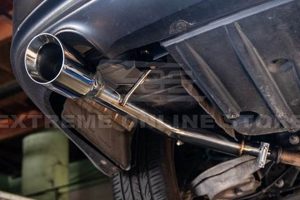
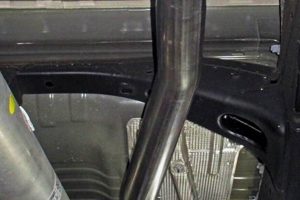
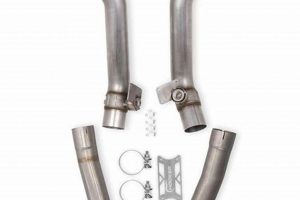
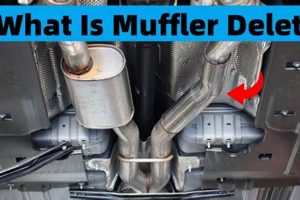
The act of removing the muffler and resonator from a vehicle’s exhaust system is a modification commonly considered for potential performance enhancements. Mufflers and resonators are designed to reduce exhaust noise, but they can also create backpressure, which some believe restricts engine output. The perceived gain stems from the idea that a less restrictive exhaust flow allows the engine to breathe more freely, potentially increasing combustion efficiency. For example, an engine with a significant amount of backpressure may not fully expel exhaust gases, leading to reduced intake of fresh air and fuel for the next combustion cycle.
The perceived importance of this modification lies in the desire for improved vehicle performance and a more aggressive exhaust note. Historically, simpler exhaust systems were associated with older, less regulated vehicles, leading to the belief that reducing exhaust components equates to increased power. The benefits are often touted as increased horsepower and torque, along with a sportier sound. However, these claims are often debated and heavily dependent on specific vehicle models and engine configurations.
The following sections will delve into a more detailed analysis of how exhaust system modifications affect engine performance, the potential consequences of such alterations, and the factors that determine whether removing these components yields a tangible increase in power.
Tips Regarding Muffler and Resonator Deletion
The following tips provide guidance for individuals contemplating the removal of mufflers and resonators from a vehicle’s exhaust system. Careful consideration of these points can aid in making an informed decision.
Tip 1: Research Specific Vehicle Models: The effect of deleting mufflers and resonators varies greatly depending on the vehicle’s make, model, and engine type. Researching online forums and consulting with automotive professionals familiar with the specific vehicle is crucial.
Tip 2: Consider Potential Performance Losses: While some vehicles may experience a slight increase in top-end horsepower, others might suffer a reduction in low-end torque due to altered exhaust gas velocity. Understand the potential trade-offs before proceeding.
Tip 3: Evaluate Legality and Noise Regulations: Many jurisdictions have noise regulations that prohibit excessively loud vehicles. Removing mufflers and resonators can lead to non-compliance and potential fines. Check local laws before modifying the exhaust system.
Tip 4: Assess Potential Drone and Resonance: Removing exhaust components can introduce undesirable drone or resonance within the vehicle’s cabin, especially at certain engine speeds. This can become tiresome during long drives.
Tip 5: Investigate Alternatives: Consider aftermarket performance exhaust systems that offer improved flow while maintaining acceptable noise levels and complying with legal requirements. These systems are often engineered to optimize performance without excessive noise.
Tip 6: Understand Potential Warranty Implications: Modifying the exhaust system may void the vehicle’s warranty, particularly if the modification is deemed to have caused damage to other components.
Tip 7: Consider Professional Installation: If deciding to proceed with a modification, engaging a qualified professional ensures the work is performed correctly and minimizes the risk of damaging the exhaust system or other vehicle components.
Careful consideration of these tips can assist in determining whether the benefits of removing mufflers and resonators outweigh the potential drawbacks. A well-informed decision is crucial to ensure a satisfactory outcome.
The concluding section will summarize the findings and provide final thoughts on exhaust system modifications.
1. Backpressure
Backpressure, in the context of an internal combustion engine’s exhaust system, refers to the resistance encountered by exhaust gases as they exit the engine’s cylinders. Mufflers and resonators, components designed to reduce exhaust noise, inherently contribute to backpressure. The argument for removing these components to increase engine power centers on the belief that reducing backpressure allows the engine to expel exhaust gases more efficiently, thus improving the intake of fresh air and fuel. In theory, this improved scavenging leads to a more complete combustion cycle and a consequent increase in power output. A real-world example is seen in certain high-performance engines designed with minimal exhaust restrictions to maximize output; however, these engines are often specifically tuned to operate optimally under these conditions. The practical significance lies in understanding that uncontrolled backpressure reduction can have unintended consequences.
The relationship between backpressure and engine performance is complex and not always linear. While excessive backpressure undoubtedly hinders engine efficiency, a complete elimination of backpressure is not necessarily optimal. Some degree of backpressure can be beneficial in maintaining exhaust gas velocity, which aids in scavenging the cylinders and preventing reversion the backflow of exhaust gases into the combustion chamber. Removing mufflers and resonators can disrupt this delicate balance, particularly in engines not specifically designed for such a free-flowing exhaust system. For instance, a naturally aspirated engine optimized for low-end torque might experience a significant loss of responsiveness if backpressure is drastically reduced. Conversely, a turbocharged engine, which relies on exhaust gas flow to spin the turbocharger, may benefit from a less restrictive exhaust system, but even then, careful consideration must be given to engine tuning and potential turbocharger overspeeding.
In summary, while reducing backpressure through the removal of mufflers and resonators is often associated with increased engine power, the actual outcome is highly dependent on the engine’s design, tuning, and intended application. A blanket assumption that this modification universally improves performance is inaccurate and potentially detrimental. Careful consideration of the specific engine characteristics and a thorough understanding of the principles of exhaust gas dynamics are essential before undertaking such a modification. The potential gains must be weighed against the risks of reduced low-end torque, increased noise levels, and potential legal or warranty implications.
2. Exhaust Flow
Exhaust flow is a critical factor in determining the efficiency and performance of an internal combustion engine. Efficient exhaust flow ensures that spent gases are rapidly and completely evacuated from the cylinders, allowing for a more complete intake of fresh air and fuel in the subsequent combustion cycle. The removal of mufflers and resonators is often pursued with the expectation that it will enhance exhaust flow, thereby increasing horsepower. A less restrictive exhaust system, theoretically, reduces backpressure, allowing the engine to “breathe” more freely. This is particularly pertinent in high-performance engines where even marginal improvements in exhaust flow can translate to measurable gains in power output. For example, race cars frequently utilize exhaust systems with minimal restrictions to maximize engine performance. However, the practical significance of this modification depends heavily on the specific engine design and its existing exhaust system. An already well-optimized exhaust system may not yield significant improvements with the removal of these components.
The impact of increased exhaust flow on horsepower is not universally positive and must be considered in the context of the entire engine system. For instance, while a freer-flowing exhaust may increase peak horsepower at high engine speeds, it can potentially reduce low-end torque. This trade-off occurs because the reduction in backpressure can decrease exhaust gas velocity at lower engine speeds, hindering the scavenging effect. Another consideration is the engine’s electronic control unit (ECU). Many modern vehicles utilize sophisticated engine management systems that adapt to changes in exhaust flow. However, the ECU’s ability to compensate for drastic changes, such as those resulting from a muffler and resonator delete, may be limited. In some cases, a custom ECU tune is necessary to fully realize the potential benefits of increased exhaust flow and avoid potential issues like lean running conditions or reduced fuel efficiency.
In conclusion, the relationship between exhaust flow and horsepower is undeniable, and the removal of mufflers and resonators can potentially enhance exhaust flow. However, the resulting impact on engine performance is complex and depends on several factors, including the engine’s design, existing exhaust system, and ECU calibration. A blanket assumption that this modification will invariably increase horsepower is inaccurate. Careful consideration of these factors, along with an understanding of potential trade-offs, is essential before modifying the exhaust system. Furthermore, adherence to local noise regulations and consideration of warranty implications are crucial aspects of this decision-making process.
3. Noise Levels
The removal of mufflers and resonators from a vehicle’s exhaust system invariably increases noise levels. These components are specifically designed to attenuate sound generated by the engine’s combustion process. Consequently, their deletion results in a louder exhaust note, often characterized by increased volume and a more aggressive tone. This amplified sound stems directly from the unrestrained expulsion of exhaust gases. The magnitude of the increase in noise is contingent upon the vehicle’s make and model, the engine type, and the design of the remaining exhaust system. For instance, a V8 engine without mufflers and resonators will produce a significantly louder sound than a four-cylinder engine subjected to the same modification. The causal relationship is straightforward: eliminating sound-dampening components directly leads to elevated noise output. The perception of increased power associated with such modifications is sometimes psychologically linked to the louder exhaust, creating a subjective sense of enhanced performance, regardless of actual gains.
Noise levels serve as a critical component in evaluating the practicality and legality of exhaust modifications. Many jurisdictions have established noise regulations that vehicles must adhere to. Exceeding these limits can result in fines, vehicle impoundment, or mandatory corrective actions. The decibel level produced by an exhaust system without mufflers and resonators often surpasses these legal thresholds. Furthermore, increased noise can lead to negative social consequences, particularly in residential areas. The amplified sound can disturb residents, leading to complaints and potential conflicts with local authorities. Therefore, while the potential for increased horsepower is a consideration, it must be balanced against the legal and social implications of elevated noise levels. Some vehicle owners mitigate these issues by installing electronically controlled exhaust cutouts that allow for a switch between a quiet, muffled exhaust and a louder, unrestricted exhaust, depending on the driving environment.
In summary, the connection between the deletion of mufflers and resonators and noise levels is direct and undeniable. While the allure of potentially increased horsepower may tempt some vehicle owners, the practical significance of noise levels cannot be overlooked. Compliance with legal regulations, consideration of social impacts, and potential mitigation strategies must be carefully evaluated before undertaking such modifications. The pursuit of performance gains should not come at the expense of responsible vehicle operation and adherence to community standards. The aural experience is only one facet of overall vehicle performance.
4. Engine tuning
Engine tuning plays a crucial role in determining whether removing mufflers and resonators translates to increased horsepower. The deletion of these components alters the exhaust system’s characteristics, primarily reducing backpressure and modifying exhaust flow dynamics. Engine control units (ECUs) are typically calibrated for a specific exhaust system configuration. When that configuration is altered, the ECU may not be able to optimally manage fuel delivery and ignition timing to take advantage of the new exhaust flow characteristics. Consequently, potential horsepower gains may be unrealized, or even a decrease in performance may occur, if engine tuning is not properly addressed. For instance, a vehicle with a relatively restrictive stock exhaust might show a noticeable increase in airflow after a muffler delete. However, without adjusting the ECU to match the increased airflow with a corresponding increase in fuel delivery, the engine might run lean, potentially leading to decreased power and even engine damage.
The importance of engine tuning stems from the necessity to optimize the engine’s operating parameters for the altered exhaust system. This can involve recalibrating the fuel maps, ignition timing curves, and even adjusting variable valve timing settings. Aftermarket tuning solutions, such as ECU reflashing or piggyback tuning devices, can allow for these adjustments. For example, a dyno tune, where the vehicle is tested on a dynamometer while adjustments are made in real-time, can precisely optimize the engine’s performance for the new exhaust configuration. Furthermore, failing to tune the engine after a muffler and resonator delete can lead to issues such as increased engine knocking or detonation, reduced fuel economy, and a decrease in overall engine efficiency. In essence, engine tuning acts as the bridge that allows the engine to effectively utilize the changes introduced by the exhaust modification.
In summary, engine tuning is an indispensable component when considering the impact of removing mufflers and resonators on horsepower. Without proper tuning, the potential benefits of the exhaust modification may not be realized, and the engine may even experience performance degradation or damage. Tuning ensures that the engine’s operating parameters are optimized for the altered exhaust system characteristics, allowing for a more complete combustion cycle and a potential increase in horsepower. The practical significance lies in understanding that a muffler and resonator delete, without proper engine tuning, is an incomplete modification and may not achieve the desired results. The decision to alter exhaust components should always be accompanied by a plan for subsequent engine tuning to maximize performance and ensure engine longevity.
5. Torque Impact
The removal of mufflers and resonators can have a discernible impact on a vehicle’s torque output, a critical aspect of engine performance. While the primary intention behind such modifications often centers on increasing horsepower, the resultant effect on torque, particularly at lower engine speeds, warrants careful consideration. The modification directly alters the exhaust system’s backpressure characteristics. Reducing backpressure, while potentially beneficial for high-end horsepower, can lead to a decrease in exhaust gas velocity at lower RPMs. This reduction in velocity can negatively impact the scavenging effect, hindering the efficient removal of exhaust gases from the cylinders. The consequence is a potential reduction in low-end torque, which is crucial for everyday drivability and acceleration from a standstill. For instance, a truck used for towing may experience a noticeable loss of pulling power at lower speeds after a muffler and resonator delete, even if it gains a slight increase in horsepower at higher RPMs. The importance of understanding this trade-off is paramount in making informed decisions about exhaust modifications.
The degree to which torque is affected depends significantly on the engine’s design and the specific exhaust system configuration. Naturally aspirated engines, which rely on vacuum created by the pistons to draw in air and fuel, are generally more susceptible to torque loss from reduced backpressure compared to turbocharged engines. Turbocharged engines utilize exhaust gas energy to force air into the cylinders, often mitigating the negative effects of reduced backpressure on low-end torque. Furthermore, the diameter of the exhaust piping plays a crucial role. Oversized exhaust piping, often installed in conjunction with muffler and resonator deletes, can exacerbate the reduction in exhaust gas velocity, leading to a more pronounced loss of low-end torque. Conversely, retaining the stock exhaust piping diameter or opting for a slightly larger diameter can help maintain exhaust gas velocity and minimize torque loss. Practical applications demand a balanced approach, prioritizing torque retention for vehicles used primarily for daily driving or towing, while focusing on horsepower gains for performance-oriented vehicles driven primarily at higher RPMs.
In conclusion, the impact on torque represents a significant consideration when evaluating the potential benefits of removing mufflers and resonators. While the modification may contribute to increased horsepower at higher engine speeds, it can concurrently lead to a reduction in low-end torque, affecting drivability and overall vehicle performance. The extent of the torque reduction is influenced by engine design, exhaust system configuration, and driving style. A thorough understanding of these factors, coupled with a realistic assessment of the vehicle’s intended use, is essential in determining whether the potential horsepower gains outweigh the potential loss of torque. A well-informed decision ensures that the exhaust modification aligns with the vehicle owner’s performance goals and driving requirements, preventing unintended consequences and maximizing overall satisfaction.
6. Legality issues
The relationship between exhaust modifications and legal compliance is a critical consideration when evaluating the potential benefits of removing mufflers and resonators. While the pursuit of increased horsepower may be a driving factor behind such modifications, adherence to local, state, and federal regulations pertaining to vehicle noise and emissions is paramount. Many jurisdictions have enacted laws that establish maximum permissible noise levels for vehicles. Exhaust systems lacking mufflers and resonators often exceed these limits, resulting in non-compliance. This non-compliance can lead to fines, mandatory vehicle inspections, and even the impoundment of the vehicle. The practical significance lies in understanding that perceived performance gains are rendered moot if the vehicle cannot be legally operated on public roads. For instance, several states enforce strict noise ordinances, utilizing decibel meters to measure exhaust noise levels and issuing citations to vehicles exceeding the legal limit. The removal of mufflers and resonators, in such areas, constitutes a direct violation of these regulations.
Furthermore, the deletion of exhaust components can impact a vehicle’s emissions compliance. While mufflers and resonators primarily address noise reduction, some exhaust systems incorporate catalytic converters within these components. Removing catalytic converters is a violation of federal law in many countries, including the United States, and can result in substantial penalties. Even if catalytic converters are retained, modifying the exhaust system can alter exhaust gas flow and temperature, potentially affecting the efficiency of the catalytic converter and leading to increased emissions. States with stringent emissions testing programs may fail vehicles with modified exhaust systems, regardless of whether the vehicle produces increased horsepower. An illustrative example is California’s Smog Check program, which visually inspects exhaust systems for illegal modifications and conducts emissions testing to ensure compliance with state standards. Vehicles failing this inspection cannot be legally registered or operated within the state.
In conclusion, the connection between exhaust modifications, such as removing mufflers and resonators, and legality issues is undeniable. The pursuit of increased horsepower must be tempered by a thorough understanding of applicable noise and emissions regulations. Non-compliance with these regulations can result in significant penalties, rendering any potential performance gains irrelevant. Vehicle owners contemplating exhaust modifications must prioritize legal compliance and ensure that any modifications adhere to all applicable laws. Failure to do so can lead to financial repercussions, restrictions on vehicle operation, and potential environmental consequences. The practical significance lies in prioritizing responsible vehicle modification practices that balance performance aspirations with legal obligations.
7. Warranty concerns
Modifying a vehicle’s exhaust system by removing mufflers and resonators can have significant implications for the vehicle’s warranty coverage. The manufacturer’s warranty typically covers defects in materials or workmanship, but it often excludes damage caused by aftermarket modifications. The removal of these exhaust components introduces factors that may void certain aspects of the warranty, requiring careful consideration.
- Directly Affected Components
The exhaust system itself, including related sensors and components, is the most directly affected by a muffler and resonator delete. The manufacturer may deny warranty claims related to exhaust leaks, corrosion, or failures in the exhaust manifold if the system has been altered. For example, if an oxygen sensor malfunctions due to changes in exhaust flow caused by the modification, the warranty claim may be rejected.
- “Causation” Clause
Most warranties contain a “causation” clause, stipulating that the manufacturer is not responsible for damage caused by modifications. If the modification can be reasonably linked to a subsequent failure in another system, the warranty claim may be denied. If an engine issue arises and the manufacturer can demonstrate that the altered exhaust system contributed to the problem, the engine warranty may be compromised. For instance, engine damage resulting from improper tuning after a muffler delete could be attributed to the modification, voiding the engine warranty.
- Burden of Proof
In warranty disputes, the burden of proof often lies with the vehicle owner to demonstrate that the modification did not cause the failure. This can be challenging, requiring expert testimony and detailed documentation. For example, if a transmission fails after a muffler and resonator delete, the owner must prove that the exhaust modification did not contribute to the transmission failure, which can be a difficult and expensive undertaking.
- Magnuson-Moss Warranty Act
The Magnuson-Moss Warranty Act protects consumers by preventing manufacturers from voiding warranties solely because aftermarket parts have been installed. However, the manufacturer can still deny a claim if it proves that the aftermarket part or modification caused the failure. It does not protect the consumer if the modification is the direct cause of the problem that needs to be covered. Therefore, while the Act offers some protection, it does not guarantee that warranty claims will be honored if the exhaust modification is deemed responsible for the issue.
In conclusion, a muffler and resonator delete can introduce significant warranty concerns. While the allure of potentially increased horsepower may be tempting, it is imperative to carefully evaluate the potential ramifications for warranty coverage. Understanding the “causation” clause, the burden of proof, and the protections afforded by the Magnuson-Moss Warranty Act can aid in making an informed decision. Contacting the manufacturer can provide specific information on the vehicle and provide a better sense of how the warranty could be impacted. If warranty coverage is a priority, it is advisable to avoid modifying the exhaust system or to consult with the manufacturer or a qualified mechanic before proceeding.
Frequently Asked Questions
The following questions address common concerns and misconceptions regarding the impact of muffler and resonator deletion on vehicle performance.
Question 1: Does removing mufflers and resonators guarantee an increase in horsepower?
Removing mufflers and resonators does not guarantee a horsepower increase. The actual effect depends on the engine’s design, existing exhaust system, and tuning. Some vehicles may experience a slight increase, while others may see no change or even a decrease in performance.
Question 2: Will deleting exhaust components always improve exhaust flow?
While the absence of mufflers and resonators reduces restriction, improved exhaust flow is not always assured. Exhaust gas velocity at lower engine speeds may decrease, potentially hindering scavenging and reducing low-end torque.
Question 3: Is engine tuning required after a muffler and resonator delete?
Engine tuning is often recommended after modifying the exhaust system. The ECU may not be calibrated to optimally manage fuel delivery and ignition timing for the altered exhaust flow, potentially leading to decreased performance or engine damage.
Question 4: Does the diameter of the exhaust piping influence the outcome of this modification?
The diameter of the exhaust piping significantly influences the outcome. Oversized piping can reduce exhaust gas velocity, potentially leading to a loss of low-end torque. Retaining the stock diameter or opting for a slightly larger diameter can help mitigate this effect.
Question 5: Are there legal ramifications associated with removing mufflers and resonators?
Many jurisdictions have noise regulations that prohibit excessively loud vehicles. Removing mufflers and resonators can lead to non-compliance and potential fines. Local laws should be checked before modifying the exhaust system.
Question 6: How does this modification affect the vehicle’s warranty?
Modifying the exhaust system may void the vehicle’s warranty, particularly if the modification is deemed to have caused damage to other components. It is advisable to consult with the manufacturer or a qualified mechanic before proceeding.
These answers underscore the complexities associated with exhaust modifications and emphasize the need for a well-informed approach.
The next section will provide a concise summary of the key considerations discussed throughout this article.
Does a Muffler and Resonator Delete Add Horsepower
The foregoing analysis elucidates that the claim “does a muffler and resonator delete add horsepower” is not a universally applicable truth. The effect of such a modification on engine performance is contingent upon a confluence of factors, including engine design, exhaust system configuration, engine tuning, and regulatory compliance. While a reduction in backpressure may theoretically improve exhaust flow and increase horsepower in certain scenarios, the practical outcome can vary significantly. Potential drawbacks, such as reduced low-end torque, increased noise levels, and warranty complications, must be carefully weighed against any anticipated performance gains.
Therefore, any decision regarding exhaust modifications should be predicated on a thorough understanding of these complexities and a realistic assessment of individual needs and priorities. Informed decision-making, guided by expert consultation and adherence to legal regulations, is crucial. Only through such a conscientious approach can vehicle owners ensure that modifications enhance performance without compromising drivability, legality, or long-term vehicle reliability. The pursuit of horsepower should not overshadow the importance of responsible vehicle stewardship.