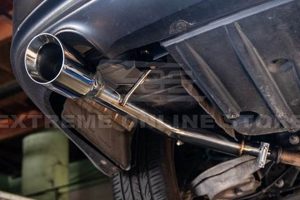
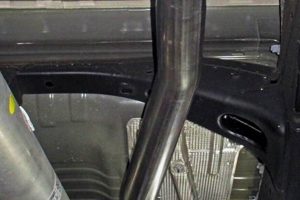
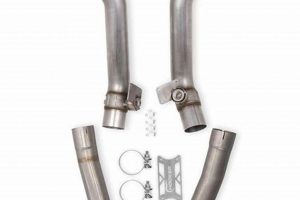
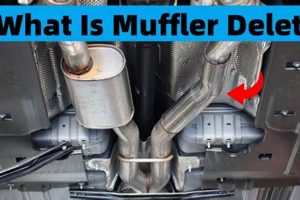
The removal of a vehicle’s muffler, an exhaust system component designed to reduce noise, and subsequent operation of the vehicle on public roads is a practice governed by state and local regulations. This modification alters the vehicle’s exhaust sound profile, potentially increasing its loudness significantly. An example would be removing the factory-installed muffler and replacing it with a straight pipe.
Exhaust systems are essential for managing emissions and mitigating noise pollution. Modifying these systems impacts both environmental and public health concerns. Historically, regulations regarding vehicle noise have evolved in response to increasing urbanization and growing awareness of the detrimental effects of excessive noise on quality of life.
California law addresses vehicle exhaust systems, focusing on noise level limits and required equipment. Understanding these specific regulations is crucial in determining the legality of any exhaust modification. The following sections will delve into the relevant California Vehicle Code sections and address the enforcement of these regulations.
Considerations Regarding Exhaust Modifications in California
Modifying a vehicle’s exhaust system necessitates careful attention to state and local regulations to ensure compliance and avoid potential penalties.
Tip 1: Research California Vehicle Code Section 27150. This section outlines the requirements for vehicle exhaust systems and prohibits modifications that amplify or increase the noise emitted by the vehicle above specified limits.
Tip 2: Understand Noise Level Limits. While specific decibel limits may not be explicitly defined in the Vehicle Code, enforcement often relies on subjective assessment by law enforcement officers regarding excessive noise.
Tip 3: Maintain Functioning Emission Control Equipment. Removal or alteration of catalytic converters or other emission control devices is strictly prohibited and can result in substantial fines and penalties.
Tip 4: Consider Aftermarket Exhaust Systems Carefully. While not all aftermarket systems are illegal, ensure that any replacement muffler or exhaust component is compliant with California noise regulations and does not substantially increase the vehicle’s noise level.
Tip 5: Document Compliance. If modifications are performed, retain documentation demonstrating that the exhaust system meets California noise standards. This can include receipts for compliant parts or certifications from qualified mechanics.
Tip 6: Be Aware of Local Ordinances. In addition to state law, certain cities and counties may have their own noise ordinances that further restrict vehicle noise levels.
Adherence to these guidelines will help mitigate the risk of receiving a citation for violating California’s vehicle exhaust regulations. Understanding the relevant laws and regulations is crucial for responsible vehicle modification.
The following sections will provide further information regarding enforcement and potential penalties associated with non-compliant exhaust systems.
1. Noise Amplification Prohibited

The prohibition against noise amplification is a cornerstone of California’s vehicle exhaust regulations, directly impacting the legality of exhaust modifications such as muffler deletes. This regulation seeks to maintain acceptable noise levels in communities and on roadways.
- Legal Framework: Vehicle Code 27150
California Vehicle Code Section 27150 explicitly prohibits modifications to motor vehicles that result in increased noise levels compared to the vehicle’s original manufactured configuration. This law provides the foundational legal basis for regulating exhaust systems. A muffler delete, by design, eliminates a component intended to reduce noise, therefore inherently increasing the vehicle’s exhaust volume and violating the statute.
- Subjective Assessment and Enforcement
While the law exists, enforcement often relies on the subjective judgment of law enforcement officers. There are no universally applied decibel limits in California law. An officer assesses whether an exhaust system is excessively loud or disturbing the peace. A vehicle with a muffler delete is highly likely to be flagged as excessively loud, leading to a citation based on the officer’s interpretation of the law.
- Impact on Vehicle Inspections and Smog Checks
Although California’s smog check program primarily focuses on emissions, a conspicuously modified exhaust system, such as one lacking a muffler, may raise concerns during a visual inspection. While not directly failing the smog check for noise, the inspector could refer the vehicle for a separate noise violation inspection if the modification is deemed excessive.
- Local Noise Ordinances and Community Impact
Many cities and counties within California have their own noise ordinances that supplement state law. These local regulations often impose stricter noise limits or restrictions on specific activities. A vehicle with a muffler delete operating in a residential area could be subject to additional penalties under these local ordinances, due to the increased noise levels impacting the community.
In summation, the prohibition against noise amplification in California law makes the act of removing a vehicle’s muffler and operating it on public roads highly questionable from a legal standpoint. The combination of state Vehicle Code regulations, subjective enforcement, potential inspection issues, and local noise ordinances creates a challenging environment for vehicles with such modifications. Consequently, operating a vehicle with a muffler delete significantly increases the risk of incurring citations and penalties within the state.
2. Vehicle Code 27150

California Vehicle Code Section 27150 directly addresses the legality of modifying vehicle exhaust systems and holds significant relevance when determining if a muffler delete complies with state law. This section of the Vehicle Code is a primary reference point for law enforcement and vehicle owners alike.
- Prohibition of Excessive Noise
Section 27150 explicitly prohibits the modification of an exhaust system in a manner that increases the noise emitted by the vehicle beyond that emitted by the original factory-installed system. A muffler delete, by its very nature, eliminates a component designed to reduce noise. The resulting increase in exhaust volume almost invariably constitutes a violation of this prohibition. This means that, in most cases, a muffler delete leads to non-compliance with Section 27150.
- Altering Emission Control Devices
While primarily focused on noise, Section 27150 implicitly relates to emission control equipment. Often, exhaust modifications, including muffler deletes, can inadvertently impact the functionality of catalytic converters or other emissions components. Any modification that compromises emission control is a separate violation under California law, compounding the illegality of the muffler delete. This reinforces the understanding that modifications must not only address noise but also maintain emission standards.
- Enforcement and Subjectivity
Enforcement of Section 27150 is often based on the subjective assessment of law enforcement officers. While precise decibel limits are not explicitly stated, officers determine whether an exhaust system produces excessive or unusual noise. A vehicle with a muffler delete is highly susceptible to being identified as excessively noisy due to the significant increase in exhaust volume. The officer’s judgment, based on experience and perception, can lead to a citation if the exhaust is deemed too loud. Therefore, reliance on the absence of specific decibel limits does not guarantee legality.
- Penalties and Corrective Action
Violation of Section 27150 can result in fines and require corrective action. The vehicle owner may be mandated to restore the exhaust system to its original, compliant configuration. Furthermore, the violation may be noted on the vehicle’s record, potentially impacting future sales or inspections. Repeated violations can lead to more severe penalties. This financial and administrative burden associated with non-compliance underscores the importance of understanding and adhering to Section 27150.
In conclusion, California Vehicle Code Section 27150 establishes the legal framework that generally renders muffler deletes unlawful in the state. The prohibition of excessive noise, combined with subjective enforcement, the potential impact on emission control, and the risk of penalties, highlights the significant legal challenges associated with operating a vehicle with such a modification on public roads. Compliance with this section of the Vehicle Code is crucial for avoiding legal repercussions related to exhaust system modifications.
3. Subjective Enforcement

Subjective enforcement constitutes a significant factor in determining the practical legality of a muffler delete in California. While regulations exist, the application of those regulations often depends on individual interpretation and judgment, creating a complex legal landscape.
- Officer Discretion
Law enforcement officers possess considerable discretion in assessing whether a vehicle’s exhaust system violates noise regulations. Lacking precise, universally applied decibel limits, officers rely on their auditory perception to determine if the noise is excessive or disturbing. A muffler delete, by significantly increasing exhaust volume, is likely to draw attention and be deemed a violation based on the officer’s judgment. The perceived loudness, rather than a specific measurement, forms the basis of the enforcement decision.
- Lack of Standardized Testing
California does not mandate standardized testing procedures for exhaust noise levels during routine traffic stops. Without standardized testing, there is no objective measure to definitively prove that a muffler delete exceeds acceptable noise levels. This absence of empirical data further reinforces the subjective nature of enforcement, relying instead on the officer’s immediate assessment of the sound. This reliance can lead to inconsistencies in enforcement across different jurisdictions and situations.
- Community Sensitivity
The level of enforcement can vary depending on community sensitivity to noise. In residential areas or locations with strict noise ordinances, law enforcement may be more vigilant in addressing loud exhaust systems. Conversely, in industrial or less populated areas, a similar exhaust system might be overlooked. The prevailing community standards and the officer’s perception of the impact of the noise on the surrounding environment can influence the enforcement decision.
- Variations in Interpretation
Different law enforcement officers may interpret noise regulations differently, leading to inconsistent enforcement patterns. One officer may consider a muffler delete a clear violation based on the perceived loudness, while another may be more lenient, especially if the vehicle is otherwise compliant. This variation in interpretation contributes to the uncertainty surrounding the legality of muffler deletes, as the outcome of a traffic stop can depend heavily on the individual officer’s assessment.
The multifaceted nature of subjective enforcement introduces a significant element of uncertainty into the legal status of muffler deletes in California. The absence of objective standards and the reliance on individual officer judgment mean that the risk of receiving a citation varies depending on the circumstances and location. While a muffler delete may technically violate regulations, the practical outcome hinges on the subjective assessment of law enforcement, creating a legal grey area for vehicle owners.
4. Emission Control Compliance

Emission control compliance is inextricably linked to the legality of a muffler delete in California. While a muffler primarily addresses noise reduction, alterations to the exhaust system can impact a vehicle’s emissions, thereby violating California’s stringent air quality regulations. The removal of a muffler, although seemingly focused on sound, can have unintended consequences on the vehicle’s overall emission control system, leading to potential legal repercussions.
For instance, some exhaust systems are designed to optimize backpressure, which aids in the proper functioning of catalytic converters. Removing the muffler can alter this backpressure, potentially reducing the efficiency of the catalytic converter and increasing harmful emissions. California law strictly prohibits modifications that disable, remove, or render inoperable any component of the vehicle’s original emission control system. Therefore, if a muffler delete results in a vehicle exceeding established emission standards, it becomes a violation of California law, irrespective of noise considerations. Real-world examples include vehicles failing smog checks due to modified exhaust systems, even if those systems appear to only affect noise levels. The interconnectedness of exhaust components means that even seemingly minor alterations can have significant impacts on overall emissions.
In conclusion, while the immediate concern with a muffler delete might center on noise regulations, the broader implications for emission control cannot be ignored. Compliance with California’s emission standards is a critical aspect of vehicle legality. Modifications that compromise these standards, even indirectly through alterations to the exhaust system, will render the vehicle non-compliant and subject to penalties. Therefore, any decision regarding exhaust modifications must thoroughly consider the potential impact on emission control systems to ensure continued compliance with California law.
5. Local Noise Ordinances

Local noise ordinances represent a critical layer of regulation that significantly influences the legality of muffler deletes within California. While California Vehicle Code Section 27150 establishes a baseline for acceptable vehicle noise, individual cities and counties possess the authority to enact more restrictive noise regulations tailored to local community needs and sensitivities. These local ordinances often impose stricter decibel limits, establish specific time-of-day restrictions, or define noise disturbances more broadly than state law. The practical effect is that a muffler delete, even if arguably compliant with state regulations due to subjective enforcement, can readily violate local noise ordinances, resulting in fines and penalties. Examples include residential areas with nighttime noise restrictions where modified vehicles are frequently targeted, or areas near hospitals and schools with heightened noise sensitivity. The impact of local ordinances on muffler delete legality is pronounced, creating a patchwork of regulations across the state that necessitate careful consideration.
The enforcement of local noise ordinances typically falls under the purview of local law enforcement agencies or designated code enforcement officers. These authorities may utilize sound level meters to measure vehicle noise, providing a more objective assessment than the subjective determination often employed under state law. Furthermore, local ordinances may allow for citizen complaints to trigger investigations and enforcement actions, increasing the likelihood of violations being reported and addressed. Real-world examples include cities actively conducting noise enforcement campaigns targeting modified vehicles, particularly during evening hours, resulting in numerous citations and heightened awareness of local regulations. Understanding the specifics of local noise ordinances is, therefore, essential for vehicle owners considering or operating a vehicle with a muffler delete, as it directly impacts the potential for legal repercussions.
In summary, local noise ordinances act as an additional and potentially more stringent layer of regulation impacting the legality of muffler deletes in California. These ordinances, tailored to local conditions and enforced by local authorities, can significantly increase the risk of fines and penalties, even if the vehicle arguably complies with state regulations. Navigating the complexities of vehicle exhaust modifications in California necessitates a comprehensive understanding of both state and local noise regulations, recognizing that local ordinances can effectively prohibit muffler deletes even where state law enforcement might be less stringent.
6. Potential Penalties
The potential legal consequences associated with a muffler delete in California represent a significant deterrent to such modifications. These penalties extend beyond simple fines and can encompass mandatory corrective actions and potential impacts on vehicle registration and future inspections. Understanding the specific penalties helps clarify the legal risks involved.
- Fines and Citations
Operating a vehicle with an illegal exhaust system, including one with a muffler delete, can result in a citation and associated fines. The exact amount varies depending on the specific violation and local jurisdiction. Initial fines may be relatively modest, but repeat offenses can lead to substantially higher penalties. These fines are designed to deter non-compliance and serve as a financial consequence for violating noise and emission regulations. Examples include citations issued during traffic stops or as a result of noise complaints filed by residents.
- Mandatory Corrective Action
In addition to fines, vehicle owners may be required to restore the exhaust system to its original, compliant condition. This typically involves reinstalling a functioning muffler that meets California’s noise and emission standards. Proof of correction is often required, such as receipts for parts and labor from a certified mechanic. Failure to comply with corrective action orders can result in further penalties, including suspension of vehicle registration. This requirement ensures that vehicles are brought back into compliance with state law.
- Impact on Smog Inspections
While a muffler delete might not directly cause a vehicle to fail a smog inspection (which primarily focuses on emissions), a visual inspection of the exhaust system is part of the process. A missing muffler or obviously modified exhaust system can raise red flags and lead to further scrutiny. Inspectors may refer the vehicle for a separate noise violation inspection or require corrective action before passing the smog check. This indirect impact on smog inspections adds another layer of potential penalties associated with a muffler delete.
- Vehicle Registration Implications
Repeated violations of exhaust regulations or failure to comply with corrective action orders can ultimately lead to suspension or revocation of vehicle registration. Operating a vehicle with a suspended registration is a serious offense that carries significant penalties, including fines, vehicle impoundment, and even potential jail time. This severe consequence underscores the importance of adhering to California’s vehicle regulations and addressing violations promptly. Suspension of registration represents a significant impediment to vehicle use and can have broader implications for the owner’s mobility and daily life.
These potential penalties, ranging from fines and corrective actions to impacts on smog inspections and vehicle registration, collectively illustrate the significant legal risks associated with operating a vehicle with a muffler delete in California. The cumulative effect of these penalties can be substantial, making it crucial for vehicle owners to understand and comply with state and local exhaust regulations. These multifaceted consequences highlight the serious implications of choosing to modify a vehicle’s exhaust system in a manner that violates California law.
Frequently Asked Questions
The following questions and answers address common concerns regarding the legality of muffler deletes on vehicles operated within the State of California.
Question 1: Is a muffler delete inherently illegal under California law?
California Vehicle Code Section 27150 prohibits modifications to a vehicle’s exhaust system that amplify or increase noise levels. A muffler delete, which removes a component designed to reduce noise, is highly likely to be deemed a violation of this code.
Question 2: Does California have specific decibel limits for vehicle exhaust?
California law does not explicitly define precise decibel limits for vehicle exhaust. Enforcement relies on the subjective judgment of law enforcement officers assessing whether the noise is excessive or disturbing.
Question 3: Can a vehicle with a muffler delete pass a California smog check?
While a muffler delete may not directly cause a vehicle to fail a smog check based on emissions readings, a visual inspection of the exhaust system is part of the process. A missing muffler can raise concerns and potentially lead to referral for a noise violation inspection.
Question 4: Are aftermarket exhaust systems always illegal in California?
Not all aftermarket exhaust systems are illegal. Those that comply with California noise regulations and do not increase noise levels beyond the original equipment are permissible. Certification or documentation demonstrating compliance is advisable.
Question 5: Do local noise ordinances affect the legality of a muffler delete?
Yes. Many cities and counties have their own noise ordinances that may be stricter than state law. These local regulations can further restrict acceptable noise levels and increase the risk of citations.
Question 6: What are the potential penalties for operating a vehicle with an illegal exhaust system?
Penalties can include fines, mandatory corrective action to restore the exhaust system to its original condition, and potential impacts on vehicle registration and future inspections.
The information provided is intended for general informational purposes only and does not constitute legal advice. Consult with a qualified legal professional for guidance regarding specific legal issues.
The subsequent section will provide a summary of the information presented and offer concluding remarks.
Conclusion
The preceding analysis of pertinent California Vehicle Codes, enforcement practices, and local ordinances reveals that the operation of a vehicle with a muffler delete on public roadways is highly questionable from a legal standpoint. The state’s prohibition against excessive noise, the subjective nature of enforcement, and the potential for stricter local regulations combine to create a challenging legal environment for such modifications. Furthermore, the potential impact on emission control systems adds another layer of complexity and risk.
Given the potential for fines, mandatory corrective actions, and even impacts on vehicle registration, careful consideration is warranted before undertaking exhaust system modifications. Adherence to both state and local regulations is paramount to avoid legal repercussions and ensure responsible vehicle operation within California. Vehicle owners are strongly advised to thoroughly research applicable laws and seek professional guidance before modifying their exhaust systems.