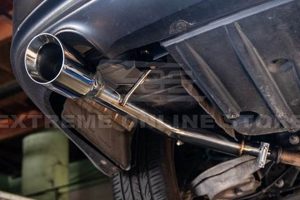
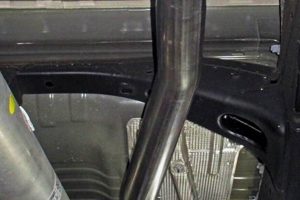
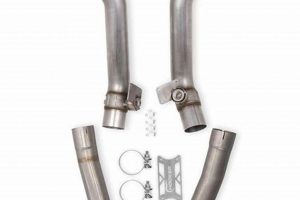
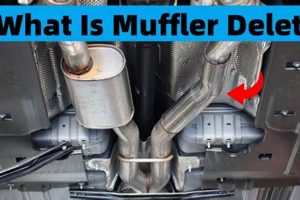
The practice of removing the muffler from a vehicle’s exhaust system is a modification primarily intended to alter the sound produced by the engine. Mufflers are designed to reduce noise levels by dampening sound waves as they pass through the exhaust system. A vehicle with a muffler delete will typically exhibit a significantly louder exhaust note. Concerns often arise regarding the potential impact of this modification on engine performance and, specifically, on how it might affect the vehicle’s efficiency of fuel usage.
The core function of the muffler is to control sound, not to directly influence engine operation or fuel delivery. Modern vehicles are equipped with sophisticated engine management systems that rely on a network of sensors to optimize air-fuel mixture and timing based on various factors, including engine load, temperature, and speed. Historically, modifications to the exhaust system were thought to have a more pronounced impact on performance, but current engine technology often mitigates any substantial changes in efficiency.
Whether altering the exhaust system by removing the muffler leads to increased fuel usage depends on several factors. These include driving habits, the specific engine design, and how the change affects backpressure. The following sections will address common misconceptions and provide a more in-depth analysis of the potential effects on efficiency.
Considerations Regarding Fuel Consumption After Muffler Removal
Modifying a vehicle’s exhaust system by eliminating the muffler can have nuanced effects. Careful consideration is advised to mitigate potential adverse consequences on fuel efficiency.
Tip 1: Evaluate Driving Habits: Aggressive acceleration and high-speed driving, often associated with the perceived performance enhancement from a louder exhaust, can lead to increased fuel consumption regardless of the muffler configuration.
Tip 2: Monitor Fuel Efficiency: Track fuel consumption before and after the modification. Use methods such as calculating miles per gallon (MPG) over several tanks of fuel to determine if a tangible change has occurred.
Tip 3: Consider Backpressure Effects: While often overstated, excessively reducing backpressure in certain engine designs may negatively impact low-end torque and potentially fuel efficiency. Consult with automotive professionals familiar with the specific vehicle model.
Tip 4: Observe Engine Performance: Note any changes in engine behavior, such as hesitation or decreased responsiveness, which may indicate an imbalance in the air-fuel ratio. These issues can indirectly influence fuel consumption.
Tip 5: Understand Engine Management Systems: Modern vehicles employ sophisticated engine management systems that can compensate for minor exhaust modifications. However, extreme alterations may exceed the system’s adaptive capabilities.
Tip 6: Consult with Professionals: Seek advice from experienced mechanics or performance tuning specialists to understand the potential impact of a muffler delete on the specific vehicle and to explore possible adjustments to optimize performance and fuel efficiency.
Careful observation and data collection are essential to accurately assess the impact on fuel consumption. Avoid relying solely on anecdotal evidence or subjective impressions.
Prior planning and informed decision-making are vital to minimize unintended consequences when modifying a vehicle’s exhaust system.
1. Driving Style

The connection between driving style and the question of altered fuel usage following muffler removal is significant. While removing the muffler itself may not drastically alter fuel consumption under consistent conditions, it often indirectly influences driving behavior. The amplified exhaust note frequently encourages more aggressive acceleration and higher engine speeds. This, in turn, leads to increased fuel usage, not inherently due to the absence of the muffler, but as a consequence of the altered driving pattern. For example, a driver previously accustomed to moderate acceleration may, after muffler removal, find themselves accelerating more rapidly to appreciate the enhanced sound, resulting in diminished fuel economy.
Consider a scenario where two identical vehicles are operated, one with a stock exhaust and the other with the muffler removed. If both drivers maintain the same driving styleconsistent speed, gradual accelerationthe difference in fuel consumption may be negligible. However, if the driver of the vehicle with the modified exhaust exhibits a tendency toward more spirited driving, the fuel efficiency will likely decrease noticeably. The psychological impact of the louder exhaust can contribute to this behavioral change. It is therefore crucial to separate the direct impact of the exhaust modification from the indirect effect of altered driving habits when assessing changes in fuel economy.
In summary, while a muffler delete’s direct effect on fuel consumption may be minimal under controlled driving conditions, the modification’s influence on driving style is a primary determinant of its impact. Drivers should carefully monitor and consciously manage their driving habits after removing a muffler to accurately assess the true effect on fuel consumption and avoid attributing changes solely to the exhaust modification itself.
2. Engine Backpressure

Engine backpressure, the resistance to exhaust gas flow within the exhaust system, is a key factor when considering whether the removal of a muffler influences fuel consumption. While frequently misconstrued as universally detrimental, a specific amount of backpressure is necessary for optimal engine performance, especially in naturally aspirated engines. This is because the scavenging effect relies on pressure waves within the exhaust manifold to help clear the combustion chamber of exhaust gases during the valve overlap period. Removing the muffler alters the exhaust system’s backpressure profile. Reducing backpressure excessively can diminish scavenging efficiency, leading to a less complete combustion process. Incomplete combustion results in reduced power output and increased fuel consumption as the engine attempts to compensate for the less efficient burn.
The impact of a muffler delete on backpressure and, consequently, fuel consumption, is highly dependent on engine design. Smaller displacement engines typically exhibit a more pronounced sensitivity to changes in exhaust backpressure. For example, a four-cylinder engine relying on a tuned exhaust system for efficient scavenging might experience a more significant decrease in fuel economy after muffler removal compared to a larger V8 engine with inherent excess power. Furthermore, the location of the catalytic converter influences the effect; if the catalytic converter provides significant backpressure, the muffler removal’s impact might be minimal. Conversely, engines equipped with turbochargers are generally less susceptible to the negative consequences of reduced backpressure because the turbocharger itself significantly increases exhaust flow velocity. Therefore, it’s critical to consider the specifics of the engine when evaluating the potential for increased fuel consumption after removing a muffler.
In summary, the interplay between engine backpressure and fuel consumption following a muffler removal is complex and engine-specific. While a widespread reduction in backpressure is often assumed, the resulting effect is not uniformly negative. A moderate reduction, particularly in turbocharged applications, might yield negligible or even beneficial results. However, excessive reduction, especially in smaller, naturally aspirated engines, can compromise combustion efficiency and increase fuel consumption. Therefore, individuals considering such modifications should consult with qualified automotive technicians to assess the potential impact on their specific vehicle’s performance and fuel economy.
3. Engine Management

Engine management systems are crucial in mitigating potential adverse effects on fuel consumption arising from the removal of a muffler. Modern vehicles incorporate sophisticated electronic control units (ECUs) that continuously monitor engine parameters, such as airflow, oxygen levels in the exhaust, and engine speed. These systems adjust fuel injection and ignition timing to optimize combustion efficiency. When a muffler is removed, the change in exhaust flow can alter the readings from these sensors. A well-functioning engine management system will attempt to compensate for this change by adjusting the air-fuel ratio to maintain optimal combustion. For instance, if the removal of the muffler causes a leaner exhaust condition (more oxygen), the ECU may increase fuel injection to restore the proper balance. If the engine management system can effectively adapt, the impact on fuel consumption may be minimal.
However, the ability of an engine management system to compensate is limited. Extreme alterations to the exhaust system may exceed the system’s adaptive range. In such cases, the engine may not be able to maintain the ideal air-fuel ratio across all operating conditions, resulting in decreased fuel efficiency. For example, if the ECU is unable to adequately compensate for a significant reduction in backpressure caused by the muffler delete, the engine may run lean at certain speeds, leading to reduced power and increased fuel consumption. Furthermore, older or less sophisticated engine management systems may have more difficulty adapting to exhaust modifications compared to newer systems with advanced sensors and processing capabilities. In these instances, a custom ECU tune may be necessary to optimize engine performance and fuel economy after the removal of the muffler.
In summary, engine management systems play a vital role in determining the impact of muffler removal on fuel consumption. While these systems can compensate for minor changes in exhaust flow, extreme modifications may overwhelm their adaptive capabilities, leading to reduced fuel efficiency. Understanding the limitations of the engine management system and considering a custom tune when necessary is essential for mitigating potential negative effects on fuel economy following a muffler delete. Therefore, a comprehensive understanding of engine management is critical in evaluating the overall impact.
4. Air-Fuel Ratio
The air-fuel ratio, the proportion of air to fuel in the combustion mixture, is a critical determinant of engine efficiency and emissions. Alterations to the exhaust system, such as muffler removal, can indirectly influence this ratio, potentially impacting fuel usage. An ideal air-fuel ratio, often referred to as stoichiometric, ensures complete combustion, maximizing power output and minimizing harmful emissions. A deviation from this ideal, whether towards a richer mixture (excess fuel) or a leaner mixture (excess air), can negatively affect engine performance and fuel economy. A vehicle with its muffler removed may experience changes in exhaust backpressure, potentially affecting the scavenging of exhaust gases from the cylinders. This alteration to the scavenging process can disrupt the air-fuel ratio, leading to inefficient combustion. For example, if muffler removal causes a significant reduction in backpressure, the engine might run leaner at certain speeds, requiring the engine control unit (ECU) to compensate by injecting more fuel. If the ECU’s compensation is insufficient, the engine could experience decreased power output and elevated fuel consumption. The significance of this understanding lies in the fact that maintaining a balanced air-fuel ratio is essential for achieving optimal fuel efficiency after any modification to the exhaust system.
Practical examples illustrate the consequences of air-fuel ratio imbalances following muffler removal. Consider two vehicles of the same make and model, one with a stock exhaust system and the other with the muffler removed. If the vehicle with the modified exhaust system experiences a noticeable increase in fuel consumption, it may indicate a disruption of the air-fuel ratio. Diagnostic tools can be used to monitor the air-fuel ratio in real-time under various driving conditions. If the ratio deviates significantly from the ideal range, adjustments, such as ECU tuning or modifications to the air intake system, may be necessary to restore balance. Furthermore, variations in environmental conditions, such as altitude and temperature, can influence the air-fuel ratio. Therefore, it’s crucial to consider these factors when assessing the impact of muffler removal on fuel efficiency. Regularly monitoring the air-fuel ratio and making necessary adjustments can help mitigate any potential increase in fuel consumption associated with exhaust modifications. The practical application of this knowledge lies in the ability to diagnose and correct imbalances, ensuring that the vehicle operates efficiently and minimizes fuel waste.
In summary, the air-fuel ratio is an integral component linking exhaust modifications to fuel consumption. Removing the muffler can affect exhaust backpressure, which in turn can disrupt the air-fuel ratio and compromise combustion efficiency. While modern engine management systems attempt to compensate for these changes, their ability to do so is limited. Maintaining a balanced air-fuel ratio, through careful monitoring and appropriate adjustments, is critical for mitigating any potential increase in fuel consumption resulting from muffler removal. The challenges lie in accurately assessing the air-fuel ratio under varying driving conditions and implementing effective solutions to restore balance. This understanding is essential for optimizing engine performance and minimizing fuel waste following exhaust modifications.
5. Vehicle Weight

The weight of a vehicle is a fundamental factor affecting fuel consumption. Its relevance in the context of exhaust modifications, specifically muffler removal, lies in its influence on the overall energy required to propel the vehicle. While a muffler delete primarily alters the exhaust note and potentially the exhaust flow dynamics, vehicle weight dictates the baseline fuel consumption rate. This establishes a framework for understanding how any change, including exhaust modification, can interact with this established baseline.
- Inertia and Acceleration
Vehicle weight directly impacts the amount of energy needed to overcome inertia during acceleration. Heavier vehicles require more force to initiate movement and to increase speed. This translates to increased fuel consumption, irrespective of the exhaust system configuration. For instance, a fully loaded truck will consume significantly more fuel during acceleration than the same truck unloaded, regardless of whether a muffler is present. The degree to which exhaust modification might affect fuel consumption will be more pronounced in lighter vehicles due to the lower baseline energy requirement for acceleration.
- Rolling Resistance
Vehicle weight also influences rolling resistance, the force required to keep the vehicle moving at a constant speed. Heavier vehicles experience greater rolling resistance due to increased friction between the tires and the road surface. This necessitates a higher continuous energy input to maintain speed, leading to increased fuel consumption. A heavier SUV, for example, will inherently exhibit higher rolling resistance than a lightweight sports car, contributing to higher baseline fuel consumption that might overshadow any potential impact of a muffler delete.
- Gravitational Forces (Uphill Driving)
When driving uphill, vehicle weight becomes a dominant factor affecting fuel consumption. The engine must work against gravity to elevate the vehicle, requiring a significantly higher energy input. In this scenario, the effect of a muffler delete on fuel consumption is likely to be minimal compared to the energy expenditure associated with overcoming gravitational forces. A heavy vehicle ascending a steep incline will consume substantial fuel, largely independent of the exhaust system configuration.
- Interaction with Engine Load
Vehicle weight contributes to the overall engine load. Higher vehicle weight results in a greater load on the engine during various driving conditions. An engine operating under increased load requires a richer air-fuel mixture, potentially offsetting any gains achieved by changes in exhaust flow from muffler removal. If the engine is consistently operating under heavy load due to vehicle weight, the impact of a muffler delete on fuel consumption may be less noticeable, as the primary determinant of fuel consumption will be the engine’s response to the weight-induced load.
In conclusion, vehicle weight establishes the foundation for fuel consumption, influencing the amount of energy required for acceleration, maintaining speed, and overcoming gravitational forces. While removing a muffler might subtly alter engine backpressure or encourage changes in driving habits, the weight of the vehicle remains a more dominant factor in determining overall fuel efficiency. The impact of a muffler delete on fuel consumption is likely to be more pronounced in lighter vehicles with lower baseline energy requirements, whereas in heavier vehicles, the weight-induced load on the engine may overshadow any potential effect of the exhaust modification. Considering vehicle weight is therefore crucial when evaluating the true impact of muffler removal on fuel economy.
6. Road Conditions
Road conditions represent a significant external factor influencing fuel consumption, and their impact interacts with any modifications made to a vehicle, including the removal of a muffler. The state of the road surface, traffic density, and prevailing weather conditions collectively affect the engine’s workload and, consequently, fuel efficiency. Understanding how road conditions interact with exhaust modifications is essential for accurately assessing the true impact of a muffler delete on fuel economy.
- Surface Quality
The quality of the road surface directly affects rolling resistance. Rough or uneven surfaces increase rolling resistance, requiring the engine to expend more energy to maintain a constant speed. The effect of a muffler delete, which might marginally alter engine backpressure, can be overshadowed by the increased energy demand imposed by poor road surfaces. For instance, driving on a gravel road will consume more fuel than driving on a smooth asphalt surface, regardless of the exhaust configuration. The rough surface demands additional power to overcome the unevenness and resistance, thus increasing consumption.
- Traffic Density
Stop-and-go traffic significantly reduces fuel efficiency due to frequent acceleration and deceleration. In congested conditions, the potential fuel savings from minor exhaust modifications become negligible compared to the fuel wasted during idling and repeated acceleration. The increased fuel consumption in heavy traffic stems from the energy required to overcome inertia each time the vehicle accelerates from a standstill. In such situations, the driver uses more aggressive acceleration in order to catch up or change lanes often and that would affect the fuel consumption in a bad way.
- Inclines and Declines
Driving uphill increases the engine’s workload as it must overcome gravity, leading to higher fuel consumption. Conversely, driving downhill may reduce fuel consumption due to gravity assisting the vehicle’s motion. The impact of a muffler delete on fuel economy is likely to be less noticeable on hilly terrain, where the energy expenditure associated with overcoming gravitational forces dominates. Driving up a hill is one of the toughest situations for the engine and therefore consumes the highest amount of fuel, especially when the engine is already modified.
- Weather Conditions
Adverse weather conditions, such as rain, snow, or strong winds, increase rolling resistance and aerodynamic drag, requiring the engine to work harder to maintain speed. These increased demands on the engine can negate any potential fuel savings from exhaust modifications. For example, driving in heavy rain increases rolling resistance due to the increased friction between the tires and the wet road surface, leading to higher fuel consumption than driving in dry conditions, irrespective of the exhaust system configuration.
The influence of road conditions on fuel consumption interacts intricately with the effects of a muffler delete. While exhaust modifications might subtly alter engine backpressure or encourage changes in driving habits, the state of the road surface, traffic density, and prevailing weather conditions exert a more dominant influence on overall fuel efficiency. Therefore, it is essential to consider road conditions when evaluating the true impact of muffler removal on fuel economy, as these external factors can significantly overshadow any potential changes arising from the exhaust modification itself. The variations in fuel consumption due to weather or inclines, for example, could overwhelm changes due to a deleted muffler.
7. Fuel Grade

Fuel grade, defined primarily by its octane rating, establishes a fundamental baseline for combustion efficiency within an internal combustion engine. Its relationship to exhaust modifications, such as muffler removal, lies in its capacity to either exacerbate or mitigate any potential changes in fuel consumption stemming from the modification. The correct fuel grade ensures the engine operates within its designed parameters, minimizing the risk of pre-ignition or knocking, which can adversely affect fuel economy. Understanding this interplay is crucial for accurately evaluating the impact of a muffler delete.
- Octane Rating and Engine Design
Octane rating indicates a fuel’s resistance to detonation or knocking during combustion. Engines with higher compression ratios or forced induction (turbocharging or supercharging) typically require higher octane fuel to prevent premature ignition. Using a lower octane fuel than recommended can lead to knocking, which the engine management system often mitigates by retarding ignition timing. This adjustment, while protecting the engine, reduces power output and increases fuel consumption. A muffler delete might subtly alter exhaust scavenging and cylinder filling, potentially exacerbating any pre-existing sensitivity to fuel grade. For example, an engine already prone to knocking on 87 octane fuel might experience a more pronounced drop in fuel economy after muffler removal if the scavenging changes increase cylinder pressure.
- Fuel Additives and Combustion Efficiency
Fuel grades often incorporate additives designed to enhance combustion efficiency and reduce deposits within the engine. These additives can improve fuel atomization, clean fuel injectors, and reduce carbon buildup, contributing to more complete combustion and improved fuel economy. Using a fuel grade with superior additives might partially offset any potential decrease in fuel efficiency resulting from a muffler delete. Conversely, a fuel grade lacking these beneficial additives might amplify any negative impact on fuel consumption. The presence of detergents that clean the fuel system is a critical factor to be considered when analyzing fuel economy.
- Engine Management System Adaptation
Modern engine management systems (EMS) are designed to adapt to varying fuel grades within a certain range. These systems utilize knock sensors to detect detonation and adjust ignition timing accordingly. While the EMS can compensate for minor variations in fuel grade, its adaptive range is limited. A significant mismatch between the recommended fuel grade and the fuel being used can overwhelm the EMS, leading to suboptimal performance and increased fuel consumption. If a muffler delete alters engine airflow dynamics, the EMS’s ability to effectively manage fuel grade deviations might be further compromised, resulting in a more pronounced decrease in fuel economy. The level of sophistication in the EMS determines its adaptation capabilities to altered exhaust flows.
- Ethanol Content and Energy Density
Fuel grades often contain varying percentages of ethanol, an alcohol-based fuel additive. Ethanol has a lower energy density than gasoline, meaning it contains less energy per unit volume. Fuels with higher ethanol content typically result in lower fuel economy compared to pure gasoline. A muffler delete might marginally affect engine efficiency, and this effect could be compounded by the use of a fuel grade with a high ethanol content. The lower energy density of the fuel would contribute to an increased fuel consumption rate, potentially masking any subtle changes in fuel economy attributable to the exhaust modification itself. Therefore, the interaction between ethanol percentage and exhaust flow is critical to consider. E85 fuel, for example, has a lower energy density than regular gasoline, and could mask any potential fuel gains.
The interaction between fuel grade and muffler removal is subtle but significant. While the exhaust modification primarily affects exhaust flow dynamics, the fuel grade establishes the fundamental parameters of combustion. Using the correct fuel grade, with appropriate additives and ethanol content, can help mitigate any potential decrease in fuel efficiency resulting from the muffler delete. Conversely, using a fuel grade that is mismatched to the engine’s requirements or lacking in beneficial additives can exacerbate any negative impact on fuel consumption. Therefore, careful consideration of fuel grade is essential when evaluating the true impact of a muffler delete on fuel economy, and understanding the fuel grade of the fuels used is critical to the analysis.
Frequently Asked Questions
This section addresses common inquiries regarding the relationship between muffler removal and its potential effects on a vehicle’s fuel efficiency. The information provided aims to clarify prevailing misconceptions.
Question 1: Does removing the muffler from a vehicle automatically lead to increased fuel consumption?
The relationship is not directly causal. While muffler removal alters exhaust flow and sound, the ultimate impact on fuel consumption depends on a combination of factors, including driving habits, engine design, and the responsiveness of the engine management system.
Question 2: How does a muffler delete affect engine backpressure, and how does this relate to fuel efficiency?
Muffler removal typically reduces backpressure. The effect on fuel efficiency depends on the engine’s design. Excessive reduction in backpressure, particularly in smaller, naturally aspirated engines, can negatively impact low-end torque and potentially increase fuel consumption.
Question 3: Can modern engine management systems compensate for the changes caused by a muffler delete and maintain optimal fuel efficiency?
Modern engine management systems can adapt to minor changes in exhaust flow. However, extreme alterations resulting from muffler removal may exceed the system’s adaptive capabilities, potentially leading to suboptimal air-fuel ratios and increased fuel consumption.
Question 4: Are there driving habits that can exacerbate fuel consumption after a muffler delete?
Aggressive acceleration and high-speed driving, often associated with the amplified sound produced by a modified exhaust, can lead to increased fuel consumption regardless of the presence or absence of a muffler.
Question 5: What steps can be taken to mitigate potential increases in fuel consumption following muffler removal?
Monitor fuel consumption patterns, consciously maintain moderate driving habits, and consult with automotive professionals to assess the potential impact on the specific vehicle model. Consider a custom ECU tune to optimize engine performance.
Question 6: Does the type of fuel used influence the effect of a muffler delete on fuel consumption?
Yes. Using the correct fuel grade, as specified by the vehicle manufacturer, is crucial for optimal combustion efficiency. Deviating from the recommended fuel grade can exacerbate any potential decrease in fuel efficiency resulting from the muffler delete.
In summary, muffler removal does not invariably increase fuel consumption. Its impact depends on a complex interplay of factors, including driving behavior, engine characteristics, and the ability of the engine management system to adapt. Careful monitoring and informed decision-making are essential.
The next section will provide practical tips for evaluating the impact of exhaust modifications.
Does Muffler Delete Increase Fuel Consumption
The inquiry regarding whether does muffler delete increase fuel consumption is a complex one, lacking a simple affirmative or negative answer. The preceding analysis has demonstrated that the removal of a muffler, while primarily intended to alter exhaust sound, can indirectly influence fuel economy. The potential for increased fuel usage is contingent upon a confluence of factors. These encompass driving habits, engine design and management system capabilities, prevailing road conditions, and even the grade of fuel utilized. While a muffler delete directly impacts exhaust backpressure, the subsequent effect on fuel consumption is modulated by the engine’s ability to adapt and maintain an optimal air-fuel ratio. Aggressive driving styles, frequently associated with the altered exhaust note, often represent the most significant contributor to diminished fuel efficiency.
Therefore, responsible vehicle modification necessitates a comprehensive understanding of potential ramifications. Before undertaking a muffler delete, a thorough evaluation of the vehicle’s specific characteristics and the driver’s typical driving behavior is paramount. While the allure of an enhanced exhaust sound is undeniable, it is crucial to weigh this against the potential for increased operational costs. Prudent decision-making, informed by technical understanding and practical observation, remains the most effective approach to mitigating unintended consequences and ensuring that modifications align with both performance objectives and economic considerations.