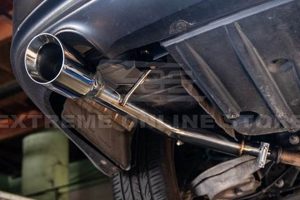
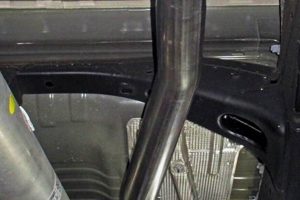
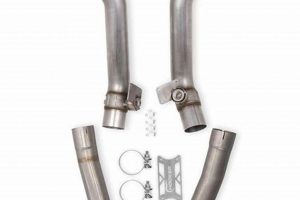
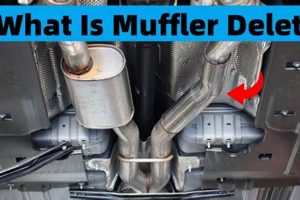
The concept centers on the removal of a vehicle’s muffler, a component of the exhaust system designed to reduce noise. Removing this part results in a louder exhaust sound. For example, a vehicle initially emitting a subdued rumble may produce a significantly more pronounced roar after this alteration.
This modification is often undertaken to enhance a vehicle’s perceived performance and auditory feedback. Some enthusiasts believe the increased sound adds to the driving experience. Historically, such alterations were common in racing and performance applications before noise regulations became more stringent. The perceived benefit is primarily auditory and aesthetic, though some may claim minor performance improvements.
Understanding the implications of this modification is crucial before proceeding. The following sections will delve into the legal aspects, potential performance effects, and alternatives to consider when contemplating changes to a vehicle’s exhaust system.
Considerations Regarding Exhaust System Modification
Before undertaking modifications to a vehicle’s exhaust system by addressing the inherent concept, several factors warrant careful consideration to ensure compliance, safety, and optimal vehicle performance.
Tip 1: Legal Compliance: Investigate local and federal regulations pertaining to vehicle noise emissions. Many jurisdictions have strict laws regarding exhaust modifications, and non-compliance can result in fines or mandatory vehicle inspections.
Tip 2: Potential Performance Impact: Recognize that removing a muffler may not automatically increase performance. In some cases, it can negatively impact engine efficiency and power output, especially if the engine’s backpressure is significantly altered.
Tip 3: Sound Level Considerations: Acknowledge the amplified sound that results. Ensure the increased noise level is acceptable for daily driving and considerate of neighbors and fellow motorists. Excessive noise can lead to driver fatigue and negative attention.
Tip 4: Alternative Solutions: Explore alternative exhaust system options, such as performance mufflers or cat-back systems. These may provide a desirable sound enhancement while maintaining some level of noise reduction and potentially improving performance.
Tip 5: Professional Installation: If proceeding with modification, consider engaging a qualified mechanic or exhaust specialist. Professional installation can help ensure proper fitment, minimize potential issues, and maintain the integrity of the exhaust system.
Tip 6: Material Selection: If fabricating a replacement section, use appropriate materials like stainless steel to resist corrosion and ensure longevity. Incompatible materials can degrade quickly, leading to leaks and further issues.
Tip 7: Backpressure Evaluation: Assess the engine’s requirements for backpressure. Some engines rely on a certain level of backpressure for optimal operation. Removing the muffler can drastically reduce backpressure, potentially requiring adjustments to fuel delivery or timing.
Careful evaluation of these considerations is essential to ensure responsible vehicle modification that aligns with legal requirements, performance goals, and overall driving experience.
The subsequent sections will further explore the nuanced aspects of vehicle exhaust systems and the implications of alterations.
1. Increased Exhaust Volume
The augmentation of exhaust sound pressure is a direct consequence of removing the muffler. Understanding the mechanics of sound generation and propagation within a vehicle’s exhaust system is essential to appreciate the significance of this alteration.
- Sound Wave Propagation
Removing the muffler allows unattenuated sound waves to travel directly from the engine to the atmosphere. The muffler normally functions as a series of chambers and baffles that reduce the amplitude of these sound waves, creating a quieter exhaust note. Deleting this component results in a significantly louder and often more aggressive sound profile.
- Resonance and Frequency
Exhaust systems are tuned to specific resonant frequencies to manage sound characteristics. Removing the muffler can alter these frequencies, potentially resulting in undesirable drone or raspiness at certain engine speeds. This change can affect both the perceived quality and the overall sound pressure level.
- Noise Pollution Considerations
Increased exhaust volume directly contributes to noise pollution. This can have negative consequences for communities and may violate local noise ordinances. The impact is particularly pronounced in densely populated areas and during nighttime hours.
- Decibel Level Amplification
The decibel (dB) scale is logarithmic, meaning that a small increase in decibel level represents a substantial increase in sound intensity. Removing the muffler can easily increase exhaust volume by 10 dB or more, which equates to a perceived doubling of the loudness. This significant change is a key factor in the legal and social considerations associated with the modification.
The interplay between these factors directly determines the overall impact of increased exhaust volume following the removal of a muffler. Recognizing these principles is essential for informed decision-making when contemplating such modifications.
2. Potential Legal Ramifications

The removal of a muffler directly affects a vehicle’s compliance with noise regulations, making legal ramifications a significant consideration when discussing this concept. Legal standards are established to control environmental noise, and modifying a vehicle’s exhaust system can easily violate these standards.
- Federal Noise Standards
The Environmental Protection Agency (EPA) establishes noise emission standards for motor vehicles. While the EPA primarily regulates vehicle manufacturers, tampering with emission control devices, including mufflers, can result in federal penalties. Enforcement often relies on state and local regulations, but federal guidelines provide the baseline for permissible noise levels.
- State and Local Noise Ordinances
Many states and municipalities have specific noise ordinances that prohibit excessively loud vehicles. These ordinances often set decibel limits for vehicle exhaust at specific distances. A vehicle lacking a muffler is likely to exceed these limits, leading to fines, mandatory repairs, or vehicle impoundment. Enforcement varies, but areas near residential zones or schools often have stricter enforcement.
- Vehicle Inspection Requirements
Several states require periodic vehicle inspections to ensure compliance with safety and emissions standards. During these inspections, the presence and functionality of the muffler are typically evaluated. Removing or disabling the muffler can result in the vehicle failing inspection, preventing registration renewal until the exhaust system is brought into compliance.
- Liability and Civil Lawsuits
Beyond fines and penalties, modifying a vehicle to be excessively loud can expose the owner to civil lawsuits. Individuals affected by the noise pollution, such as nearby residents, may seek damages for nuisance or health impacts. The lack of a muffler, demonstrably increasing noise levels, strengthens the case for such lawsuits.
These interconnected legal aspects highlight the potential consequences of exhaust modifications. While the appeal of altered exhaust sound may be strong, the legal ramifications should be thoroughly investigated and understood before proceeding. Non-compliance can result in significant financial burdens and legal complications, overshadowing any perceived benefits.
3. Engine Performance Changes

The practice of removing a muffler can induce alterations in an engine’s operational characteristics. This modification directly impacts the exhaust backpressure, a critical factor in engine performance. The intended design of the exhaust system incorporates a degree of backpressure to optimize the scavenging of exhaust gases from the cylinders. Altering this backpressure, by removing the muffler, can disrupt the carefully calibrated balance.
If the removal significantly reduces backpressure, it can lead to a decrease in low-end torque. This effect is more pronounced in naturally aspirated engines, where exhaust scavenging relies heavily on pressure differentials. Conversely, in some turbocharged engines, a reduction in backpressure might improve turbocharger response and overall high-end power. However, this benefit requires careful tuning and modifications to the engine’s fuel and ignition maps to prevent lean conditions or other detrimental effects. An example is an older carbureted V8 where a drastic reduction of backpressure might lead to a noticeable drop in low-end torque, making city driving less responsive. On the other hand, a modern turbocharged inline-4 might see slightly improved top-end horsepower with proper tuning after this modification.
In summary, the effects on engine performance are not universally positive or negative. A simple removal can create an imbalance in carefully calculated dynamics leading to sub-optimal outcome. Careful consideration of the engine type, existing modifications, and the overall goal is essential to predict and manage the potential ramifications of altering the exhaust system in this manner. Undertaking such a modification without proper analysis or tuning can lead to diminished performance and, potentially, engine damage.
4. Altered Sound Characteristics

The removal of a muffler fundamentally reshapes the auditory output of a vehicle’s exhaust system. This alteration isn’t merely a matter of increased volume; the sound’s tonal qualities and dynamic behavior are also significantly affected, influencing the driving experience and the vehicle’s acoustic signature.
- Increased Decibel Level
The most obvious change is a substantial increase in sound pressure. The muffler’s primary function is to attenuate exhaust noise; its removal bypasses this noise reduction, leading to a significantly louder exhaust note. Decibel levels can rise dramatically, potentially exceeding legal limits and contributing to noise pollution. The human perception of loudness doubles for every 10 dB increase, making this a notable impact.
- Shift in Frequency Spectrum
Mufflers are designed to selectively dampen certain frequencies within the exhaust sound. Removing it changes the frequency distribution, often emphasizing lower frequencies. This can result in a deeper, rumbling exhaust note that is perceived as more aggressive or powerful. However, it can also introduce unwanted droning at certain engine speeds, depending on the vehicle’s specific exhaust system design.
- Introduction of Resonance and Drone
The absence of a muffler can create resonant frequencies within the exhaust system that produce a droning sound, particularly noticeable at cruising speeds. This drone can be fatiguing for the driver and passengers, diminishing the comfort of the vehicle. The specific frequency and intensity of the drone are dependent on the exhaust pipe length, diameter, and the engine’s firing order.
- Change in Exhaust Note Character
The overall character of the exhaust sound changes from a muffled, subdued tone to a raw, unfiltered noise. This transformation can be perceived positively by some, who appreciate the aggressive sound. However, others may find the resulting sound unrefined or even unpleasant. The suitability of the changed sound is largely subjective and depends on personal preference and the vehicle’s intended use.
These altered sound characteristics are central to the appeal for those considering this type of modification. However, it is essential to balance the desired sound enhancement with the potential for legal issues, noise pollution, and undesirable sound qualities like drone. Understanding the specific ways in which the sound is altered provides a basis for making informed decisions about exhaust system modifications.
5. Structural Exhaust Integrity

Maintaining the structural integrity of the exhaust system is paramount when considering the removal of a muffler. This modification inevitably alters the mechanical stresses and vibrations within the system, necessitating careful attention to ensure long-term reliability and prevent catastrophic failures.
- Weld Integrity and Joint Stress
Removing the muffler requires cutting and potentially welding sections of exhaust pipe. The quality of these welds directly affects the system’s ability to withstand thermal cycling and mechanical stresses. Poorly executed welds can crack or fail, leading to exhaust leaks and potentially hazardous conditions. Furthermore, the joints closest to the engine often experience the highest stress, demanding meticulous welding practices.
- Hanger and Support System Load
The muffler provides a significant degree of support and damping within the exhaust system. Removing it can redistribute the load onto the remaining hangers and supports. If these supports are not adequately reinforced or repositioned, they may be prone to failure due to increased vibration and stress. This can lead to sagging or complete detachment of sections of the exhaust pipe.
- Corrosion Resistance and Material Compatibility
Exhaust systems are exposed to harsh environmental conditions, including moisture, road salt, and extreme temperatures. Modifying the system, especially by introducing dissimilar metals or compromised coatings, can accelerate corrosion. The use of appropriate materials and coatings is crucial to ensure longevity and prevent premature failure. For example, welding mild steel to stainless steel without proper techniques can lead to rapid galvanic corrosion.
- Backpressure and Resonance Considerations
The mechanical design of the muffler impacts the overall backpressure in the system. Its removal can affect these pressure characteristics and change the resonant frequencies of the exhaust piping. These changes can, in turn, lead to increased vibration. An increase to vibration requires additional reinforcement of the remaining components to ensure they can withstand the new forces being exerted upon the integrity of the whole system.
These elements collectively determine the long-term structural integrity of the modified exhaust system. The omission of careful planning and execution during muffler removal can compromise the system’s reliability, safety, and longevity. Prioritizing sound enhancement over structural integrity can ultimately lead to more significant and costly repairs. Maintaining careful attention to these considerations allows the vehicle to uphold integrity after the deletion of the muffler
Frequently Asked Questions
This section addresses common inquiries and misconceptions surrounding the removal of a vehicle’s muffler. The intention is to provide accurate information to inform responsible decision-making.
Question 1: Does removing the muffler automatically increase horsepower?
No. While some engines may experience a marginal increase in power, it is not a guaranteed outcome. The effect is highly dependent on the engine type, existing exhaust system design, and whether corresponding adjustments are made to the engine’s fuel and ignition settings. In some cases, removing the muffler can actually reduce low-end torque.
Question 2: Is it legal to operate a vehicle without a muffler?
The legality varies significantly by jurisdiction. Most states and municipalities have noise ordinances that prohibit excessively loud vehicles. Removing the muffler often results in a violation of these ordinances, leading to fines, mandatory repairs, or vehicle impoundment. It is essential to research local regulations before proceeding with this modification.
Question 3: What is the difference between a muffler delete and a resonator delete?
The muffler and resonator are distinct components of the exhaust system. The muffler primarily reduces noise, while the resonator fine-tunes the exhaust note and mitigates unwanted frequencies or drone. Removing the muffler will generally result in a louder and more aggressive sound, whereas removing the resonator will primarily alter the tone and reduce drone.
Question 4: Will removing the muffler affect my vehicle’s fuel economy?
The impact on fuel economy is typically minimal. However, if the modification negatively affects engine performance, such as reducing low-end torque, the driver may compensate by using more throttle, potentially leading to a slight decrease in fuel efficiency. Any change would likely be within the margin of normal driving variability.
Question 5: What are the potential drawbacks of removing the muffler?
Potential drawbacks include increased noise pollution, legal ramifications, potential reduction in low-end torque, increased exhaust drone, and compromised structural integrity of the exhaust system if not properly addressed. It is imperative to weigh these factors against any perceived benefits before undertaking the modification.
Question 6: Are there alternative ways to achieve a sportier exhaust sound?
Yes, several alternatives exist. These include installing a performance muffler, cat-back exhaust system, or axle-back exhaust system. These options offer a balance between sound enhancement and noise reduction, often providing a more refined sound without the potential legal issues associated with a complete muffler removal.
In summary, removing a muffler is a modification with significant implications. Thorough research and understanding of the potential consequences are crucial to making an informed decision.
The subsequent section will examine suitable alternatives to the modifications of an exhaust system to consider.
Conclusion
The preceding analysis clarifies the core principles of the term. It signifies the intentional removal of a vehicle’s muffler, resulting in a cascade of effects ranging from amplified noise output to potential alterations in engine performance and legal standing. The implications extend beyond mere sound enhancement, encompassing mechanical integrity and societal considerations.
Ultimately, the decision to alter a vehicle’s exhaust system necessitates thorough investigation and a balanced assessment of risks and rewards. Individuals must consider the legal framework, the technical ramifications, and the ethical dimensions of amplified vehicle noise. Informed action, guided by comprehensive understanding, remains paramount.