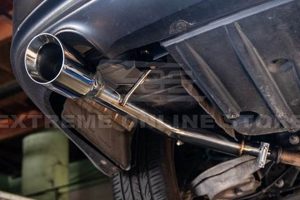
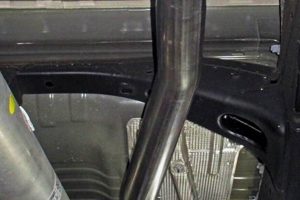
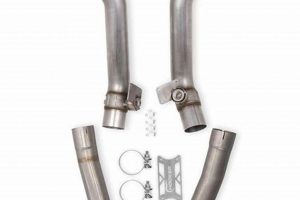
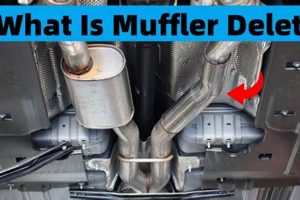
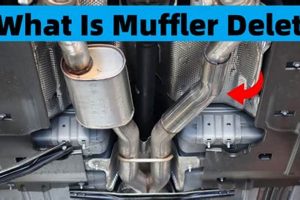
The legality of removing a vehicle’s muffler in Texas is a frequently debated topic among automotive enthusiasts and regulatory bodies. A muffler is a component of the exhaust system designed to reduce the noise emitted by the engine. Its removal, often referred to as a “muffler delete,” typically results in a significant increase in exhaust volume. This alteration raises questions about compliance with state and local noise regulations.
The importance of regulating vehicle noise stems from its impact on public health and quality of life. Excessive noise pollution can contribute to stress, sleep disturbances, and other health problems. Historically, noise regulations have been enacted to protect residential areas and maintain a reasonable level of peace and quiet within communities. These regulations often vary by municipality, adding complexity to the question of whether such modifications are permissible.
The subsequent analysis will delve into specific Texas laws pertaining to vehicle noise emissions, explore the potential consequences of violating these regulations, and examine how local ordinances may further restrict modifications to exhaust systems. It is essential to understand the legal framework to make informed decisions regarding vehicle modifications and avoid potential fines or penalties.
Understanding the specifics of Texas laws regarding vehicle exhaust systems is critical for any vehicle owner considering modifications. The following tips provide guidance on ensuring compliance and avoiding potential legal repercussions.
Tip 1: Consult the Texas Transportation Code: Familiarize yourself with Section 547.604 of the Texas Transportation Code, which addresses exhaust systems and noise levels. This section provides the foundational legal framework.
Tip 2: Research Local Ordinances: In addition to state law, many Texas cities and counties have their own noise ordinances. Contact your local government to determine if any specific restrictions apply within your jurisdiction.
Tip 3: Understand “Unusual Noise”: Texas law prohibits exhaust systems that create “unusual noise.” While this term is subjective, excessive loudness resulting from muffler removal typically falls under this definition.
Tip 4: Maintain Original Equipment: Generally, maintaining the vehicle’s original exhaust system, including the muffler, ensures compliance with factory-specified noise levels.
Tip 5: Document Modifications: If modifications are performed, retain detailed documentation, including receipts and specifications, to demonstrate adherence to any applicable sound level limits, should questions arise.
Tip 6: Seek Expert Advice: Consult with a qualified mechanic or automotive specialist familiar with Texas vehicle regulations before undertaking any exhaust system modifications. Their expertise can help ensure legal compliance.
Tip 7: Consider Sound Level Testing: If modifications have been made, consider having the vehicle’s sound level tested by a certified professional to determine if it meets legal limits. This can provide objective evidence of compliance.
Adhering to these tips can help vehicle owners navigate the complexities of Texas vehicle noise regulations, minimizing the risk of fines, penalties, or vehicle inspections.
The concluding section will summarize the legal landscape and offer final considerations regarding exhaust system modifications in Texas.
1. Noise Ordinances

Noise ordinances are integral in determining the legality of muffler deletes within Texas. These regulations, enacted at the municipal and county levels, establish acceptable noise levels and govern activities that generate excessive sound. Their enforcement directly influences whether a vehicle operating without a muffler complies with local laws.
- Decibel Limits and Enforcement
Many noise ordinances define specific decibel limits considered acceptable within certain zones (e.g., residential, commercial). Law enforcement uses sound level meters to measure vehicle noise. A muffler delete, predictably raising exhaust volume, often exceeds these limits, leading to citations and fines. The severity of enforcement varies widely, influencing the prevalence of illegal modifications.
- Time-of-Day Restrictions
Certain ordinances impose stricter noise limits during nighttime hours or early mornings. Operating a vehicle with a muffler delete during these restricted times is more likely to result in a violation. These temporal constraints reflect the need to balance transportation needs with community peace, especially in residential neighborhoods.
- Subjective Noise Standards
Some ordinances rely on subjective language, prohibiting “unreasonable” or “disturbing” noise. Law enforcement officers assess violations based on their judgment. While less precise than decibel limits, this allows for addressing situations where a vehicle’s noise, even if marginally within decibel thresholds, significantly disrupts the peace. Muffler deletes are inherently prone to being deemed subjectively unreasonable.
- Exemptions and Variances
Certain exemptions may exist, such as for emergency vehicles or legally sanctioned events. Variances might be granted for specific activities or industries after demonstrating mitigation efforts. No such exemptions typically exist for personal vehicles with deliberately removed mufflers; they are generally expected to comply fully with prevailing noise regulations.
The interplay between state law and local noise ordinances dictates the practical legality of muffler deletes. While state law provides a broad framework, municipal and county regulations define the specific standards and enforcement mechanisms, directly impacting whether operating a vehicle without a muffler is permissible in a particular Texas locale. Understanding these local nuances is crucial for vehicle owners to avoid legal penalties.
2. Texas Transportation Code

The Texas Transportation Code serves as the primary legal framework governing vehicle operation and equipment standards within the state. Its relevance to the question of whether a muffler delete is permissible is significant, as it establishes basic requirements for exhaust systems and noise emissions.
- Section 547.604: Exhaust System Required
This specific section mandates that every motor vehicle be equipped with a muffler in good working order that prevents excessive or unusual noise. The absence of a muffler, as in a muffler delete, directly contravenes this requirement. The implications are clear: vehicles lacking a functional muffler are in violation of state law, regardless of local ordinances.
- Definition of “Unusual Noise”
While Section 547.604 prohibits “excessive or unusual noise,” the code provides no explicit decibel limits. This ambiguity shifts the determination of compliance to local enforcement agencies. A muffler delete, predictably increasing exhaust volume, creates a high likelihood of being classified as “unusual noise,” resulting in enforcement action. Local interpretation plays a decisive role in practical application.
- Equipment Standards and Inspections
The Transportation Code empowers the Texas Department of Public Safety (DPS) to establish vehicle inspection standards. While specific standards for exhaust noise levels are not universally mandated, an inspector may fail a vehicle if the exhaust system is deemed unsafe or generates excessive noise. A muffler delete introduces a high risk of inspection failure due to the obviously altered exhaust system.
- Enforcement and Penalties
Violation of Section 547.604 is typically classified as a misdemeanor offense. Penalties may include fines and requirements to correct the violation. Consistent enforcement varies across jurisdictions, but the legal basis for penalizing vehicles with muffler deletes remains firmly rooted in the Texas Transportation Code. The potential for legal repercussions acts as a deterrent against such modifications.
The Texas Transportation Code provides the legal basis for regulating vehicle noise. Although lacking specific decibel limits, its prohibition of “excessive or unusual noise” and requirement for functional mufflers establish a clear legal standard that most muffler deletes are likely to violate. Enforcement, influenced by local interpretation and inspection standards, determines the practical consequences for vehicle owners.
3. Unusual noise definition

The phrase “unusual noise definition,” as it relates to the legality of a muffler delete in Texas, is pivotal. The Texas Transportation Code, while mandating a muffler to prevent “excessive or unusual noise,” notably omits a quantitative measurement of permissible noise levels. This absence directly delegates the interpretation and application of the noise standard to local jurisdictions and law enforcement. The direct effect is that the legal status of a muffler delete isn’t uniformly defined across Texas; it becomes contingent upon the subjective interpretation of what constitutes “unusual noise” within a specific locality. For example, what may be deemed acceptable in a rural county could be deemed a violation within a city with a stricter noise ordinance, showing the significance of the definition. The importance of understanding this lies in the fact that a vehicle owner can’t solely rely on the state statute to determine legality; local ordinances and enforcement practices reign supreme.
Real-world application hinges on law enforcement’s assessment. If an officer judges the noise emanating from a vehicle with a muffler delete as exceeding community standards or disrupting public peace, a citation can be issued. This discretionary power underscores the necessity for vehicle owners to be aware of their local jurisdiction’s stance. Consider a vehicle operating with a muffler delete near a hospital or residential area late at night; even without a precise decibel reading, the likelihood of a violation significantly increases due to the disruption caused. This subjectivity presents a challenge for automotive enthusiasts seeking to modify their vehicles while remaining compliant with the law.
In summary, the lack of a definitive statewide “unusual noise definition” creates a fragmented legal landscape for muffler deletes in Texas. While the state mandates mufflers, local interpretations determine their practicality. Vehicle owners must proactively research and adhere to local noise ordinances and enforcement practices to mitigate the risk of fines and penalties. The challenge lies in navigating this ambiguity and recognizing that the legality of a muffler delete is ultimately subject to the subjective judgment of local authorities and community standards, instead of concrete state decibel reading.
4. Local regulations

Local regulations exert a decisive influence on the permissibility of a muffler delete in Texas. While the Texas Transportation Code provides a baseline requiring mufflers to prevent “excessive or unusual noise,” the interpretation and enforcement of this provision are largely delegated to municipalities and counties. This decentralization creates a patchwork of varying legal standards across the state, rendering the legality of a muffler delete highly dependent on location. Local ordinances define specific noise limits, time-of-day restrictions, and enforcement mechanisms, thereby directly impacting whether a vehicle operating without a muffler is compliant.
The practical significance of understanding local regulations cannot be overstated. For instance, a vehicle with a muffler delete operating in a rural county with minimal noise enforcement may encounter no issues. Conversely, the same vehicle in a densely populated urban area with strict noise ordinances and active enforcement would likely face citations and fines. Some cities may impose decibel limits, while others rely on subjective assessments of “unreasonable” noise. Furthermore, inspection protocols and penalties vary. Therefore, vehicle owners contemplating or utilizing muffler deletes must proactively investigate and adhere to the specific regulations of the localities where they intend to operate their vehicles. Failure to do so exposes them to legal and financial risks.
In conclusion, the legality of a muffler delete in Texas is not a uniform statewide determination. Local regulations serve as the primary determinant. The broad prohibition in the Texas Transportation Code is refined and enforced through municipal and county ordinances, which establish the specific noise standards and enforcement procedures. Vehicle owners are responsible for understanding and complying with these local regulations to avoid penalties. The complex interplay between state law and local control underscores the importance of thorough research and responsible vehicle modification practices.
5. Federal Standards

Federal standards play a crucial role in determining the legality of a muffler delete in Texas, establishing a baseline of environmental and safety regulations that intersect with state and local laws. These standards, primarily enforced by the Environmental Protection Agency (EPA), address noise pollution and emission control, indirectly impacting the permissibility of exhaust system modifications.
- EPA Noise Emission Standards
The EPA sets noise emission standards for newly manufactured vehicles, aiming to reduce environmental noise pollution. While these standards don’t directly regulate modifications to existing vehicles, altering an exhaust system to significantly increase noise levels can indirectly violate these standards. A muffler delete, resulting in amplified exhaust noise, may draw scrutiny if perceived as circumventing the intent of federal noise reduction efforts. This potential conflict presents a point of legal vulnerability.
- Clean Air Act and Emission Control
The Clean Air Act mandates specific emission control systems for vehicles, including catalytic converters and other devices that work in conjunction with the muffler. A muffler delete, while primarily affecting noise, can also impact a vehicle’s emission control system. If the modification interferes with the proper functioning of emission control devices or increases harmful emissions, it violates federal law. This represents a substantial legal hurdle for muffler deletes, irrespective of state or local noise regulations.
- Tampering Prohibitions
Federal law prohibits tampering with emission control systems. The EPA considers the removal or alteration of any component designed to control emissions as a violation. If a muffler delete is performed in a manner that affects the functionality of the catalytic converter or other emission-related components, it falls under this prohibition. This is a significant consideration, as fines for tampering with emission control systems can be substantial, irrespective of state or local laws concerning noise.
- Aftermarket Parts Certification
Federal regulations require aftermarket parts, including exhaust components, to meet certain performance and emission standards. While a complete muffler delete eliminates the need for aftermarket mufflers, it raises the issue of compliance with overall system requirements. If the resulting exhaust system fails to meet federal emission or noise standards, the modification is deemed illegal. This certification process ensures that replacement parts do not compromise the vehicle’s environmental performance.
The intersection of federal standards and state laws establishes a complex regulatory landscape. While Texas law focuses primarily on noise, federal regulations emphasize emission control and overall environmental impact. A muffler delete, while potentially violating Texas noise regulations, also risks violating federal emission standards and tampering prohibitions. This dual regulatory framework creates significant legal risks for vehicle owners considering such modifications.
6. Inspection Failures
Vehicle inspections in Texas serve as a critical enforcement mechanism for ensuring compliance with state and federal vehicle equipment regulations. The presence of a muffler delete directly correlates with an increased likelihood of inspection failure, thereby impacting the legal operation of the vehicle within the state.
- Exhaust System Integrity
Texas vehicle inspections mandate that the exhaust system be in good working order and free from leaks. A muffler delete, by definition, alters the original exhaust system design, often resulting in increased noise levels and potential exhaust leaks at connection points. Inspectors are trained to identify such modifications, leading to an automatic failure due to the compromised integrity of the system.
- Noise Level Compliance
While Texas law lacks specific decibel limits for vehicle noise, inspectors are authorized to fail vehicles emitting “excessive or unusual noise.” The subjective nature of this standard allows inspectors to deem a vehicle with a muffler delete non-compliant based on the amplified exhaust sound. This assessment is particularly relevant in areas with stringent local noise ordinances, further increasing the likelihood of inspection failure.
- Emissions System Functionality
Although the primary function of a muffler is noise reduction, its removal can indirectly impact the vehicle’s emissions system. A properly functioning exhaust system, including the muffler, contributes to optimal engine performance and emission control. An inspector may fail a vehicle with a muffler delete if the modification is deemed to negatively affect emissions, even if emission testing is not explicitly part of the inspection process.
- Visual Inspection and Component Verification
Texas vehicle inspections involve a visual examination of various components, including the exhaust system. The absence of a muffler, a standard component of most vehicles, is readily apparent to inspectors. This visual discrepancy provides immediate grounds for questioning the legality of the modification and potentially failing the vehicle based on non-compliance with equipment requirements.
The intersection of these factors highlights the significance of vehicle inspections in the context of muffler deletes in Texas. A vehicle lacking a functional muffler faces a heightened risk of failing inspection due to compromised exhaust system integrity, excessive noise levels, potential emissions impacts, and visual discrepancies. This failure effectively renders the vehicle non-compliant with state regulations, thereby impacting its legal operation until the violation is rectified.
Frequently Asked Questions
The following addresses common questions regarding the legality of muffler deletes on vehicles operating within the state of Texas. The information provided aims to clarify state laws and local regulations pertinent to exhaust system modifications.
Question 1: Is a muffler delete inherently illegal under Texas state law?
The Texas Transportation Code mandates that all vehicles be equipped with a muffler in good working order to prevent “excessive or unusual noise.” While lacking specific decibel limits, the removal of a muffler inherently increases noise output, likely violating this provision.
Question 2: Do local noise ordinances supersede state law regarding muffler deletes?
Local ordinances supplement state law. Municipalities and counties can impose stricter noise regulations, including specific decibel limits. Even if a vehicle marginally complies with state law, it may still violate local ordinances, resulting in fines or penalties.
Question 3: Can a vehicle with a muffler delete pass a Texas vehicle inspection?
A vehicle inspection assesses compliance with state equipment standards. The absence of a muffler, a standard component, raises concerns about exhaust system integrity and noise levels, likely leading to inspection failure. Inspectors are authorized to fail vehicles emitting excessive or unusual noise.
Question 4: Does the lack of a specific decibel limit in state law mean a muffler delete is permissible?
The absence of a statewide decibel limit does not legitimize muffler deletes. The prohibition of “excessive or unusual noise” provides a subjective standard enforced by local authorities. A vehicle with a muffler delete is highly susceptible to being deemed in violation of this standard.
Question 5: Are there exceptions to the muffler requirement for certain types of vehicles in Texas?
While exceptions may exist for emergency vehicles or during sanctioned events, these exceptions typically do not extend to privately owned passenger vehicles. The expectation is that all non-exempt vehicles comply with state and local noise regulations.
Question 6: What are the potential penalties for operating a vehicle with a muffler delete in Texas?
Penalties for violating Texas Transportation Code Section 547.604 can include fines and requirements to correct the violation. Furthermore, repeated offenses or violations of local noise ordinances may result in more severe penalties.
In summary, while Texas law does not specify decibel limits, the requirement for a muffler to prevent “excessive or unusual noise” coupled with local noise ordinances and inspection standards, makes operating a vehicle with a muffler delete a legally risky endeavor.
The next section will provide a conclusion summarizing the legal considerations of muffler deletes in Texas.
Conclusion
The analysis demonstrates that the legality of a muffler delete in Texas is not a straightforward determination. While the Texas Transportation Code mandates a muffler to prevent “excessive or unusual noise,” the interpretation and enforcement of this standard are largely delegated to local jurisdictions. Consequently, the permissibility of such a modification is contingent upon adherence to local noise ordinances, compliance with vehicle inspection standards, and potential conflicts with federal emissions regulations. The absence of a specific statewide decibel limit does not negate the requirement for a functional muffler, and a vehicle operating without one faces an elevated risk of violating state and local laws.
Given the complex interplay between state law, local ordinances, and federal regulations, vehicle owners are strongly advised to exercise caution when considering exhaust system modifications. Thorough research of applicable local regulations, consultation with qualified automotive professionals, and responsible vehicle operation are essential to mitigate the risk of fines, penalties, and inspection failures. Prioritizing legal compliance and community standards serves to ensure both individual responsibility and public well-being.