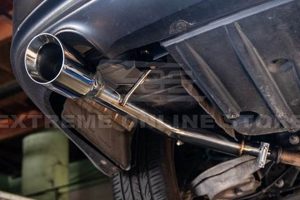
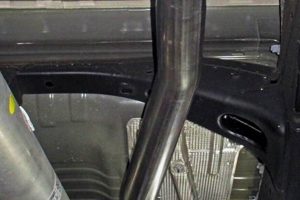
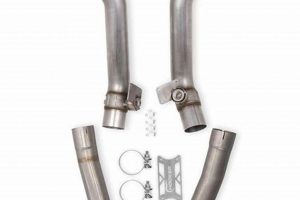
The modification of a vehicle’s exhaust system often involves decisions regarding components designed to attenuate sound. Two common procedures are the removal of the resonator and the removal of the muffler. The resonator typically targets specific sound frequencies to reduce droning, while the muffler is designed for overall sound reduction. For example, a car owner might consider replacing the stock muffler with a less restrictive one, or deleting it altogether, to achieve a louder exhaust note. Simultaneously, the resonator might be altered or eliminated to further adjust the sound characteristics.
The implementation of these modifications can significantly alter the exhaust’s tone and volume. Historically, these changes were primarily driven by a desire for increased performance and a more aggressive auditory experience. Currently, individuals modify their exhaust systems for both aesthetic reasons and perceived performance gains. However, it’s crucial to consider local noise regulations and the potential impact on the vehicle’s resale value before undertaking such alterations.
The following sections will delve deeper into the specific effects of altering or eliminating these two exhaust components, exploring the potential advantages, disadvantages, and implications for vehicle performance and sound characteristics. The discussion will encompass the anticipated changes in sound volume, the potential for droning or raspiness, and the possible impact on the engine’s backpressure and overall efficiency.
Considerations for Exhaust Modification
Modifying an exhaust system necessitates careful evaluation of the potential outcomes. The following points address crucial aspects relevant to alterations concerning the resonator and muffler.
Tip 1: Understanding the Function of Each Component: The resonator primarily targets specific frequencies to minimize drone, while the muffler aims for overall sound reduction. Eliminating the resonator might introduce unwanted resonance, especially at cruising speeds. Removing the muffler will invariably increase exhaust volume significantly.
Tip 2: Assessing Local Noise Regulations: Exhaust modifications can lead to non-compliance with noise regulations. Before undertaking any alterations, research and understand the applicable laws and potential penalties in the relevant jurisdiction. Failure to comply can result in fines or mandatory vehicle modifications.
Tip 3: Evaluating Potential Performance Changes: While exhaust modifications are often associated with performance gains, the actual impact can vary significantly depending on the vehicle and the specific modifications performed. In some cases, removing or altering components may decrease performance due to changes in backpressure.
Tip 4: Anticipating Changes in Sound Characteristics: Modifying the exhaust system will directly impact the exhaust note. Consider the desired sound profile. Removing the muffler typically results in a louder, more aggressive sound, while resonator deletion may introduce raspiness or droning.
Tip 5: Evaluating the Impact on Resale Value: Extensive modifications to the exhaust system may negatively affect the vehicle’s resale value. Potential buyers might be deterred by the altered sound or concerns about compliance with regulations.
Tip 6: Considering Professional Installation: Proper installation is crucial for optimal performance and to avoid potential issues such as exhaust leaks or damage to other vehicle components. Professional installation by a qualified mechanic is highly recommended, especially for complex modifications.
These considerations are intended to inform decisions regarding exhaust system modifications. Careful planning and an understanding of the potential consequences are essential for achieving the desired outcome while minimizing negative impacts.
The subsequent section provides a summary of the overall impact of these choices.
1. Sound Frequency Control

Sound frequency control is a central aspect when considering resonator or muffler removal in a vehicle’s exhaust system. Each component plays a distinct role in managing and attenuating specific frequencies to shape the overall sound profile.
- Resonator Function and Targeted Frequencies
The resonator is designed to target and cancel specific sound frequencies, primarily those responsible for creating drone or unwanted resonance within the exhaust system. Its internal structure is calibrated to generate sound waves that are out of phase with the targeted frequencies, resulting in their cancellation and a reduction in the perceived drone. Resonators do not typically address the full range of exhaust frequencies, making their impact more focused than that of a muffler.
- Muffler Design and Broadband Attenuation
Mufflers are engineered to attenuate a broader range of sound frequencies, thus reducing the overall sound level emanating from the exhaust system. Mufflers typically employ a combination of sound-absorbing materials, chambers, and baffles to disrupt sound waves and reduce their amplitude. Unlike resonators, which target specific frequencies, mufflers aim for a generalized reduction in sound output, resulting in a quieter exhaust note.
- Impact of Resonator Removal on Specific Frequencies
Removing the resonator can lead to a significant increase in the presence of the specific frequencies it was designed to attenuate. This often results in increased drone, especially at cruising speeds or under specific engine load conditions. The removal typically does not drastically increase the overall volume but alters the sound profile and can introduce undesirable resonance.
- Impact of Muffler Removal on Overall Sound Level
Removing the muffler typically results in a substantial increase in overall exhaust volume across a broad range of frequencies. The exhaust system is left largely unattenuated, allowing nearly all generated sound to escape. While some frequency characteristics may be altered, the most noticeable impact is a significant increase in loudness, potentially exceeding legal limits and creating a more aggressive, less refined exhaust note.
The choice between altering or removing either the resonator or the muffler necessitates an understanding of how each component manages sound frequency. Removing the resonator will likely alter specific frequencies and induce drone, while muffler removal amplifies all frequencies, increasing the overall sound level. Selection should reflect desired sound characteristics and consideration of legal compliance.
2. Overall Sound Reduction

Overall sound reduction is a key consideration when evaluating modifications to a vehicle’s exhaust system, specifically concerning resonator and muffler deletion. The extent of sound attenuation achieved significantly influences the vehicle’s compliance with noise regulations, driver comfort, and public perception.
- Muffler’s Primary Role in Sound Attenuation
The muffler is the principal component responsible for overall sound reduction within the exhaust system. It utilizes internal baffles, chambers, and sound-absorbing materials to dissipate sound waves, reducing their amplitude and thereby lowering the overall exhaust volume. A functional muffler typically ensures compliance with mandated noise levels and contributes to a more subdued driving experience. Deleting the muffler compromises this primary sound-dampening mechanism.
- Resonator’s Secondary Impact on Sound Reduction
While primarily focused on specific frequencies that cause droning, the resonator also contributes to overall sound reduction, albeit to a lesser extent than the muffler. By attenuating targeted frequencies, the resonator indirectly reduces the total sound energy emitted from the exhaust. The removal of a resonator might not cause as drastic an increase in overall volume as a muffler deletion, but can still audibly alter the exhaust note.
- Legal Implications of Sound Modification
Exhaust modifications that significantly increase overall sound levels can contravene local noise ordinances and emissions regulations. Many jurisdictions enforce maximum decibel limits for vehicles, and exceeding these limits can result in fines or mandatory corrective actions. Deleting either the resonator or muffler without considering these regulations may lead to legal complications.
- Subjective Perception of Sound Changes
Even if exhaust modifications remain within legal decibel limits, the alteration in sound characteristics can be subjectively perceived as excessively loud or intrusive. Factors such as the exhaust note’s tone, pitch, and presence of drone can influence the perceived loudness and impact driver and passenger comfort, as well as public opinion. This subjective element underscores the importance of carefully considering the desired sound profile before modifying an exhaust system.
The degree of overall sound reduction achieved is a direct consequence of modifications to the exhaust system’s resonator and muffler components. While both parts contribute to managing exhaust noise, the muffler plays a more prominent role in attenuating overall sound levels. Considering both legal and subjective ramifications is crucial before undertaking any modifications.
3. Legality Considerations
The alteration of a vehicle’s exhaust system, specifically through resonator or muffler deletion, directly engages with legal considerations concerning noise pollution and vehicle emissions standards. These regulations exist to mitigate the adverse effects of excessive noise and environmental pollution, and modifications circumventing mandated controls often incur penalties. The act of removing or modifying these components can significantly alter the sound profile and emission characteristics of a vehicle, potentially causing non-compliance.
Practical examples of this interaction are readily found. Many jurisdictions establish maximum decibel limits for vehicle exhaust, and removing the muffler, the primary sound attenuation device, frequently results in exceeding these limits. This situation can lead to fines, mandatory vehicle inspections, or requirements to restore the exhaust system to its original configuration. Similarly, while resonator deletion primarily affects specific sound frequencies, its impact on overall exhaust flow can, in some cases, influence emissions control systems, potentially triggering diagnostic alerts or failing emissions tests. The importance of understanding legality considerations is paramount; uninformed modification can result in substantial financial burdens and legal repercussions.
In summary, the decision to modify or remove a resonator or muffler carries a responsibility to understand and adhere to applicable laws. The practical significance of this understanding lies in avoiding legal penalties, ensuring vehicle compliance, and contributing to a responsible approach to vehicle modification. While desired sound or performance gains may motivate such changes, the legal ramifications should always be a decisive factor in the decision-making process.
4. Performance Impact Assessment

The evaluation of performance ramifications is integral to any consideration of resonator or muffler deletion. Alterations to the exhaust system directly influence engine backpressure, exhaust gas velocity, and overall engine efficiency. Understanding these potential effects is essential for informed decision-making.
- Backpressure Modification
The exhaust system’s backpressure exerts a direct influence on engine performance. Excessive backpressure hinders exhaust gas expulsion, reducing engine efficiency and power output. Conversely, insufficient backpressure can negatively impact low-end torque. Resonator and muffler deletions alter the backpressure profile, with potential benefits or detriments depending on the vehicle’s engine characteristics and the specific modifications implemented. A performance impact assessment should quantify these backpressure changes to predict their effect on engine output. For example, a turbocharged engine typically benefits from reduced backpressure, whereas a naturally aspirated engine might experience torque loss with excessive exhaust flow.
- Exhaust Gas Velocity
Maintaining optimal exhaust gas velocity is crucial for efficient scavenging of combustion byproducts from the cylinders. Resonator and muffler modifications can affect exhaust gas velocity. A poorly designed exhaust system, resulting from component deletion, can reduce exhaust gas velocity, leading to incomplete cylinder scavenging and reduced engine performance. Evaluating the impact on exhaust gas velocity requires sophisticated modeling and analysis, but its implications for overall engine efficiency are significant. An example is a situation where too large of an exhaust diameter following a muffler delete can slow the exhaust gases down.
- Engine Tuning Requirements
Significant alterations to the exhaust system, such as resonator or muffler removal, can necessitate adjustments to the engine’s fuel and ignition maps. These adjustments, often referred to as engine tuning, are required to optimize engine performance in response to the changed exhaust flow dynamics. Without proper tuning, modifications can lead to suboptimal air-fuel ratios, reduced power output, and potential engine damage. A performance impact assessment must consider the need for, and feasibility of, engine tuning to fully realize the potential benefits of exhaust modifications. An example can be a car running lean because of the increased airflow.
- Impact on Emissions Control Systems
Resonator and muffler modifications can potentially affect the functionality of a vehicle’s emissions control systems, including catalytic converters and oxygen sensors. Changes to exhaust gas composition or temperature can impair the efficiency of these systems, leading to increased emissions and potential non-compliance with emissions regulations. A thorough performance impact assessment must evaluate these potential effects to ensure that modifications do not compromise the vehicle’s emissions performance. Removing catalytic converters may cause illegal levels of pollution.
In conclusion, a comprehensive performance impact assessment is crucial when considering resonator or muffler deletion. Such assessment must include consideration of backpressure changes, exhaust gas velocity, tuning requirements, and potential implications for emissions control systems. A balanced approach that integrates engineering principles, testing methodologies, and adherence to legal requirements is vital for ensuring that exhaust modifications lead to genuine performance improvements without causing unintended consequences.
5. Drone Potential

The phenomenon of exhaust drone, characterized by a persistent, low-frequency resonance within the vehicle’s cabin, is a significant consideration in the context of altering an exhaust system through resonator or muffler deletion. Understanding the origin, characteristics, and mitigation strategies for drone is essential for those contemplating such modifications.
- Resonator Function and Drone Mitigation
The resonator’s primary function is to attenuate specific sound frequencies that contribute to drone. By strategically employing chambers and internal designs, resonators are calibrated to cancel out these undesirable frequencies. Deleting the resonator often results in a pronounced increase in drone, particularly within a specific RPM range, leading to driver and passenger discomfort during steady-state driving conditions. This effect is most noticeable on highways or during extended periods of constant speed.
- Muffler Influence on Drone Perception
While the muffler’s primary role is overall sound reduction, it also indirectly impacts the perception of drone. A well-designed muffler can dampen a broader range of frequencies, including those contributing to drone. However, some aftermarket mufflers, particularly those designed for increased performance, may offer less drone mitigation than the factory unit. Muffler deletion invariably exacerbates any existing drone, as the exhaust system lacks the primary component responsible for broad frequency attenuation.
- Vehicle-Specific Drone Characteristics
The propensity for drone varies significantly between vehicle models, engine types, and exhaust system configurations. Some vehicles are inherently more susceptible to drone due to their chassis design or engine firing order. Consequently, the impact of resonator or muffler deletion on drone potential is highly vehicle-specific. What might result in a tolerable exhaust note in one vehicle could produce an unbearable drone in another.
- Aftermarket Solutions and Drone Reduction Strategies
Despite the increased drone potential from resonator or muffler deletion, various aftermarket solutions aim to mitigate this issue. These include installing anti-drone resonators, strategically placed sound-deadening materials within the vehicle’s cabin, or employing Helmholtz resonators tuned to cancel the specific drone frequencies. The effectiveness of these strategies varies depending on the severity of the drone and the precision of the implemented solutions.
In summary, drone potential represents a significant factor in evaluating the consequences of resonator or muffler deletion. The impact varies based on the vehicle’s inherent characteristics, the specific components removed, and the presence of aftermarket drone-reduction strategies. While achieving a desired exhaust note is a common motivation for these modifications, a thorough understanding of drone potential is crucial for avoiding unintended and undesirable consequences.
6. Backpressure Implications

The alteration of an exhaust system through resonator or muffler deletion has direct implications for engine backpressure. These components inherently influence the flow of exhaust gases, and their removal alters the pressure dynamics within the system. The extent of these changes depends on the engine’s specific design, the type of exhaust system initially installed, and the specific modifications undertaken. For instance, deleting a muffler designed to create significant backpressure will result in a greater change than removing a more free-flowing aftermarket muffler. This shift can directly impact engine performance, potentially affecting horsepower, torque, and fuel efficiency. Understanding the cause-and-effect relationship between these deletions and backpressure is thus crucial for making informed decisions about exhaust system modifications.
Backpressure is a critical parameter in engine operation, as it affects the efficiency of the combustion cycle. While some level of backpressure is generally beneficial, excessive backpressure hinders the expulsion of exhaust gases, leading to reduced engine performance. Conversely, insufficient backpressure can result in poor cylinder scavenging, also negatively affecting performance. The role of the resonator and muffler in contributing to backpressure must be carefully considered. Deleting either component, particularly the muffler, generally reduces backpressure, which can be advantageous for engines designed to operate with minimal restriction. However, this reduction may not be universally beneficial, especially for naturally aspirated engines where a certain degree of backpressure is necessary to maintain optimal torque output. Therefore, empirical testing or simulation is often required to determine the optimal exhaust system configuration for a given engine.
In summary, resonator and muffler deletion both carry significant backpressure implications that must be understood to avoid unintended consequences. While the removal of these components typically reduces backpressure, the resulting effect on engine performance is highly dependent on the specific engine characteristics and the overall exhaust system design. Careful evaluation of backpressure changes, coupled with dyno testing or simulation, is recommended to ensure that modifications enhance rather than hinder engine performance. Moreover, the long-term effects on engine durability and emissions compliance should be considered before undertaking such modifications.
7. Resale Value Affect

Modifications to a vehicle’s exhaust system, specifically alterations involving resonator or muffler deletion, directly influence its subsequent resale value. This influence stems from a combination of factors, including perceived vehicle condition, compliance with noise and emissions regulations, and buyer preferences. The perceived impact of such modifications can vary significantly depending on the potential buyer’s demographic, geographic location, and familiarity with aftermarket modifications. A modified exhaust, particularly one perceived as excessively loud or of questionable legality, often deters potential buyers, thereby reducing the vehicle’s overall market value. This reduction is often attributable to concerns about potential repair costs, regulatory non-compliance, or simply a preference for stock configurations.
The negative impact on resale value is exacerbated if the modifications are perceived as unprofessional or are not accompanied by proper documentation. Buyers often view modified vehicles as potentially problematic, assuming that other undocumented or poorly executed modifications may exist. Furthermore, non-compliance with local noise or emissions regulations can significantly diminish a vehicle’s appeal, particularly in regions with stringent enforcement. An example would be a sports car with a muffler delete offered for sale in a neighborhood known for noise complaints; prospective buyers might avoid it, fearing future legal or social issues. Conversely, a well-documented modification performed by a reputable shop might be viewed more favorably, especially among enthusiasts who appreciate such alterations.
In conclusion, the decision to alter an exhaust system through resonator or muffler deletion should be carefully weighed against the potential impact on resale value. While such modifications may provide short-term auditory or perceived performance gains, the long-term consequences on marketability and financial return can be substantial. Prospective sellers are advised to carefully consider the preferences of their target market, the regulatory environment, and the overall quality of the modifications before undertaking such alterations. Preserving original components and maintaining meticulous records of all modifications can mitigate potential negative impacts on resale value.
Frequently Asked Questions
This section addresses frequently asked questions regarding the modification of exhaust systems through resonator or muffler deletion. The information provided aims to clarify common concerns and misconceptions surrounding these procedures.
Question 1: What is the primary difference between a resonator and a muffler?
The resonator is designed to attenuate specific sound frequencies, typically those responsible for generating drone. The muffler is engineered for overall sound reduction across a broader range of frequencies.
Question 2: Will deleting my muffler increase my vehicle’s horsepower?
Muffler deletion may result in a perceived increase in horsepower due to a change in sound. Actual horsepower gains are often minimal and may require engine tuning to realize fully.
Question 3: Is resonator or muffler deletion legal?
Legality varies by jurisdiction. Many regions have noise regulations, and modifications resulting in excessive noise levels may violate these regulations. Consult local laws before proceeding.
Question 4: What are the potential drawbacks of deleting my resonator or muffler?
Potential drawbacks include increased drone, elevated noise levels, potential non-compliance with regulations, and a possible decrease in resale value.
Question 5: How does deleting the resonator or muffler affect engine backpressure?
Both modifications typically reduce backpressure. The extent of the reduction depends on the specific engine and exhaust system. Excessive reduction in backpressure may negatively impact low-end torque.
Question 6: Will deleting my resonator or muffler affect my vehicle’s emissions?
While the direct impact may be minimal, alterations to the exhaust system can indirectly affect emissions control system efficiency, potentially leading to non-compliance with emissions standards.
This FAQ clarifies the primary differences, potential consequences, and legal considerations associated with resonator and muffler deletion. Individuals contemplating such modifications are strongly advised to conduct thorough research and seek professional guidance.
The subsequent section will provide a summary of recommended best practices.
Conclusion
The preceding analysis has explored the multifaceted implications of “resonator vs muffler delete” exhaust modifications. It is evident that the removal or alteration of these components introduces a complex interplay of sound characteristics, performance considerations, regulatory compliance, and potential financial consequences. While the allure of an enhanced exhaust note and perceived performance gains may be strong, a responsible approach necessitates a comprehensive understanding of the potential drawbacks.
Therefore, any decision regarding “resonator vs muffler delete” should be approached with caution and thorough research. Individuals contemplating such modifications are urged to prioritize legal compliance, consider the potential impact on engine performance and resale value, and carefully assess the trade-offs between auditory enhancements and practical considerations. Informed decisions, grounded in a clear understanding of the ramifications, are essential to avoid unintended consequences and ensure responsible vehicle ownership.